If you’ve searched “Oil of Olay” expecting to land on a product page and instead found yourself scrolling through a brand called just “Olay,” you’re not misremembering anything. The name genuinely changed. This is the story of what happened to it, what the original product actually was, and, since that history doesn’t help you much at the shelf, which current Olay products are the real successors if you’re trying to recreate that classic pink-bottle routine in 2026.
Why It’s Not Called “Oil of Olay” Anymore
The product was created in 1952 by Graham Wulff, a South African chemist, who developed a pink fluid formula inspired by wanting deeper hydration than the heavy creams available at the time. He named it “Oil of Olay” as a play on lanolin, one of the formula’s key original ingredients. It launched in a distinctive heavy glass bottle and was marketed almost mysteriously; early advertising never even described it as a moisturizer, instead leaning on vague “beauty secret” messaging built around a fictional advice columnist.
As the brand expanded internationally, the name was deliberately localized for different markets: Oil of Ulay in the UK and Ireland, Oil of Ulan in Australia, and Oil of Olaz across France, Germany, Italy, and the Netherlands. Procter & Gamble, which acquired the brand in 1985, eventually decided to unify all of these under one global name. In the 1990s, “Oil of Olay” officially became simply “Olay,” partly to modernize the brand and partly to create one consistent identity across every country it sold in, rather than maintaining four or five regional names for the same core product line.
So if you grew up with the pink bottle on your mother’s or grandmother’s dresser, you weren’t imagining a different product; you were using the direct predecessor to what’s now sold as Olay.
What the Original Formula Actually Was
The original 1952 Beauty Fluid was notable specifically because it was a pink liquid rather than a thick cream, which was unusual for the era. It was positioned as a lighter, more absorbable alternative to the heavy night creams that dominated skincare at the time. The brand continued refining that hydration-focused formula through the 1960s, then expanded into cleansing products and sensitive-skin variants through the 1980s as the product range grew beyond the single original fluid.
The exact original formulation isn’t sold today under that name, but the hydration-first philosophy it introduced a lightweight fluid that absorbs rather than sits heavily on skin is still recognizable in how Olay formulates several of its current lines.
What Replaced It: Olay’s Current Product Lines
If you’re trying to figure out what actually to buy today, here’s how the modern Olay lineup maps onto what the original product was trying to do:
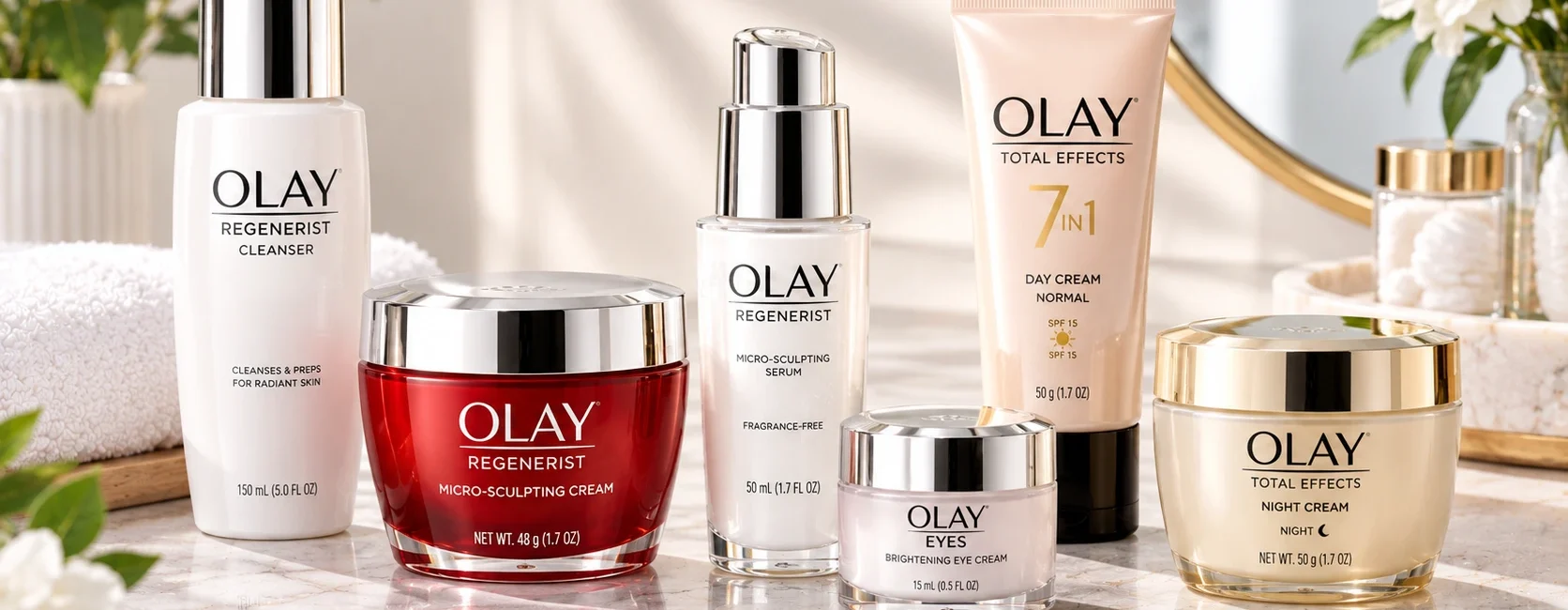
Olay Regenerist is the brand’s current core anti-aging and hydration line, built primarily around niacinamide and peptides. This is the closest philosophical successor to the original Beauty Fluid concept: a lightweight, daily-use formula focused on hydration and skin barrier support rather than aggressive treatment. The Regenerist Niacinamide + Peptide 24 moisturizer is the line’s flagship product.
Olay Retinol24 takes the hydration base further with retinol added for more active anti-aging correction, typically formulated as a night cream or serum paired with niacinamide to offset some of retinol’s usual dryness.
Olay Total Effects is a long-running multi-benefit line (commonly marketed as addressing seven signs of aging in one product) that sits between the simplicity of the original Beauty Fluid and the more targeted Regenerist range.
Olay Super Serum with vitamin C and AHA is positioned for brightening and tone evenness, a benefit area the original formula never specifically targeted but that’s become central to modern skincare routines.
Olay Complete with SPF combines daily moisturizing with sun protection in one step, arguably the most direct modern equivalent to “one simple daily fluid,” just updated with sunscreen built in, which the original 1952 product didn’t include.
Olay Hyaluronic + Peptide 24, sold in gel, cream, and lotion textures, is the brand’s hydration-first line most reminiscent of the original product’s lightweight philosophy, without the retinol or vitamin C actives layered in.
Is Any Original-Style “Oil of Olay” Still Sold Anywhere?
In some international markets, older naming conventions and formulas have persisted longer than in the U.S., and P&G has occasionally reissued heritage-style packaging for anniversary or nostalgia marketing. However, there isn’t currently a widely available U.S. product sold specifically under the “Oil of Olay” name; the brand’s current U.S. retail presence is entirely under the “Olay” name across all of its lines. If you’re specifically hunting for vintage bottles or packaging, that’s more of a collector’s or nostalgia search than a current skincare purchase, and formulations from decades ago won’t match current safety, stability, or ingredient standards regardless.
Choosing a Current Olay Product Based on What You Actually Want
- If you want the simple, lightweight daily hydration the original product was known for: Olay Hyaluronic + Peptide 24 or the basic Regenerist moisturizer are the closest match.
- If you want visible anti-aging results and are willing to introduce an active ingredient gradually: Olay Retinol24 is the modern upgrade path.
- If brightening and tone are your priority: Olay Super Serum with vitamin C and AHA fills a gap the original formula never addressed.
- If you want one product that also handles sun protection: Olay Complete Daily Moisturizer with SPF is the most practical single-step option.
Whichever line you land on, applying it correctly matters as much as the formula itself. If you’re layering a moisturizer under makeup, our guide to choosing the right foundation covers how to build a base that won’t pill or separate over a heavier cream. And if your routine starts with removing makeup or sunscreen before applying any Olay product at night, our roundup of cleansing balms worth trying covers how to do that first step properly rather than skipping straight to moisturizer on unwashed skin.
A Quick Note on Nostalgia Marketing vs. Current Formulas
It’s worth being clear-eyed about one thing: current Olay marketing sometimes leans into the brand’s decades-long heritage as a trust signal, and that’s a legitimate marketing angle the brand genuinely has been reformulating and refining since 1952. But “70+ years of history” isn’t the same claim as “this specific current product performs identically to the one your grandmother used.” Ingredient science, safety standards, and formulation technology have all changed substantially since 1952, generally for the better, and current Regenerist or Retinol24 formulas are built on genuinely different (and more actively studied) ingredients like niacinamide and retinol rather than the original lanolin-based fluid.
Frequently Asked Questions
Why did Oil of Olay change its name to Olay?
Procter & Gamble unified the brand’s several region-specific names (Oil of Olay, Oil of Ulay, Oil of Ulan, Oil of Olaz) into one global name, “Olay,” in the 1990s, as part of standardizing the brand’s identity across international markets.
Is Olay the same company as Oil of Olay?
Yes, Olay is the direct continuation of the same brand, now owned by Procter & Gamble, which acquired it in 1985. The name changed, but it’s the same company and product lineage.
What is the modern equivalent of the original Oil of Olay Beauty Fluid?
Olay’s Hyaluronic + Peptide 24 line and the base Regenerist moisturizer are the closest current products in spirit: lightweight, hydration-focused daily formulas, though with updated ingredients compared to the 1952 original.
Can you still buy the original pink Oil of Olay formula?
Not as a current, widely available U.S. retail product under that specific name and original formulation. Some markets have occasionally reissued heritage-style packaging, but the standard current lineup is sold entirely under the Olay name with modern formulations.
Is Oil of Olay/Olay a good brand for anti-aging skincare?
Olay’s current lines use well-studied ingredients niacinamide, retinol, vitamin C, and hyaluronic acid across an accessible price range, making it a reasonable option for people wanting evidence-backed actives without a premium price tag.
What ingredient made the original Oil of Olay unique?
The original formula’s name referenced lanolin, a key ingredient in the 1952 pink Beauty Fluid, though the brand’s current formulations have moved well beyond that original ingredient list toward niacinamide, peptides, and retinol-based actives.