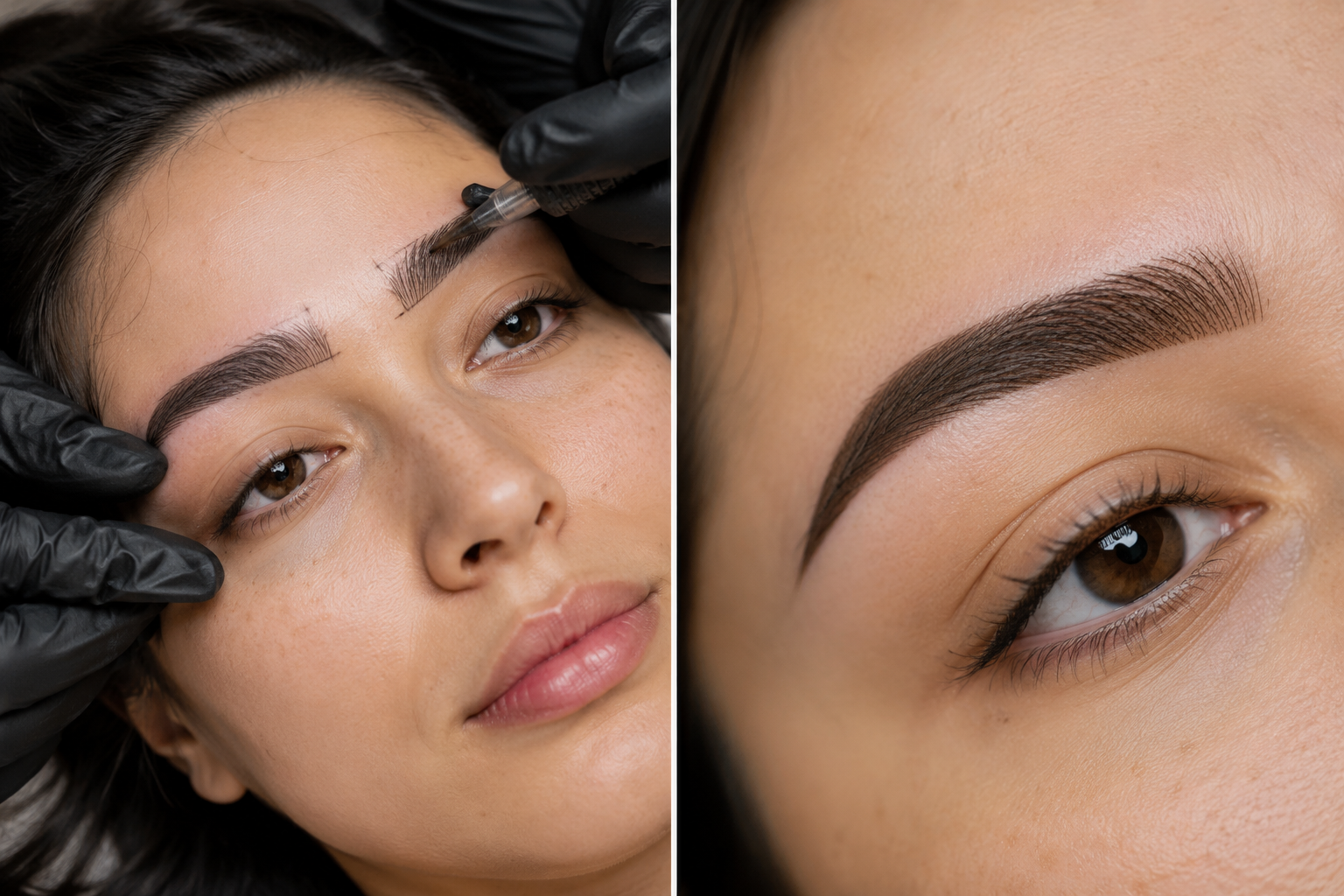
If you have brown skin and you’re considering powder brows, one question will come up before anything else: What color should I choose? It seems like a simple question. It isn’t. The wrong pigment on brown skin doesn’t just look off in the studio, it heals wrong, fades into unexpected shades, and can take months to correct. The right pigment, chosen with your undertone and skin depth in mind, gives you brows that look seamlessly natural, beautifully defined, and last for years without turning an awkward color.
By RK Fashion Zone Editorial Team | A dedicated team researching and writing about modern fashion, beauty products, and practical outfit guides.
Why Color Selection Matters More for Brown Skin
Powder brows involve depositing semi-permanent pigment into the upper layers of the skin using a machine technique that creates a soft, shaded finish. The technique itself is widely considered the most flattering option for brown and darker skin tones but the technique is only part of the equation.
Skin with more melanin interacts with pigment differently from lighter skin. Certain pigment undertones that look beautiful on fair complexions can heal into unexpected hues on brown skin. Cool, ashy pigments are a well-known problem: what deposits as a soft gray-brown can heal into a flat, bluish-gray that looks unnatural and hard to correct.
According to semi-permanent makeup specialists who work extensively with deeper skin tones, warm, neutral, or golden pigments tend to work better for melanin-rich skin. In contrast, ashy pigments such as cool browns or greys can turn darker grey on darker skin. Warm, golden tones are preferable for achieving a more natural look.
This isn’t a minor detail. It’s the difference between brows that look like they belong on your face and brows that require expensive correction work.
Understanding Your Undertone First
Before you choose a powder brow color, you need to identify your skin’s undertone. This applies to all skin tones, but it’s especially important for brown skin because the range of undertones within brown complexions is wide from golden and olive to red, amber, and cool mahogany.
There are three undertone categories:
Warm undertones — Your skin has golden, yellow, peachy, or amber hues. You tend to tan easily in the sun. When you look at the veins on your inner wrist in natural light, they appear green. Warm brown skin tones often include honey, caramel, golden beige, and rich amber complexions.
Cool undertones — Your skin has pink, red, or blue-violet hues. Your veins appear blue or purple. Cool brown skin tones often include deep mahogany, rich ebony with pink or red cast, and some deeper medium brown complexions.
Neutral undertones — A mix of both warm and cool. Your veins appear blue-green. Neutral undertones give you more flexibility in color selection than either warm or cool alone.
Determining your undertone comes down to looking at your skin next to a window in natural light if you see warm golden or peachy tones, you’re warm; if you see pink or blue hues, you’re cool. If you’re genuinely unsure, a good PMU artist will assess this for you during consultation.
Best Powder Brows Colors for Brown Skin — By Shade and Undertone
Light to Medium Brown Skin with Warm Undertones
If your complexion falls in the light-to-medium brown range think warm beige, golden tan, honey, caramel and you have warm undertones, you want pigments in the soft-to-medium warm brown family.
Best colors:
- Warm Soft Brown — A medium brown with golden or reddish undertones. Creates a natural, filled-in look without appearing too dark.
- Caramel Brown — Slightly lighter, with a golden base. Excellent for a more understated, everyday result.
- Chocolate Brown — A richer medium-dark brown with warm depth. Works beautifully on medium warm skin that can handle more definition.
For warm skin tones, the best brow colors typically range from honey blonde to warm chocolate brown, with caramel brown being a great choice for medium skin with warm undertones and chocolate brown best suited for deeper skin tones with warm undertones.
The key for warm light-to-medium skin is to avoid anything with a cool or grey base these will heal ashy and look disconnected from your natural coloring.
Medium Brown Skin with Cool or Neutral Undertones
Medium brown skin with cool undertones complexions with rosy, reddish, or slightly purple-pink cast responds well to deeper, more neutral browns. The goal is to avoid anything too warm or orange-toned, which can clash with the cooler cast of your complexion.
Best colors:
- Neutral Medium Brown — Balanced between warm and cool. Sits naturally on medium cool skin without reading too orange or too grey.
- Soft Dark Brown — A deeper shade with minimal warmth. Works well for medium-cool skin that wants more presence.
- Cool Taupe Brown — A slightly muted brown with just enough cool undertone to complement rosy or cool-cast complexions.
Soft taupe is perfect for medium skin that leans cool, and dark brown is a great match for deeper skin tones with cool undertones.
Neutral undertones in medium brown skin give you the most flexibility if you have dark brown or black hair, you don’t necessarily need to match exactly; instead, choose a softer and warmer hue of the same shade, such as warm brown or dark brown.
Deep Brown and Dark Skin Tones
For deeper brown complexions rich espresso, deep mahogany, dark ebony color selection becomes even more critical. The most common mistake with deep skin tones is choosing a pigment that’s too light (which heals ashy and pale) or one with a strong, cool, or grey base (which can turn a flat, unnatural grey as it fades).
Best colors:
- Dark Warm Brown — A deep brown with an orange or amber base. Heals are a rich, defined warm brown that looks naturally intense without being harsh.
- Brown-Black — For clients with very dark natural brows who want a defined result that matches their existing hair color without the harshness of pure black.
- Deep Chocolate with Warm Undertone — Rich, deep, and warm. Particularly flattering on deep brown skin with golden or amber undertones.
Dark brown pigments typically have a warm undertone with an orange base, which gives a warm dark brown healed result this is why they tend to perform well on deeper skin tones, where cooler pigments are more likely to shift to grey.
Brown Diamond-type pigments specifically formulated for dark to deep skin tones cover warm, neutral, and cool undertones within the deeper Fitzpatrick range, making them a reliable starting point for artists working with deep brown complexions.
Colors to Avoid on Brown Skin
Knowing what not to choose is just as useful as knowing what works.
Ashy or cool-grey pigments — These are the most problematic for brown skin. What looks like a sophisticated grey-brown in the bottle frequently heals to a flat, blue-grey tone on melanin-rich skin. This is especially visible as the pigment fades.
Very light blonde or taupe shades — Pigments designed for fair skin and blonde hair simply don’t have enough depth to read naturally on brown skin. They can appear chalky, pale, or faded even immediately after the appointment.
Pure black — While black isn’t inherently wrong, it leaves little room for the natural softening that happens during healing. The result can be stark and overly dramatic. A deep warm brown or brown-black is almost always a more flattering choice.
When selecting pigment for clients with darker skin, it’s essential to avoid pigments that are too light or too ashy, as these can create an unnatural look or fade to undesirable hues.
The Role of Your Artist in Color Selection
Choosing the right powder brow color for brown skin is not something you should do alone and you shouldn’t have to. A qualified PMU artist should assess your skin tone, undertone, natural brow color, and personal aesthetic preferences during a thorough consultation before any pigment touches your skin.
A few things to look for in an artist:
Ask to see healed results specifically on clients with your skin depth. Fresh work always looks bold and defined. Healed results show how pigment actually settles and ages on the skin and that’s what matters.
Ask about their pigment brands. Reputable artists use professional-grade pigments that are formulated for predictable, consistent healing. Quality pigment behaves differently from bargain alternatives.
Ask how they handle undertone assessment. An experienced artist should be able to explain why they’re choosing a specific pigment color for your skin not just point to a color chart.
Understanding a client’s undertones whether warm, cool, or neutral is essential for selecting the right pigment that complements their complexion, and neutral undertones allow more flexibility in pigment selection but can still require a mix of warm and cool tones for a natural effect.
What to Expect During the Color Consultation
At your appointment, your artist will likely do one or more of the following:
- Examine your skin in natural light to assess your undertone
- Compare several pigment options against your skin and brow area
- Mix pigments to achieve a custom shade when needed
- Map the brow shape before finalizing the color, so everything is visible together
This process can take fifteen to thirty minutes on its own and it should. Don’t work with an artist who skips straight to the procedure without a thorough color assessment.
Powder Brows Color Recommendations at a Glance
| Skin Depth | Undertone | Best Colors |
|---|---|---|
| Light-Medium Brown | Warm | Warm Soft Brown, Caramel, Golden Brown |
| Light-Medium Brown | Cool | Neutral Taupe Brown, Cool Medium Brown |
| Medium Brown | Warm | Chocolate Brown, Medium Warm Brown |
| Medium Brown | Cool/Neutral | Neutral Dark Brown, Soft Dark Brown |
| Deep Brown | Warm | Dark Warm Brown, Deep Chocolate |
| Deep Brown | Cool/Neutral | Brown-Black, Deep Neutral Brown |
| Very Deep/Ebony | Any | Brown-Black, Warm Dark Brown, Ebony Brown |
Longevity and Color Fading on Brown Skin
Powder brows generally last two to four years. On brown skin, pigment tends to hold well melanin-rich skin often retains semi-permanent pigment longer than very fair skin; however, how the color fades matters.
Well-chosen warm or neutral pigments fade gracefully they soften and lighten without shifting to an odd color. Poorly chosen cool or ashy pigments can fade into a grey or blue-grey shade that is difficult to correct without a color correction appointment.
Sun exposure accelerates fading across all skin types. If you spend a lot of time outdoors, SPF over your healed brows helps preserve the pigment longer.
Frequently Asked Questions
Can I choose any powder brow color I like, regardless of my skin tone?
Your preference matters, and a good artist will work with it but certain pigments simply don’t heal predictably on brown skin. The best approach is to choose a color you like within the range that’s appropriate for your undertone and skin depth. Your artist should guide this conversation, not override your preferences entirely.
What if my brows heal too light after the procedure?
Some degree of fading is normal brows can appear 20–40% lighter after healing. This is why the touch-up appointment at six to eight weeks is standard. If brows heal significantly lighter than expected, additional pigment can be layered at the touch-up.
My brows healed with a grey or blue tint. What do I do?
This is a color correction situation. An experienced artist can apply a warm-toned pigment over top to neutralize the cool cast. Don’t attempt to fix this at home. Seek out an artist who specifically lists color correction in their services.
Are there specific pigment brands that work well for brown skin?
Professional-grade brands used by experienced PMU artists such as Perma Blend, PhiContour, and Tina Davies offer specific shades formulated with brown and deep skin tones in mind. Your artist’s expertise with the pigment matters as much as the brand itself.
How many shades will my artist choose between?
Often, two or three are compared side by side. Sometimes pigments are custom-mixed for a more precise result. The process is more nuanced than simply picking one shade from a row.
Final Thoughts
Getting the color right for powder brows on brown skin is not a guessing game it’s a skill that combines knowledge of pigment undertones, skin depth, healing behavior, and individual preference. When all of those factors are considered together, the result is brows that look like they were made for your face, because essentially they were.
The most important steps you can take: research artists who have proven experience with brown and deeper skin tones, ask to see their healed results, and go into your consultation ready to discuss your undertone and the color direction you’re drawn to.
The right artist, the right pigment, and the right aftercare will give you brows that stay beautiful, no grey, no ashy fade, just clean, defined, natural-looking color that holds.