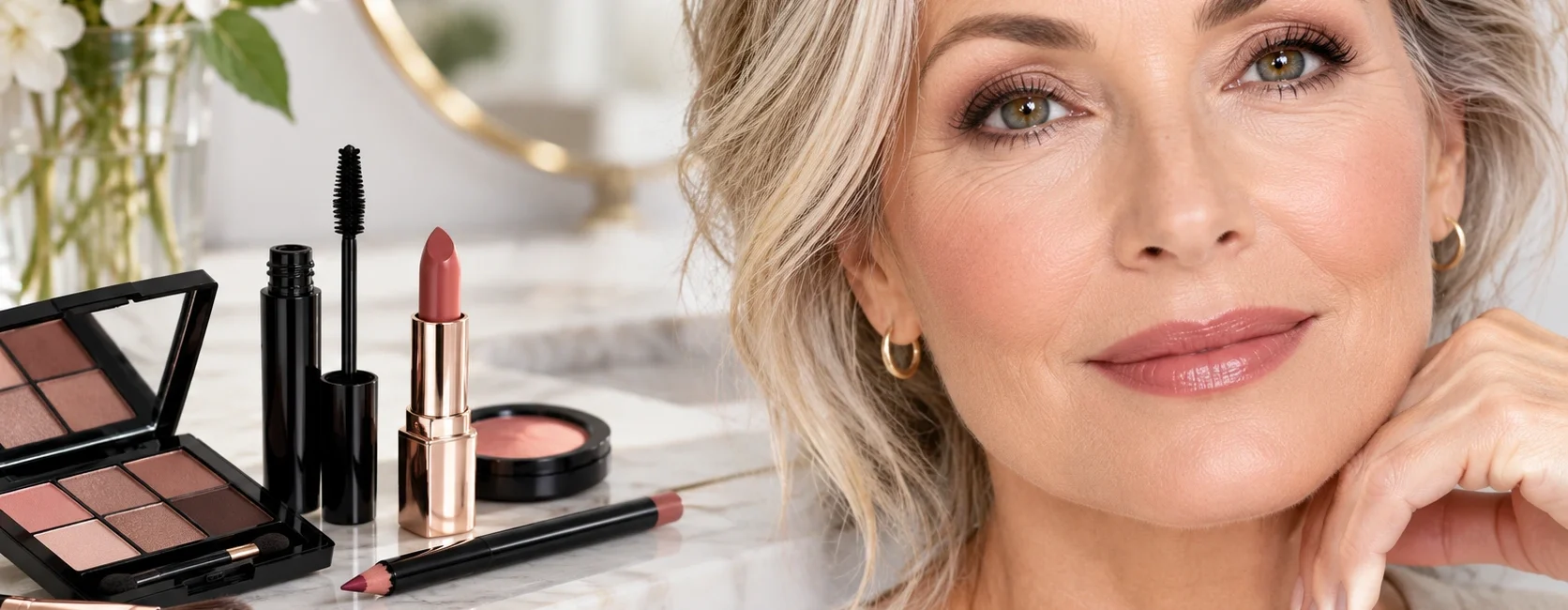
After 50, makeup does not need to become invisible. I still enjoy definition, color and a little polish. What changed was the way I create that definition. Thick lines, very powdery textures and hard edges can dominate the face more quickly than they once did, while small, well-placed details usually look fresher.
The most useful adjustment I have made is to stop treating the eyes and lips as separate projects. They need to balance each other. When both areas are strongly outlined, the result can feel severe. When neither has enough structure, the face can look unfinished. My goal is a soft frame
around the eyes, a clean lip border and enough color to make the whole face look awake without appearing overworked.
Begin With Comfort Rather Than Coverage
Soft makeup starts before color. I apply a light moisturizer and give it time to settle instead of layering makeup over a slippery surface. Around the eyes, I use only what I need because too much cream can make liner and mascara transfer. On the lips, I apply balm early, then blot away
any excess before using pencil or lipstick.
This small pause matters. A dry surface can make pencils skip, but an oily surface can make them travel. Comfortable skin with very little residue gives me the most control. I also keep the base around the eyes and mouth thin. Heavy concealer in fine lines can make even delicate eye and lip
makeup appear heavier.
Create a Soft Frame Around the Eyes
I begin with a neutral shadow close to my natural skin tone. Its job is not to cover every sign of age. It simply reduces tackiness and gives the liner a smoother surface. If I want more shape, I place a muted taupe, soft brown or dusty plum slightly above the natural crease and blend upward rather than pulling the color down at the outer corner.
Eyeliner makes the biggest difference when I use less of it. I keep the line thin through the inner half of the eye and build a little more width toward the outer third. Short strokes are easier to control than one long sweep, especially when the lid is textured or slightly hooded. I press the
pencil close to the lash roots so the lashes look fuller without leaving a thick strip of color above them.
At the outer corner, I follow the direction of the lower lash line for a subtle lift. I do not stretch the skin tightly while drawing because the line can drop or wrinkle when the lid returns to its normal position. My full routine for applying eyeliner on mature eyes explains the placement in more detail, but the essential idea is simple: connect small strokes, keep the inner corner light and soften anything that looks too sharp.
A cotton swab or tiny angled brush is useful for blurring the upper edge before the liner sets. This turns a slightly uneven line into intentional soft definition. I normally avoid a dark, solid line across the lower lashes. A touch of taupe shadow or pencil on the outer third is often enough to balance the top without closing the eye.
Let Mascara Finish the Shape
Mascara should support the liner rather than compete with it. I concentrate the first coat at the roots and comb upward, giving a little extra attention to the outer lashes. This reinforces the lifted direction without requiring a dramatic wing. If the lashes clump, I separate them before the formula dries because clean, visible lash tips keep the eye area looking open.
I rarely need several heavy coats for daytime. One even coat, or a light second coat on the outer lashes, gives enough contrast. Brown-black can be a lovely option when pure black feels too strong, although the best shade still depends on hair color, skin tone and the rest of the makeup.
Restore the Lip Border Without Drawing a Ring
Lip definition becomes more useful when the natural border looks less even or lipstick begins to feather into vertical lines. The answer is not necessarily a darker or harder pencil. I choose a liner close to my natural lip color or the lipstick I plan to wear. Rose, mauve, berry and soft brown often create more believable shape than a pale beige marketed as a universal nude.
I start at the cupid's bow and the center of the lower lip, then connect those guide points with short strokes. Rather than tracing far outside the whole mouth, I correct only the areas that need it. A slightly fuller center can look natural, but a completely new outline is difficult to maintain once the lipstick begins to fade.
Texture matters as much as color. A pencil should glide with light pressure but still create enough resistance to slow down feathering. My guide to the best lip liners for mature lips compares creamy, waterproof and affordable options, but the application technique remains important with every formula. I shade a few millimeters inward so the liner and lipstick overlap instead of forming two separate bands.
After applying lipstick, I tap the meeting point with a fingertip or small lip brush. That softens the edge without erasing the structure. If I am wearing gloss, I keep it mainly in the center. Taking a very fluid product all the way to the border makes migration more likely and can undo the careful
work underneath.
Balance the Strength of the Eyes and Lips
Once both areas are defined, I step back from the mirror. Close-up application can make small gaps seem important, but makeup is seen as a complete face. If the eye makeup is deeper, I usually choose a quieter lip in rose, muted berry or warm pink. If I want a stronger lipstick, I keep
the shadow simple and let fine liner plus mascara provide the eye definition.
This does not mean mature women must avoid bold color. I still wear richer shades when I want them. The difference is that I give one feature the leading role and let the other provide support. A berry lip with softly separated lashes can look modern and confident. A smoky taupe eye with a
creamy neutral lip can do the same.
Blush helps connect the two. I use a small amount of a tone that relates to the lip color and blend it upward across the cheeks. It does not need to match exactly. A shared undertone is enough to make the eyes, cheeks and lips feel intentional rather than assembled from unrelated products.
Keep Touch Ups Light
During the day, I resist the urge to add a full new layer of everything. If liner has transferred, I remove the mark first instead of covering it with more shadow. If lipstick has worn away, I blot, smooth the remaining color and reapply only where needed. Repeated layers can become dry and
uneven, particularly around the mouth.
I carry a cotton swab, a small mirror and the lip product I am wearing. Those three items solve most problems. A clean fingertip can also soften an edge that has become too obvious. The aim is to restore the original balance, not create an entirely new makeup look halfway through the day.
The Most Modern Finish Is the One That Still Looks Like You
Makeup after 50 works best when it respects movement, texture and the features already there. I do not try to draw a perfectly smooth eyelid or a completely new mouth. I use thin liner to strengthen the lashes, a soft pencil to restore the lip border and color that brings life back to the
face.
The finished result should feel polished but comfortable. When I can smile, blink and go through the day without constantly checking for smudges or harsh edges, I know the routine is working. Soft definition is not about wearing less for the sake of age. It is about placing makeup more
thoughtfully so the eyes and lips look