
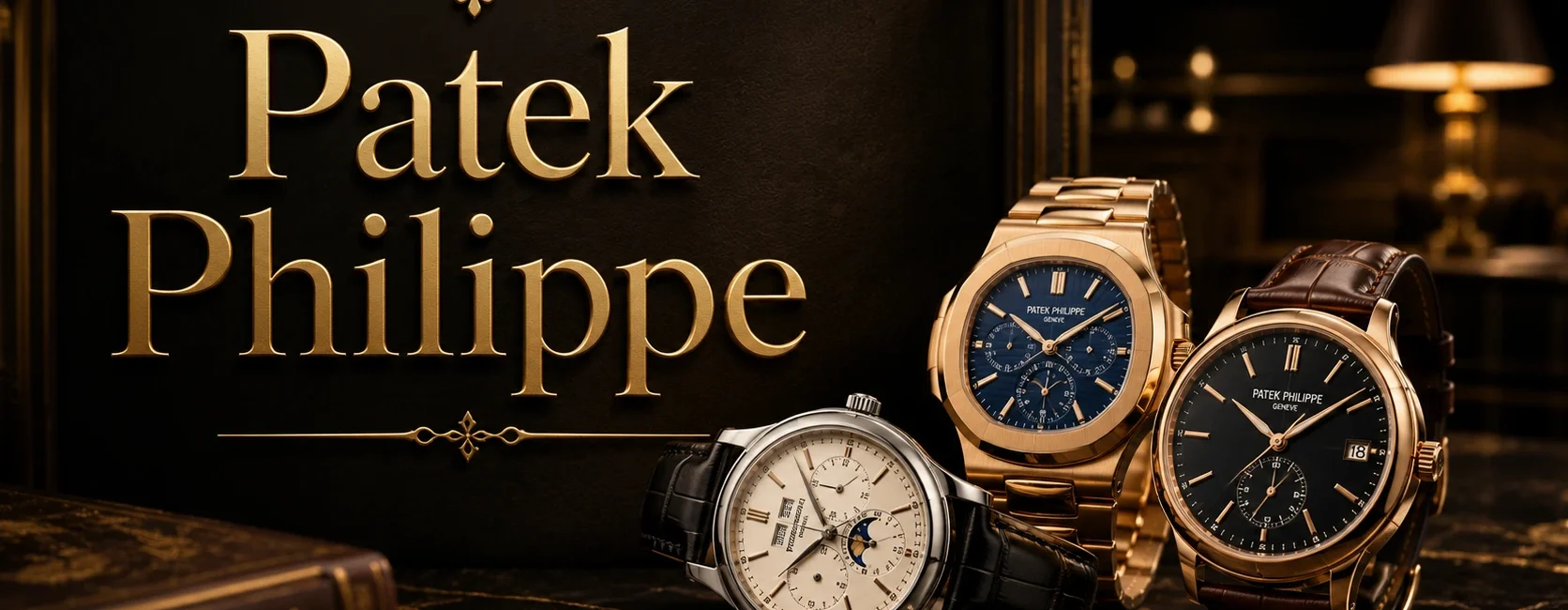
There is a phrase that Patek Philippe has used in its advertising for decades: “You never actually own a Patek Philippe. You merely look after it for the next generation.” It is, on the surface, a marketing line. But look at the secondary market data for 2025 and 2026, the auction records at Christie’s and Sotheby’s, the waitlists at authorized dealers across London and Geneva, and the investment performance against every competing luxury asset class, and what reads like marketing turns out to be a remarkably accurate description of how the brand actually functions in the real world.
Patek Philippe does not merely dominate the luxury watch market. It occupies a position in the broader luxury fashion ecosystem that no other timepiece brand has managed to replicate: simultaneously the most prestigious watch you can wear, the most reliable wearable investment you can make, and the single accessory most likely to communicate genuine taste, wealth, and generational thinking to anyone who notices it on your wrist. This is why Patek Philippe dominates luxury fashion and why that dominance is accelerating, not diminishing, in 2025–2026.
By Rehan Khatri | Fashion & Beauty Writer at RK Fashion Zone.
The Foundation: 186 Years of Uncompromising Independence
Patek Philippe was founded in Geneva in 1839 by Antoni Patek and Adrien Philippe. It has operated for 186 years under a single defining commitment: independence from the conglomerate-owned luxury industry that surrounds it. While the Hans Wilsdorf Foundation owns Rolex, and while LVMH and Richemont control swathes of the luxury watch industry, Patek Philippe has been owned by the Stern family since 1932, when Charles and Jean Stern acquired the brand during the Great Depression and established the family ownership structure that continues to this day.
This independence matters more than it might initially appear. Conglomerate ownership creates pressure for volume, margin management, and brand expansion that frequently compromises the very qualities that made a luxury brand desirable in the first place. Patek Philippe, owned by a family rather than shareholders, can make decisions that prioritise long-term brand equity over short-term revenue, including the deliberate decision to keep production volumes among the lowest of any major watch brand. In 2025, Patek Philippe produced an estimated 72,000 watches, generating approximately CHF 2.5 billion in sales. That is remarkable efficiency per unit, and it is only possible because the brand has never prioritised volume over rarity.
The Holy Trinity: Where Patek Philippe Sits in Watchmaking’s Hierarchy
The luxury watch industry has a well-established internal hierarchy. At its apex sits what collectors and industry professionals call the “Holy Trinity” of Swiss watchmaking: Patek Philippe, Audemars Piguet, and Vacheron Constantin. This designation, which emerged in watchmaking culture in the 1970s, recognises these three brands as standing apart from even the most prestigious of their competitors, distinguished by the depth of their horological complexity, the quality of their finishing, and the prestige of their heritage.
Within the Holy Trinity, Patek Philippe holds the senior position by most measures. Its brand value stands at CHF 1.885 billion, it ranks third among all Swiss luxury watch brands by global recognition (behind Rolex and Cartier), and it consistently outperforms both Audemars Piguet and Vacheron Constantin on the secondary market by meaningful margins. Industry data from 2025 shows Patek Philippe’s pre-owned prices growing at 18% in the first quarter of 2025, outpacing Rolex’s 10% growth over the same period.
In terms of auction dominance, the numbers are extraordinary: nine of the ten most expensive watches ever sold at auction bear the Patek Philippe name. The most expensive single wristwatch ever sold at auction is the Grandmaster Chime Ref. 6300A-010 sold for CHF 31.19 million at Only Watch in 2019. That record has not been broken.
Scarcity as Strategy: The Production Philosophy That Drives Desirability
The foundation of Patek Philippe’s dominance in luxury fashion is deliberate, managed scarcity, and it is the single most important element of the brand’s market position. While Rolex produces an estimated 1,000,000 watches per year, Patek Philippe produces approximately 72,000. That is not a function of manufacturing incapacity. It is a strategic choice.
Keeping production volumes intentionally low creates a natural supply gap that drives value retention. In the current market, this strategy has solidified their position at the top of the collecting pyramid, second only to Rolex in terms of broad market recognition but often exceeding it in high-end value retention.
The practical consequence of this scarcity strategy is visible everywhere in the luxury market. Waitlists for the most coveted Patek Philippe references at authorised dealers, particularly the Nautilus and Aquanaut, extend years into the future. Secondary market premiums on key Patek Philippe references regularly exceed 200–400% of original retail price. The steel Nautilus 5711, which retails at approximately £30,000, has traded on the secondary market for over £100,000. These are not speculative valuations; they are cleared transactions at major auction houses and established pre-owned dealers across London, Geneva, and New York.
The Collections: Which Models Define Patek Philippe’s Fashion Dominance
The Nautilus: The Watch That Redefined Sports Luxury
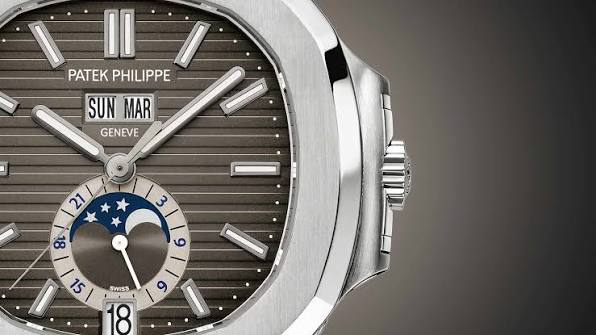
Designed by Gerald Genta and introduced in 1976, the Nautilus is the watch most responsible for Patek Philippe’s current cultural dominance. Its porthole-inspired case, integrated bracelet, and horizontal embossed dial broke every convention of what a luxury watch was supposed to look like and created the “luxury sports watch” category that every major brand has since attempted to occupy.
In 2025–2026, the Nautilus 5811 is expected to show strong appreciation. The Nautilus remains the reference most associated with the intersection of luxury watchmaking and luxury fashion, equally comfortable at black-tie dinners and on private yachts, readable as a style statement by those who know watches and as a serious wealth signal by those who know luxury.
The Calatrava: Classic Elegance Defined
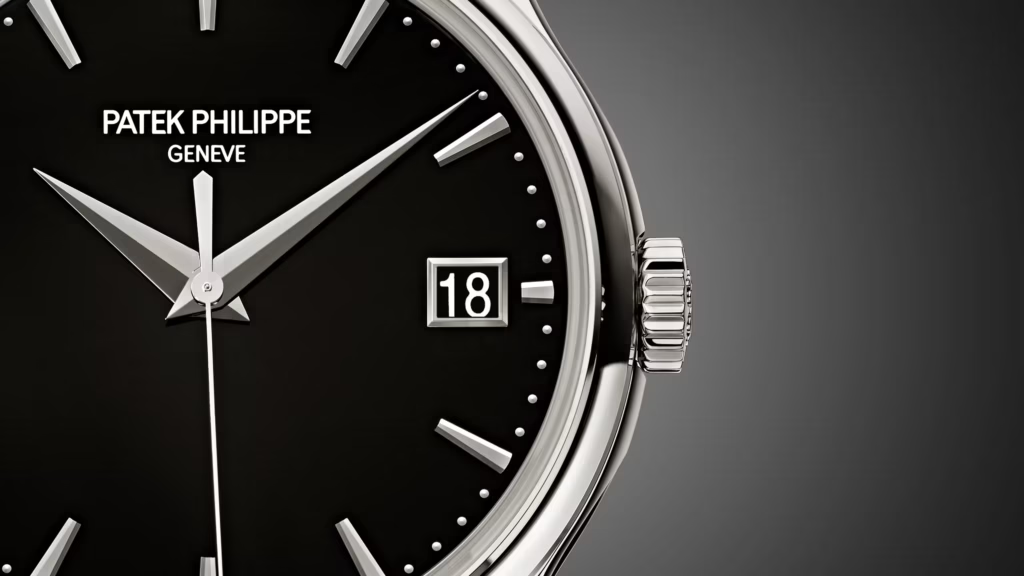
The Calatrava, introduced in 1932, is Patek Philippe’s dress watch: clean, round, minimal, and governed by the golden ratio proportions that have made it a benchmark for the elegant wristwatch since the Art Deco era. It is the watch that watchmakers themselves point to when asked what a perfect dress watch looks like.
In 2025–2026, the Calatrava has become a significant fashion accessory in its own right, worn by a new generation of collectors who want the brand’s heritage without the sports-watch associations of the Nautilus. Its pairing with tailored suits, minimal knitwear, and understated luxury dressing makes it the natural Patek Philippe entry point for those whose personal style runs toward quiet elegance rather than statement-making.
The Grand Complications: Horological Art
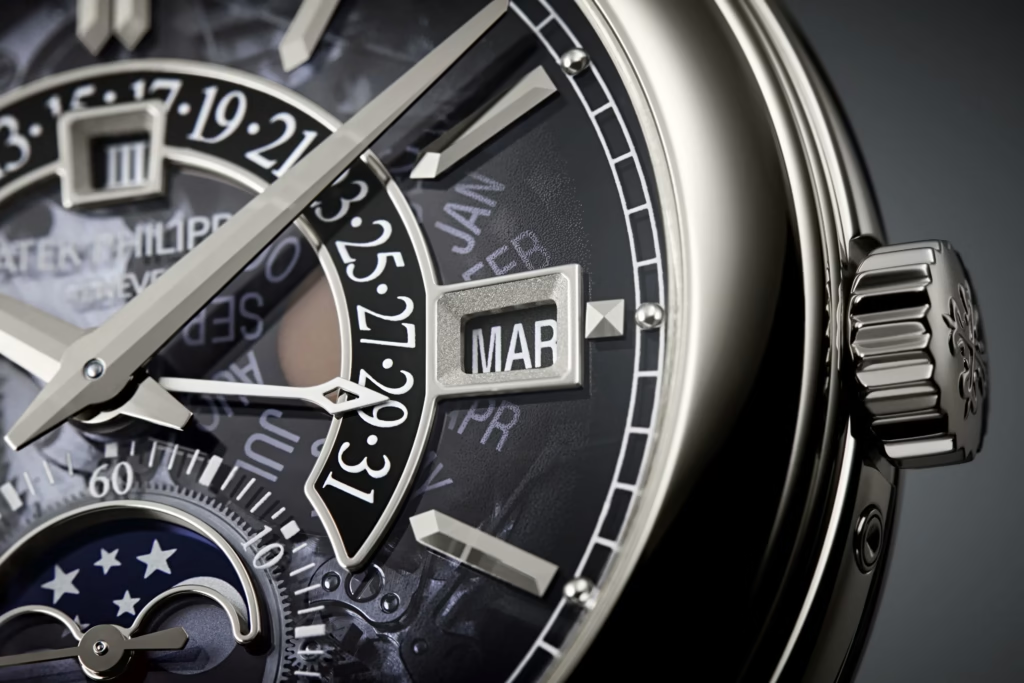
Patek Philippe’s Grand Complications represent the pinnacle of mechanical watchmaking: perpetual calendars, minute repeaters, tourbillons, split-seconds chronographs, and combinations thereof that require years of manufacturing and thousands of individual components. For the collector who values artistic expression as much as horological achievement, the Grand Complications are without peer.
Auction premiums on Grand Complications with full provenance and complete sets routinely achieve six-figure results at Christie’s, Sotheby’s, and Phillips. They are less fashion accessories than they are wearable museum pieces, and their dominance at auction is the single clearest demonstration of why Patek Philippe operates in a category entirely its own.
The Golden Ellipse: The Designer’s Choice
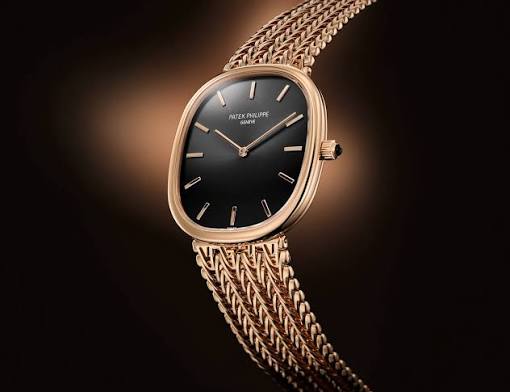
The Golden Ellipse, proportioned according to the mathematical golden ratio, has in 2026 become more relevant than at any point in its history, driven by the broader luxury fashion world’s renewed interest in craft, proportion, and material excellence over trend-driven design. The Ref. 5738/51G-001, featuring a hand-engraved and black enamelled dial, represents the pinnacle of this collection and is among the most fashion-forward pieces in the entire Patek catalogue.
Investment Performance: What the Numbers Say in 2026
Patek Philippe’s dominance of luxury fashion is inseparable from its investment performance because the ability to hold and grow value is part of what luxury fashion at this level actually means. A piece of clothing or a handbag depreciates. A Patek Philippe appreciates.
The data for 2025 and 2026 is clear. Pre-owned Patek Philippe prices grew 18% in Q1 2025. Overall brand market value increased 11.6% despite the brand implementing an 8% retail price reduction in 2026 to adjust for US tariff impacts a reduction that paradoxically strengthened secondary market confidence by demonstrating pricing discipline rather than opportunistic inflation.
Secondary market performance specifically: nine of the ten most expensive watches ever sold at auction are Patek Philippe references. Steel Nautilus references have shown some of the strongest appreciation curves of any luxury watch category over the past decade. Industry data positions Patek Philippe as the “Investment Apex” among luxury watch brands in 2026, second only to Rolex in broad market recognition but often exceeding it in high-end value retention.
For context: a Nautilus purchased at retail a decade ago for approximately £20,000 would be worth over £60,000 on the secondary market today. No other wearable fashion item no handbag, no jewellery, no garment consistently performs at that level.
Patek Philippe and the “Quiet Luxury” Aesthetic
The broader luxury fashion world in 2025–2026 is defined by a movement that fashion editors have termed “quiet luxury” or “old money aesthetic,” a rejection of obvious logos, conspicuous branding, and trend-driven statement pieces in favour of quality, restraint, and the kind of understated confidence that comes from knowing exactly what you have.
Patek Philippe is the horological definition of this aesthetic. The brand’s logo is small. Its designs are not flashy. The most coveted references the Calatrava, the Nautilus in its more minimal expressions, the Golden Ellipse communicate through material and craft rather than through visible branding. A Patek Philippe on the wrist is readable to those who know, invisible to those who don’t, and that selectivity is precisely the point.
This alignment between Patek Philippe’s design philosophy and the dominant luxury fashion aesthetic of 2025–2026 is not accidental. It reflects a consistent brand identity maintained over 186 years that has come into perfect alignment with the current cultural moment, and it explains why the brand’s cultural presence is, if anything, stronger than at any point since the Nautilus was introduced.
The same quiet confidence that a Patek Philippe communicates on the wrist is what the best-dressed people in any room are also expressing through their clothing: minimal accessories, exceptional materials, zero need for validation through visible logos. For more on how this accessory-led approach to luxury style works across a complete wardrobe, our guide to the 10 bracelet types worth building into your collection covers the accessory choices that complement rather than compete with a timepiece at this level. And for those building a complete professional wardrobe around understated luxury accessories, our breakdown of the Calvin Klein black briefcase covers how accessible luxury at the other end of the price spectrum applies the same quiet-confidence principles.
Why No Other Watch brand Has Replicated Patek Philippe’s Position
The question that watch industry insiders ask most frequently about Patek Philippe is: why has no other brand managed to replicate its position genuinely? The answer is a combination of factors that compound rather than add.
Time. 186 years of continuous operation, innovation, and ownership by a single family creates a credibility that cannot be manufactured in a shorter timeframe. Brand heritage at this level is not marketing; it is demonstrated history.
Production discipline. Most brands, under shareholder or conglomerate pressure, eventually increase production to capture more revenue. Patek Philippe has consistently prioritised scarcity over revenue growth, and the secondary market performance is the result.
Auction dominance. Nine of the ten most expensive watches ever sold at auction. This is a self-reinforcing record; each major auction result reinforces the next buyer’s confidence in the brand’s value.
Family ownership. The Stern family’s stewardship removes the quarterly earnings pressure that causes most luxury brands to dilute their positioning eventually. Decisions at Patek Philippe are made for decades, not quarters.
Horological credibility. The depth and quality of Patek Philippe’s in-house complications, many of which require years to assemble, cannot be replicated quickly. It is genuine craft at a level that the luxury fashion industry recognises and rewards.
Final Thoughts: The Watch That Wears Like an Heirloom
Patek Philippe dominates luxury fashion because it operates at the intersection of the three things that luxury fashion at its highest level is actually about: craft, heritage, and investment. It makes things of extraordinary quality. It has done so for 186 years. And the things it makes hold their value better than almost any other wearable object in the world.
The advertising line about never truly owning a Patek Philippe is, in the end, not just a marketing sentiment. It is an accurate description of what happens when you buy one: you acquire an object that will outlast you, likely appreciate during your ownership, and pass to whoever comes next in better condition than it arrived. That is luxury fashion at its most complete expression, and it is why no other watch brand has managed to occupy the same position.

1 Comment
[…] a Loro Piana purchase alongside other investment-grade accessories more broadly, our look at why Patek Philippe dominates luxury fashion conversation covers a similar “quiet but recognized” positioning in the watch category, and our breakdown of […]