Shopping for swimsuits for women means choosing between more styles, cuts, and fabrics than almost any other clothing category one-pieces, bikinis, tankinis, high-waisted bottoms, cut-outs, and everything in between. The right choice comes down to fit, coverage, fabric quality, and how you actually plan to use it, not just what’s trending this season.
What’s Trending in Women’s Swimsuits This Year
Swimwear trends shift seasonally, but a few directions are consistently showing up across current collections:
- One-piece swimsuits are having a real resurgence, moving well beyond the “modest option” category into bold cut-out designs, plunging necklines, and statement prints that compete directly with bikinis for attention.
- High-waisted bottoms remain a mainstay, now frequently paired with more revealing tops (bandeau, triangle, or sport-bra-style) rather than the more conservative pairings of a few years ago mixing higher coverage on the bottom with more exposure on top.
- Bandeau tops are back as a distinct trend, often with removable straps for a strapless look.
- Cut-outs and asymmetrical detailing continue to be a major styling feature on both one-pieces and bikini bottoms, with side cut-outs at the waist being especially common.
- Mix-and-match separates buying top and bottom independently rather than as a matched set have become genuinely mainstream, letting you combine different sizes, support levels, or coverage between top and bottom.
- Recycled and sustainable fabrics, particularly regenerated nylon (branded as ECONYL by several major swimwear manufacturers), are increasingly common in mid-range and premium suits, alongside continued emphasis on chlorine- and UV-resistant finishes.
None of these trends override the basics fit and fabric quality still matter more than chasing a specific silhouette.
Choosing a Swimsuit by Body Type and Priority
There’s no single “correct” swimsuit for a given body type personal preference and what you feel confident in matter more than any style rule. That said, a few general fit principles are worth knowing before you shop:
- If you want extra bust support, look for suits with underwire, molded cups, or wider straps rather than a thin triangle top, and consider sizing swim tops the way you’d size a bra rather than assuming your usual clothing size applies. Our guide to choosing the right bra for your bust size covers fit principles like band and cup sizing that carry over directly to swim tops with built-in support.
- If you’re fuller-busted and want more structure and lift, styles with underwire and wider set straps tend to hold up better through a day of swimming than soft, unstructured tops the same support logic covered in our guide to bras for a fuller bust applies when shopping structured swim tops.
- If you have a smaller bust and want more shape, ruffled, padded, or bandeau-style tops can add visual volume similar to the styling approaches in our guide to swim and bra styles for a smaller chest.
- If tummy coverage is a priority, high-waisted bottoms, ruched fabric panels, and one-pieces with strategic paneling all provide more coverage without necessarily sacrificing style.
- If you’re most focused on tan lines and coverage flexibility, mix-and-match separates or a high-cut bikini let you fine-tune coverage more precisely than a fixed one-piece.
Types of Swimsuits for Women
One-piece swimsuits range from simple, athletic-cut styles built for actual swimming to elaborate cut-out and plunge designs built primarily for style. They generally offer the most core coverage and tend to hold up well for active use, from swimming laps to chasing kids around a pool.
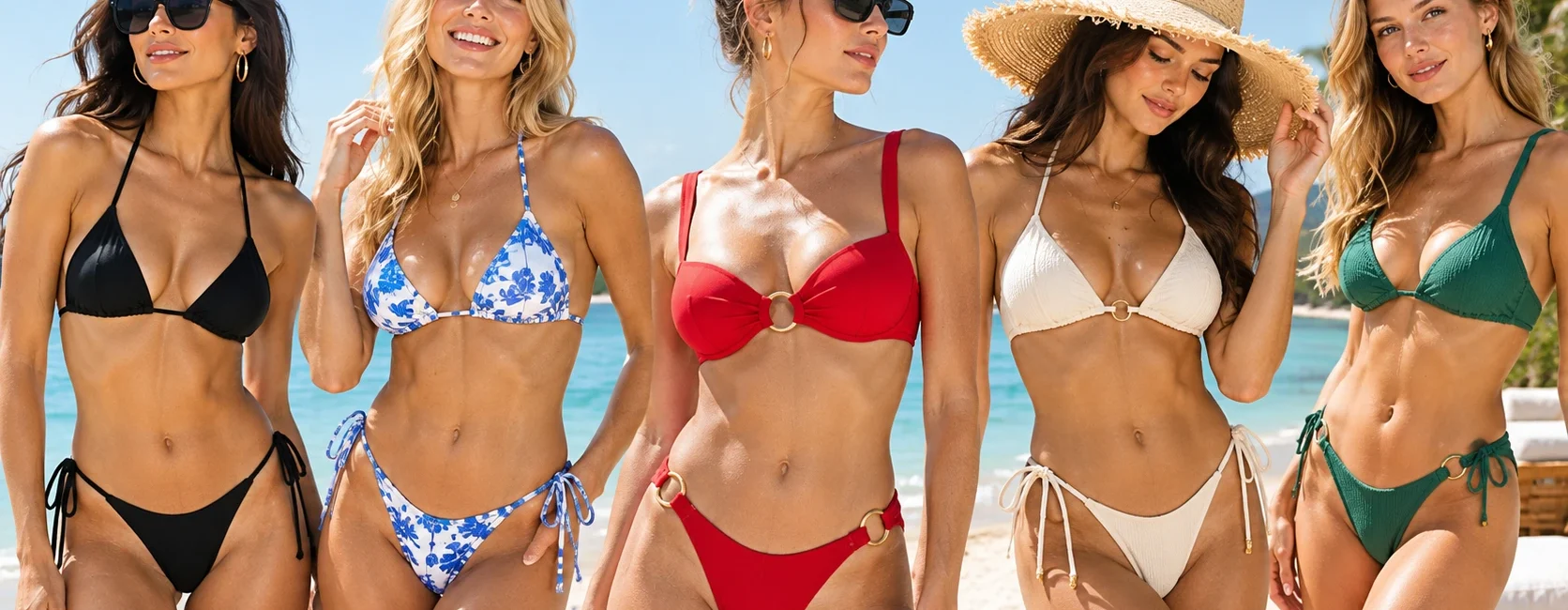
Bikinis span an enormous range of top and bottom combinations. If you’re trying to figure out which specific cut (triangle, bandeau, high-waisted, cheeky, string) actually fits how you want to look and feel, our breakdown of bikini top and bottom styles goes through the full range in detail.
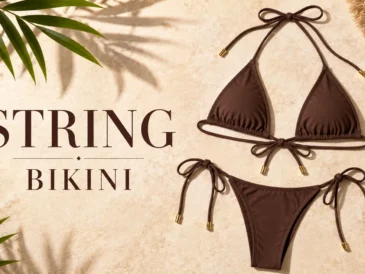
String bikinis are a minimal-coverage style built around thin, tie-adjustable straps rather than fixed bands, offering more customizable fit but generally less support than structured styles our dedicated guide to the string bikini covers when this style works well and how to size it correctly.
High-cut bikini bottoms sit higher on the hip than standard cuts, visually elongating the leg line if this silhouette interests you, our guide to high-cut bikini bottoms walks through fit considerations and how they pair with different top styles.
Tankinis combine a tank-style top with separate bottoms, offering more torso coverage than a bikini while retaining a two-piece’s flexibility and ease of use (especially for bathroom breaks, which matters more than swimwear marketing usually admits).
Monokinis use strategic cut-outs to create a one-piece silhouette with bikini-level skin exposure, landing stylistically between the two categories.
Printed and branded designer swimwear like the retro-inspired prints associated with heritage fashion houses bring a distinct style statement; our look at Pucci-print bikini styling covers how to wear a bold statement print without it overwhelming the rest of your look.
Fabric and Construction: What Actually Matters
Most swimsuits are made from a nylon-spandex or polyester-spandex blend, and the ratio matters more than most shoppers realize. A higher spandex content (typically 18–22%) gives better shape retention and recovery after repeated wear and washing, while a suit with too little spandex will stretch out and lose shape within a season. Polyester-based suits generally resist chlorine degradation and fading better than nylon-based ones, making them a better pick if you’re swimming in a pool regularly rather than primarily lounging poolside or at the beach.
Look for a UPF (Ultraviolet Protection Factor) rating if sun protection is a priority UPF 50+ is common on swimwear specifically marketed for sun protection and blocks a significantly higher percentage of UV rays than an untreated fabric of similar weight. Recycled nylon fabrics (often branded as ECONYL or similar regenerated-fiber names) have become widely available and perform comparably to virgin nylon in terms of durability, so choosing one for sustainability reasons doesn’t require a meaningful performance trade-off.
How to Make a Swimsuit Last Longer
Chlorine, salt water, sunscreen, and sun exposure all degrade swimsuit fabric and elastic over time, but a few habits meaningfully extend a suit’s lifespan:
- Rinse in cool, fresh water immediately after wearing, whether you swam in a pool or the ocean this removes chlorine and salt before they have time to break down the fabric.
- Hand wash rather than machine wash when possible; if you do machine wash, use a mesh laundry bag and cold water on a gentle cycle.
- Never wring out a wet swimsuit gently press out excess water instead, since wringing stretches and damages the fabric and elastic.
- Air dry away from direct sunlight, since UV exposure while wet accelerates color fading and elastic breakdown.
- Rotate between two suits if you swim frequently (like for fitness swimming), since giving elastic fibers time to fully recover between wears extends their lifespan significantly compared to wearing the same suit daily.
- Apply sunscreen before putting on your suit and let it absorb, since certain sunscreen ingredients (particularly oil-based formulas) can stain or degrade swimsuit fabric on contact.
Buying Swimsuits Online: What to Check Before Ordering
- Read the actual size chart for that specific brand rather than assuming your usual size swimwear sizing varies dramatically between brands, more so than most other clothing categories.
- Check the return policy specifically for swimwear, since many retailers have stricter or different return rules for swimsuits than for regular clothing due to hygiene liners.
- Look for fabric content and spandex percentage in the product description, not just the style photos.
- Check for adjustable features (removable straps, tie sides, reversible designs) if you’re unsure about fit, since these give you more room to adjust after the suit arrives.
Frequently Asked Questions
What swimsuit style is most flattering for most body types?
There isn’t a single universally flattering style high-waisted bottoms, structured one-pieces with paneling, and suits with adjustable straps tend to work well across a range of body types because they offer more fit customization than fixed, minimal styles.
How do I know what swimsuit size to buy?
Always check the specific brand’s size chart rather than relying on your regular clothing size, since swimwear sizing varies significantly between brands and often runs differently than everyday apparel.
What fabric is best for a swimsuit that will be worn in a chlorinated pool often?
Polyester-spandex blends generally hold up better against chlorine degradation over repeated wear than nylon-spandex blends, making them a stronger choice for frequent pool use.
Are one-piece swimsuits back in style?
Yes one-piece swimsuits have seen a significant resurgence, now frequently featuring bold cut-outs, plunging necklines, and statement prints rather than being treated purely as a modest or athletic option.
How often should I replace a swimsuit?
There’s no fixed timeline, but once you notice the fabric losing its stretch and recovery, visible fading, or the elastic feeling loose rather than snug, it’s a sign the suit’s structural integrity has broken down and it’s time to replace it.
What’s the difference between a tankini and a monokini?
A tankini is a two-piece suit with a tank-style top and separate bottoms, offering more coverage and two-piece flexibility, while a monokini is a one-piece suit that uses cut-outs to mimic a two-piece’s skin exposure while remaining a single connected garment.