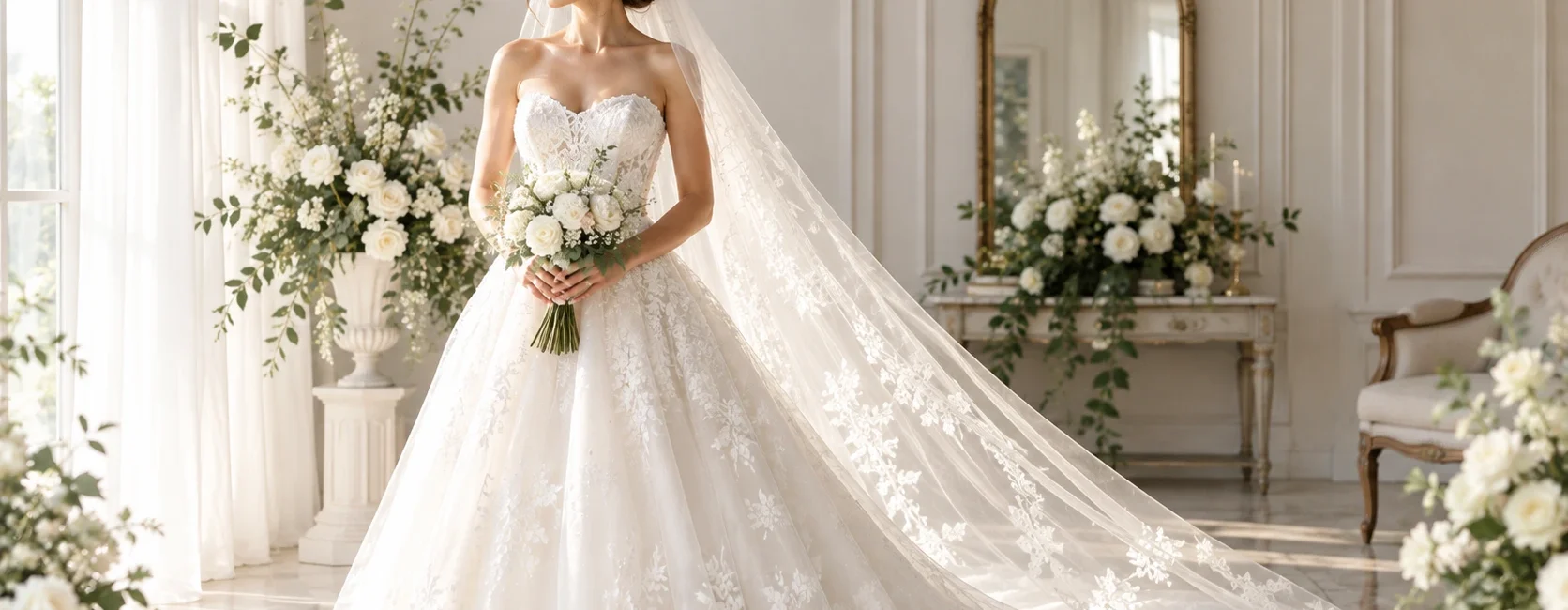
A white bridal dress sounds simple until you start actually shopping for one; then you’re facing dozens of shades of “white,” half a dozen silhouettes, more neckline options than you knew existed, and fabric names you’ve never heard before.
White Isn’t Just White: Understanding Bridal Shades
One of the most common surprises for first-time bridal shoppers is realizing that “white” wedding dresses come in several distinct undertones, and the shade you choose meaningfully affects how the dress looks against your skin tone in photos.
- Pure/diamond white is the brightest, most stark shade, with cool undertones. It photographs crisply but can look harsh against fair or cool-toned skin and tends to be the least commonly stocked shade in bridal boutiques compared to warmer options.
- Ivory has a soft, warm undertone and is the most commonly chosen bridal shade, since it flatters a wide range of skin tones and photographs softly rather than starkly.
- Champagne carries a subtle golden-beige undertone, offering more warmth than ivory, and has become increasingly popular for brides wanting something less traditional-white without shifting into a dramatically different color.
- Candlelight sits between ivory and champagne, with a warm, slightly creamy cast.
If you’re ordering a dress or shopping in person, always ask to see the fabric swatch under natural light rather than boutique lighting, and hold it against your skin (or have a consultant do this for you) before committing; undertone differences that look subtle on a hanger can look very different in daylight wedding photos.
Wedding Dress Silhouettes: Which Shape Fits You
The silhouette is the single biggest factor in how a dress fits and moves, and it matters more than the specific designer or fabric for most brides trying to figure out what will actually look good on them.
- A-line gowns fit closer through the bodice and gradually flare from the waist, creating a universally flattering silhouette that works well across most body types; it’s consistently one of the most popular shapes for exactly that reason.
- Ball gown silhouettes have a fitted bodice and a dramatically full skirt, creating a classic, fairy-tale effect. This shape adds volume below the waist, which can help balance broader shoulders or create more hourglass definition.
- Mermaid and trumpet silhouettes fit closely through the body and flare out at or below the knee, emphasizing curves. If you’re drawn to this dramatic, curve-hugging shape, our deeper breakdown of the mermaid dress silhouette covers fit considerations and how to wear it with confidence.
- Sheath/column gowns fall in a single straight line from top to bottom with minimal flare, favoring a sleek, modern aesthetic. This silhouette has gained renewed popularity in 2026 collections for brides wanting a minimalist, tailored look.
- Basque waist gowns, one of the standout trends this year, feature a bodice that dips into a V or U shape below the natural waistline before the skirt flares out, creating an elongated torso and a flattering hourglass effect that works across multiple body types.
Necklines That Are Actually Trending in 2026
Necklines have become a genuine focal point in current bridal collections, moving well beyond the classic strapless sweetheart:
- Halter necklines emphasize the shoulders and create a streamlined, sophisticated line.
- High necklines, often paired with lace overlays or long sleeves, are making a strong comeback for brides wanting more coverage without sacrificing a modern feel.
- Illusion necklines use sheer fabric to create the appearance of a deep V or plunging cut while maintaining coverage, a popular way to get a dramatic look without it feeling overly revealing.
- Asymmetric and off-center necklines are showing up more in 2026 collections, giving bodices a distinctive, less traditional silhouette.
- Cat-eye necklines, a subtle, pointed variation on the classic sweetheart, are a newer trend for brides who want something familiar with a modern twist.
Fabrics and Textures Defining 2026 Bridal Fashion
Texture has become as important as silhouette in current bridal fashion, with several distinct directions showing up across collections:
- Matte lace (including Chantilly and Alençon lace) is trending over heavily sequined or beaded fabrics, giving a softer, more vintage-romantic feel.
- Crinkle silk and draped satin add movement and a relaxed, fluid quality to simpler silhouettes.
- Pearl embellishment has become one of the most requested detail choices this year, appearing on veils, sleeves, and bodices as a subtler alternative to crystal or sequin embellishment.
- Mikado and chiffon remain popular structural and flowing fabric choices respectively, often combined within the same gown for contrast between a structured bodice and a soft, flowing skirt.
- Detachable elements overskirts, sleeves, and capes are a major practical trend, letting brides wear one dramatic look for the ceremony and a lighter, simpler version for the reception without needing two separate dresses.
Sleeves, Straps, and Coverage Options
Sleeve style has become a genuine design decision rather than an afterthought. Long lace sleeves pair naturally with vintage-inspired and high-neck gowns, while structured cap or puff sleeves suit ball gown and princess-style silhouettes. Strapless remains a classic option and gives the most flexibility for later accessorizing (a jacket, wrap, or detachable sleeves can be added for the ceremony or colder weather), while off-the-shoulder styles offer a middle ground: some coverage and structure without a full sleeve.
Getting the Right Fit and Undergarments
A dress that fits perfectly on the shoulders and bust matters more for overall appearance than almost any other single factor, and most bridal gowns require some combination of professional alterations and the right foundational undergarments to look their best.
- Strapless and backless gowns typically require specialized bras (strapless, adhesive, or backless styles) rather than a standard everyday bra. Our guide to choosing the right bra for your body and outfit covers fit principles that carry over directly when shopping for wedding-specific undergarments.
- Fuller busts often need more structural support built into the gown itself (boning, molded cups) rather than relying on an external bra alone. The same support considerations covered in our guide to bras and support options for a fuller bust are worth discussing with your bridal consultant during fittings.
- Shapewear is common under fitted silhouettes like mermaid, trumpet, and sheath gowns specifically because there’s little fabric volume to camouflage fit issues, so plan for shapewear at your fitting appointments, not just on the wedding day itself, so alterations account for it.
- Book your final fitting close to the wedding date (most bridal salons recommend within a few weeks) so the dress is altered to your body as it will actually be on the day, including any weight fluctuation or undergarment decisions made during the process.
Accessorizing Your White Bridal Dress
Jewelry and accessories should complement rather than compete with your gown’s neckline and detailing. A simpler, less embellished bodice generally has more room for statement jewelry, while a heavily detailed lace or beaded gown often looks best with more minimal accessories so the dress detailing stays the visual focus. Our guide to styling jewelry with an outfit covers general principles balancing proportions, matching metal tones, and not over-accessorizing that apply directly to bridal styling. If you’re deciding on bracelets specifically, our breakdown of bracelet types and styles can help you choose something that won’t compete with sleeve detailing or a fitted bodice.
Bridal Makeup Considerations
Wedding day makeup needs to hold up through hours of photos, potential tears, and long celebration hours, which is a different standard than everyday makeup application. A long-wear, photo-friendly base is worth prioritizing well before the big day so you have time to test how it performs. Our guide to choosing the right foundation covers how to find a formula with the coverage and longevity a wedding day actually demands.
Budgeting and Where to Shop
Bridal gown pricing varies enormously from a few hundred dollars for sample sale or off-the-rack options to several thousand for a custom or designer gown. A few practical budgeting notes: alteration costs are frequently underestimated and can add several hundred dollars on top of the gown price, especially for gowns needing significant structural changes. Sample sales and trunk shows at bridal salons often offer meaningful discounts on current-season styles, and considering a gown from a past season’s collection (rather than the newest arrivals) can reduce cost without sacrificing quality. Start shopping at least six to nine months before the wedding date if possible, since made-to-order gowns often have lead times of several months before alterations even begin.
Caring for and Preserving Your Dress
After the wedding, have the dress professionally cleaned as soon as reasonably possible. Stains from food, drinks, or makeup can set and become significantly harder to remove the longer they sit, even if they’re not visible immediately. Professional wedding dress preservation (as opposed to standard dry cleaning) uses acid-free materials specifically to prevent long-term yellowing and fabric breakdown if you’re planning to keep the gown for years or pass it down.
Frequently Asked Questions
What’s the difference between white and ivory wedding dresses?
White wedding dresses have a bright, cool undertone, while ivory has a soft, warm undertone. Ivory is the more commonly chosen shade because it flatters a wider range of skin tones and photographs less starkly than pure white.
What silhouette is most flattering for most body types?
A-line and basque waist silhouettes are generally considered the most universally flattering, since both create a defined waist and balanced proportions across a range of body shapes.
How far in advance should I buy my wedding dress?
Most bridal experts recommend starting the shopping process six to nine months before the wedding, since made-to-order gowns often require several months of production time before alterations can even begin.
Do I need special undergarments for a wedding dress?
Often, yes. Strapless and backless gowns typically require specialized bras, and fitted silhouettes like mermaid or sheath styles commonly require shapewear, both of which should be brought to fitting appointments so alterations account for them.
What wedding dress trends are popular in 2026?
Current trends include basque and dropped waistlines, high and asymmetric necklines, matte lace and pearl embellishment over heavy sequins, and detachable elements like overskirts and sleeves that let brides create two distinct looks from one gown.
How much does a wedding dress alteration typically cost?
Alteration costs vary widely based on how much structural change is needed, but brides frequently underestimate them. Budgeting a few hundred dollars beyond the gown’s purchase price is a reasonable starting expectation for most fittings.