
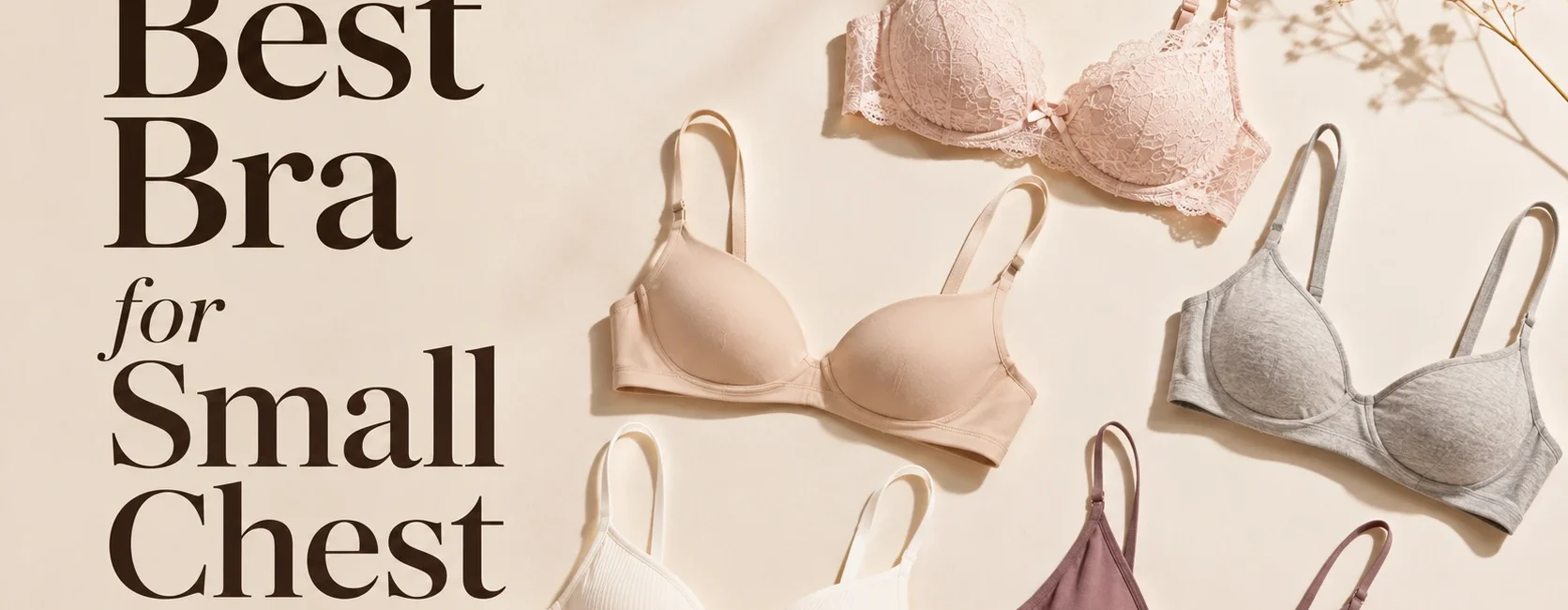
Quick answer: The best bra for small chest are push-up, plunge, and balconette styles, all built to add visible shape and lift rather than cover smaller breast tissue. ThirdLove and Knix are especially strong picks for this size range, since both address the two most common smaller-bust complaints directly: gaping cups and straps that won’t stay adjusted. The single biggest fix, though, usually isn’t a new bra at all. Most people with a smaller chest are wearing a band size too large, and sizing down the band while keeping the same cup volume solves the “no shape” complaint before a style change is even needed.
Shopping for a smaller bust comes with its own specific frustrations that don’t get much attention in general bra-buying advice: cups that gape at the top, straps that slide no matter how tightly they’re adjusted, and bras that promise lift or shape but deliver almost none. None of this means a smaller chest is harder to dress; it means the usual advice (built around fuller-bust support) doesn’t fully apply. This guide covers exactly what does.
By RK Fashion Zone Editorial Team | A dedicated team researching and writing about modern fashion, beauty products, and practical outfit guides.
Why Standard Bra-Fitting Advice Doesn’t Fully Work for Smaller Busts
Most mainstream bra-fitting guidance is written around support and lift for larger cup sizes, where the band’s job is to hold significant weight in place. For a smaller bust, the band and cup are doing a different job entirely: creating shape and structure where there’s naturally less tissue to work with. This is exactly why a smaller-busted person can follow “standard” fitting advice to the letter and still end up with a bra that looks and feels wrong. The goal isn’t the same, so the fit priorities shouldn’t be either.
The Most Common Fit Mistake for Smaller Busts
The single most common issue isn’t cup sizeit’s band size. Many people with a smaller chest size down in cup but never correct the band, ending up in something like a 36A when a properly fitted band would put them in a 32C or 32D with an equivalent cup volume. A band that’s too large:
- Rides up in the back, pulling the cups away from the body at the top
- Forces the straps to compensate for support the band should be providing, causing constant slipping
- Leaves too much space in the cup, creating the “no shape” look often blamed on the bra style rather than the fit
The fix: go down in band size and use sister sizing (explained below) to find the equivalent cup volume in the smaller band. This single adjustment resolves more smaller-bust fit complaints than switching styles or brands ever does.
Best Bra for Small Chest
Push-up bras remain the most effective style for adding visible volume and cleavage. Padding positioned at the base and sides of the cup lifts and centers breast tissue rather than just adding bulk on top, which is what separates a well-made push-up bra from one that looks obviously padded.
Plunge bras are cut with a lower center gore and cups specifically shaped for a smaller bust, giving natural-looking shape under low necklines without the gaping a standard cup often creates at this size. This makes plunge one of the most versatile smaller-bust styles, since it works equally well under everyday tops and going-out necklines.
Balconette bras sit lower across the bust with horizontal cup seams that lift and round out smaller tissue, creating shape under fitted tops and T-shirts specifically. This is often the most flattering everyday style for a smaller chest, since it adds visible structure without looking overtly padded.
Bralettes are a genuinely strong option at this size range in a way they usually aren’t for fuller busts. Less tissue means less structural support is needed, so comfort and style can reasonably take priority over heavy-duty lift a tradeoff that doesn’t hold up as well once cup size increases.
Demi and half-cup bras cover roughly half the breast, creating a rounded, lifted shape that works particularly well under scoop and square necklines, and tends to flatter a smaller bust more naturally than a full-coverage cup does.
Styles to Approach Carefully
Full-coverage bras, while excellent for larger busts, can sometimes make a smaller chest appear even smaller by covering rather than shaping the tissue not a rule, but worth being aware of if shape is your priority.
Minimizer bras are built specifically to reduce visual volume, which is the opposite of what most smaller-busted shoppers are looking for. Skip this category entirely unless a specific outfit calls for it.
Bras with widely spaced underwire designed for a fuller cup shape often gap noticeably on a smaller bust rather than sitting flush against the body, a common cause of the “this bra doesn’t fit right” feeling even when the size label is technically correct.
Best Brands for a Small Chest
ThirdLove is a standout for this size range specifically because of its half-cup sizing system, which closes the gap that standard whole-cup sizing leaves for many smaller-busted shoppers between “too tight” and “too loose.”
Knix focuses on wireless construction with reinforced side panels, giving genuine structure without underwire, a strong pick for anyone who finds wire uncomfortable but still wants shape rather than a fully soft bralette.
Aerie has built a strong reputation specifically among smaller-busted and younger shoppers for its wide range of lightly-lined and push-up bralette styles at an accessible price point.
Cosabella and Cuup both offer well-reviewed plunge and balconette options with sizing that runs true specifically in smaller band-and-cup combinations, where many mainstream brands’ sizing becomes less reliable.
Victoria’s Secret remains a widely available option for classic push-up styles, particularly for anyone who wants maximum shape enhancement for a specific occasion rather than everyday wear.
For a broader look at how these brands perform across every size range, not just smaller busts, our complete guide to the best bra brands ranks the top ten overall.
How to Find Your Actual Size
Before buying anything new, get an accurate band and cup measurement rather than guessing from a previous size or a generic size chart. Sizing varies enough between brands that this step alone prevents most returns and fit disappointments.
Use our free bra size calculator to get your exact band and cup size in under a minute. Measure your band directly under the bust with a soft measuring tape, snug but not tight, and your bust at the fullest point without pulling the tape too tight. The calculator handles the sister-sizing math and gives you a precise starting point to shop from.
Understanding sister sizing matters even more for smaller busts, since the “right” cup volume often shows up in a noticeably smaller band size than most people assume. If a 34A doesn’t seem to fit quite right, a 32B has essentially the same cup volume in a smaller, more supportive band worth trying before assuming the cup size itself is wrong.
Styling Tips for a Smaller Chest
Layering works in your favor. Smaller busts handle layered necklines, structured blazers, and fitted knits without the fit challenges a fuller bust can run into with the same pieces genuinely one of the practical advantages of this body type when it comes to getting dressed.
A well-chosen bralette can double as visible styling, worn intentionally under an open shirt or a lower neckline, rather than something that needs to be fully hidden.
Padding is a styling tool, not a requirement. Whether or not to size up visually with a push-up or lightly padded style is entirely about the look you want for a given outfit, not a fix for anything that needs fixing.
Frequently Asked Questions
What is the best bra for a small chest?
Push-up, plunge, and balconette styles offer the most visible shape and lift for a smaller bust. ThirdLove and Knix are particularly strong brand choices, since both directly address common smaller-bust fit issues like gaping and strap slippage.
Why does my bra gape at the top even though it’s my size?
This is usually a band-size issue, not a cup-size issue. A band that’s too large leaves excess room in the cup. Try sizing down in the band and adjusting the cup with sister sizing before switching styles entirely.
Do push-up bras actually work for a small chest?
Yes. Push-up bras are specifically engineered with padding at the base and sides of the cup to lift and center smaller breast tissue, creating visible volume and cleavage rather than just adding bulk.
Should I avoid full-coverage bras if I have a small chest?
Not necessarily, but full-coverage styles can sometimes minimize rather than enhance a smaller bust’s natural shape. If visible shape is your priority, plunge, push-up, or balconette styles are generally a better starting point.
What band size should I actually be wearing?
Get measured with a free calculator, like our bra size calculator, rather than guessing. Many smaller-busted people are wearing a band size too large, which is the most common cause of a bra that doesn’t create the shape they’re looking for.
Final Thoughts
A smaller chest isn’t harder to dress; it needs different priorities than the fuller-bust fitting advice most bra guides default to. Focus on getting the band size right first, then choose a style built to add shape rather than cover what’s there: push-up, plunge, or balconette are the strongest starting points. Get the fit right, and the style options open up from there.


2 Comments
[…] top line in that case, a demi-cup or lightly padded style may sit more smoothly. Our guide to bra and top styles for a smaller chest covers which silhouettes tend to fit better for that body type […]
[…] Support note: smaller cups still benefit from a proper sports bra for high-impact activity. For styling and fit ideas aimed at this end of the range, see our guide to bra and top styles for a smaller chest. […]