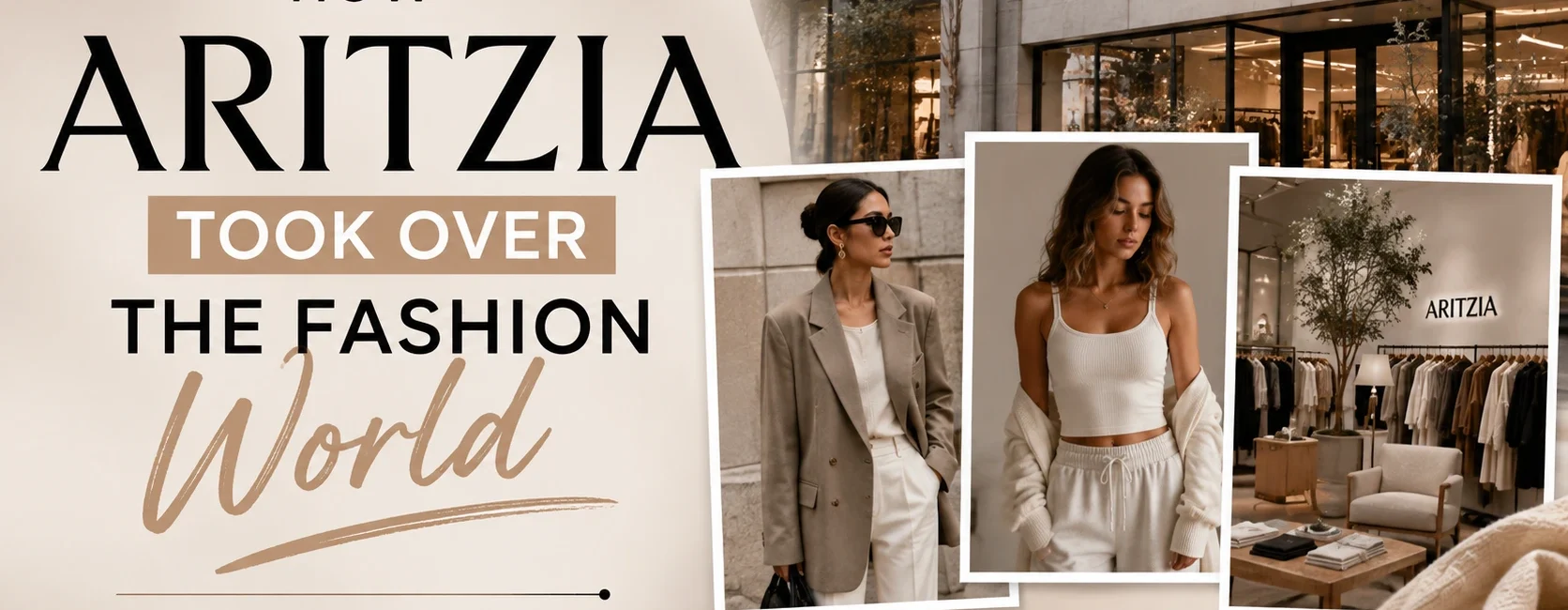
Fifteen years ago, Aritzia was a Vancouver-born boutique chain that most shoppers outside Canada had never heard of. Today, it’s one of the fastest-growing fashion retailers on the planet, closing fiscal 2026 with record net revenue of roughly $3.7 billion a 35% jump over the prior year with the United States now driving the majority of that growth. So how did a quiet Canadian label turn into a global “Everyday Luxury” powerhouse that sells out drops in minutes and has fashion editors, TikTok stylists, and Wall Street analysts all talking about it at once?
By RK Fashion Zone Editorial Team | A dedicated team researching and writing about modern fashion, beauty products, and practical outfit guides.
Quick Stats: Aritzia’s Global Rise at a Glance
| Metric | Figure |
|---|---|
| Fiscal 2026 net revenue | ~$3.7 billion (up 35%) |
| Fiscal 2027 revenue guidance | $4.4B–$4.6B (up 19–24%) |
| Total boutiques (end of FY26) | 144, up from 130 |
| U.S. share of total revenue | 63.7% |
| Digital revenue share | 41.2% of total net revenue |
| App share of e-commerce sales | 20–40% |
| Adjusted EBITDA margin | 18.6% |
| Marketing spend | Low single digits of revenue |
| New-store payback period | 12–18 months |
From a Single Vancouver Store to a Global Fashion Powerhouse
Aritzia was founded in 1984 by Brian Hill, who opened his first boutique with a simple but disciplined idea: curate a small number of exclusive, high-quality brands rather than chase every trend. That instinct quality over noise became the DNA of the company decades later.
For most of its history, Aritzia grew slowly and deliberately across Canada, building a loyal following of women who valued its elevated basics. The real inflection point came when the brand pushed into the United States and leaned hard into two things at once: its own in-house labels and a digital-first customer experience. That combination is what eventually let a mid-sized retailer compete with, and in many categories outpace, giants many times its size.
The Numbers Behind Aritzia’s Explosive Growth
The scale of Aritzia’s turnaround is hard to overstate. The company is now guiding toward net revenue of $4.4 billion to $4.6 billion for the year ahead, representing growth of roughly 19% to 24%, building on a fiscal 2026 that already blew past expectations. Fourth-quarter net revenue alone increased 32.6% to $1.19 billion, with U.S. net revenue climbing 37.8% to $755.3 million now nearly two-thirds of the company’s total business.
Even more telling is where that growth is coming from. In one recent quarter, U.S. net revenue jumped more than 50% year-over-year, while Canadian revenue grew close to 30%. Aritzia isn’t just growing it’s winning America, historically the toughest market for any international apparel brand to crack.
Profitability has climbed in step with revenue. Adjusted EBITDA rose more than 37% to roughly $220 million, and net income increased almost 35%. For a fashion retailer operating in a notoriously thin-margin industry, that kind of leverage is rare and it’s the reason investors and industry analysts now treat Aritzia as a genuine growth story rather than a niche Canadian label.
Strategy: Three Growth Levers, Executed With Precision
CEO Jennifer Wong has been candid about the playbook, describing it as three levers pulled simultaneously: geographic expansion, digital growth, and increased brand awareness. What’s unusual is how disciplined the execution has been on all three fronts at once.
1. Aggressive but Calculated Store Expansion
Aritzia’s real estate strategy reads less like typical retail expansion and more like a private equity thesis. New stores reportedly generate around $10 million in revenue against a $4 million investment, paying back in just 12 to 18 months extraordinary economics in physical retail. That efficiency is why the company keeps opening boutiques even as e-commerce grows. Total boutique count reached 144 by the end of fiscal 2026, up from 130 a year earlier, and leadership has identified room for more than 150 U.S. locations alone, with plans to add 8 to 10 new U.S. boutiques every year.
2. A Digital Engine That Actually Converts
Aritzia’s online business isn’t an afterthought bolted onto physical retail it’s a core growth engine. Digital revenue climbed nearly 30% to $488 million in a single quarter, representing over 41% of total net revenue. Much of that acceleration traces back to one strategic bet: the October 2025 launch of the Aritzia mobile app, which now drives 20% to 40% of total e-commerce sales. App users convert at higher rates and shop more often than desktop visitors a sign Aritzia understood exactly where its customers’ attention was heading before most legacy retailers caught up.
3. brand Awareness Without Blowing the Marketing Budget
Perhaps the most counterintuitive part of Aritzia’s rise is how little it spends to achieve it. The company keeps marketing expenses at a low single-digit percentage of total revenue, relying instead on product-led word of mouth, cultural moments, and viral pieces most famously its outerwear to do the heavy lifting. That efficiency is a big reason margins have expanded even as growth accelerated.
Aritzia has also started using strategic acquisitions to build brand equity in specific markets. Its recent acquisition of the Los Angeles-based Fred Segal brand, including the lease of its landmark Melrose Avenue property, is designed to elevate Aritzia’s presence on the West Coast and tap into the cultural nostalgia surrounding the Fred Segal name a savvy way to buy instant credibility in one of the most fashion-conscious cities in America.
The Product Moments That Made Aritzia a Household Name
Strategy explains the mechanics, but products explain the obsession. Aritzia built a reputation for a handful of pieces that transcended “retail item” status and became cultural shorthand for a certain aesthetic: polished, cozy, effortlessly put-together.
The brand’s puffer outerwear is the clearest example of a single product line reshaping how the world sees a company. If you want the full breakdown of why that particular jacket became an unavoidable street-style staple, our deep dive on the Aritzia Super Puff phenomenon covers exactly how a winter coat turned into a waitlist-worthy status symbol.
Bags have followed a similar arc. Aritzia’s house labels have produced accessories that sell out on restock day, and shoppers hunting for sizing, pricing, and where-to-buy details should check our guide to the Jenni bag, one of the brand’s most talked-about accessory launches.
Why Aritzia’s Aesthetic Resonates Globally
Part of Aritzia’s international pull is that its clothing photographs and lives well across very different climates and cultures. The brand’s oversized knitwear and layering pieces have become a template stylists reference constantly, and shoppers looking to recreate the look often start with our guide on how to style oversized sweaters if you’re petite, since silhouette balance is exactly what makes Aritzia’s fits read as expensive rather than sloppy.
That same oversized-but-elevated formula extends across categories. Readers building a similar wardrobe capsule can also see how the trend plays out in casualwear with our piece on styling oversized hoodies and our roundup of oversized tee outfit ideas, both of which lean on the same proportion tricks that make Aritzia’s own campaigns look so effortless.
Denim is another category where Aritzia’s influence shows up constantly in shopping searches. If warm-toned denim is on your radar this season, our breakdown of the brown jeans trend explains why the shade has become such a staple in elevated-casual wardrobes, and for anyone shopping outside straight sizing, our plus-size jeans styling guide tackles fit and flattery with the same quiet-luxury mindset Aritzia has built its name on.
Even Aritzia’s more playful pieces feed into wider style conversations. Baby tees have had a major resurgence largely because brands like Aritzia made them feel intentional rather than juvenile a shift we cover in why fashion people are all wearing baby tees again. And for shoppers piecing together a full seasonal wardrobe in the Aritzia spirit, our general outfit ideas hub is a useful starting point for building looks around investment pieces rather than fast-fashion basics.
The “Everyday Luxury” Positioning That Beat the Middle Market
Aritzia coined the phrase “Everyday Luxury” to describe its pricing philosophy, and it’s arguably the smartest positioning decision in modern fashion retail. The brand sits deliberately above fast fashion but well below true luxury houses expensive enough to feel aspirational, accessible enough to buy without agonizing.
That middle lane has proven remarkably resilient. While traditional mid-market retailers have struggled against both cheap fast-fashion competitors and resurgent luxury demand, Aritzia carved out space neither side could easily contest. Management has credited “unparalleled demand” for the Everyday Luxury offering for driving comparable sales growth above 30% in recent quarters, with U.S. revenue alone rising more than 50% year-over-year in some periods, proving the positioning isn’t just a marketing line; it’s the engine of the entire growth story.
Aritzia vs. the Competition: Where It Fits
| Brand | Price Tier | Core Strength | Where Aritzia Wins |
|---|---|---|---|
| Zara / H&M | Fast fashion | Speed, low price | Better fabric quality, longer garment life |
| Abercrombie / American Eagle | Mid-market casual | Denim, youth appeal | More elevated styling, “quiet luxury” feel |
| Reformation | Premium contemporary | Sustainability story | Broader size range, wider store footprint |
| True luxury (Chanel, etc.) | High luxury | Prestige, exclusivity | Accessibility no five-figure price tags |
This positioning gap is exactly why the brand keeps showing up at the top of searches for “elevated basics,” “Everyday Luxury fashion,” and “affordable quiet luxury brands” it occupies a category almost no other retailer fully owns.
Navigating Headwinds: Tariffs and Consumer Uncertainty
Aritzia’s rise hasn’t been without turbulence. Company leadership has repeatedly flagged tariff exposure as a real risk to margins in the future, with adjusted EBITDA margin forecasts for fiscal 2027 trimmed to the high teens down from an earlier estimate near 19%, citing expected tariff implications and the removal of the de minimis exemption on low-value imports. Management has also acknowledged the possibility of a broader consumer slowdown later in the year, even while insisting the company is navigating tariff-related developments from a position of strength.
What’s notable is that Aritzia has kept its inventory discipline intact through all of this. Even amid 33% revenue growth in one recent quarter, inventory rose only about 3% year-over-year a sign of tight operational control that should help cushion any softness in consumer spending.
Frequently Asked Questions
Is Aritzia a Canadian or American brand? Aritzia is Canadian, founded in Vancouver in 1984. It has since expanded aggressively into the United States, which now generates the majority of its revenue.
What does “Everyday Luxury” mean at Aritzia? It’s the brand’s own term for its positioning: clothing priced above fast fashion but below true luxury labels, designed to feel elevated and long-lasting without a luxury price tag.
Why did the Aritzia Super Puff become so popular? A mix of genuine product quality, limited seasonal drops, and organic street-style visibility turned the jacket into a viral, waitlist-worthy item rather than a typical winter coat.
Is Aritzia growing faster than other fashion retailers? Yes. Its recent revenue growth rate, in the 20–35% range, significantly outpaces most legacy mid-market apparel retailers, many of which are flat or declining.
Does Aritzia sell internationally, or just in North America? Aritzia operates physical boutiques only in Canada and the U.S., but ships to customers in more than 180 countries through its e-commerce platform.
What’s Next for Aritzia
Having already hit its long-term revenue targets a full year ahead of schedule, Aritzia is now in the rare position of planning its next chapter from a position of strength rather than recovery. Expect continued U.S. boutique expansion, deeper investment in the mobile app experience, and more culturally driven brand plays like the Fred Segal acquisition as the company works to convert American brand awareness into the kind of loyalty it has long enjoyed in Canada.
For a company that started as one boutique in Vancouver, the trajectory is now unmistakably global and if the current growth curve holds, Aritzia won’t just be a fashion retailer people shop from. It will be one of the defining apparel brands of this decade.
Looking to build your own Aritzia-inspired wardrobe? Explore our guides on the Super Puff jacket, the Jenni bag, and our full outfit inspiration library for more elevated-casual styling ideas.