Creating a beautiful fragrance is part science, part creativity. A few drops of the right botanical oils can transform an ordinary homemade candle, massage blend, bath product, or room fragrance into something distinctive. Yet choosing oils that work well together is not simply a matter of combining favourite scents. Their individual aromas, strength, volatility, and intended application all influence the final result.
For beginners, essential oil blending can seem complicated because there are so many plant extracts to explore. Citrus oils smell bright and fresh, floral oils can add softness, and woody or resinous aromas often provide depth. Once you understand how fragrance notes work and how to approach blending systematically, it becomes much easier to develop combinations that smell balanced and suit a particular project.
This guide explains the fundamentals of blending, practical ways to experiment with fragrance, and the safety considerations that matter when using concentrated botanical oils.
What Are Essential Oils and Why Are They Used in DIY Products?
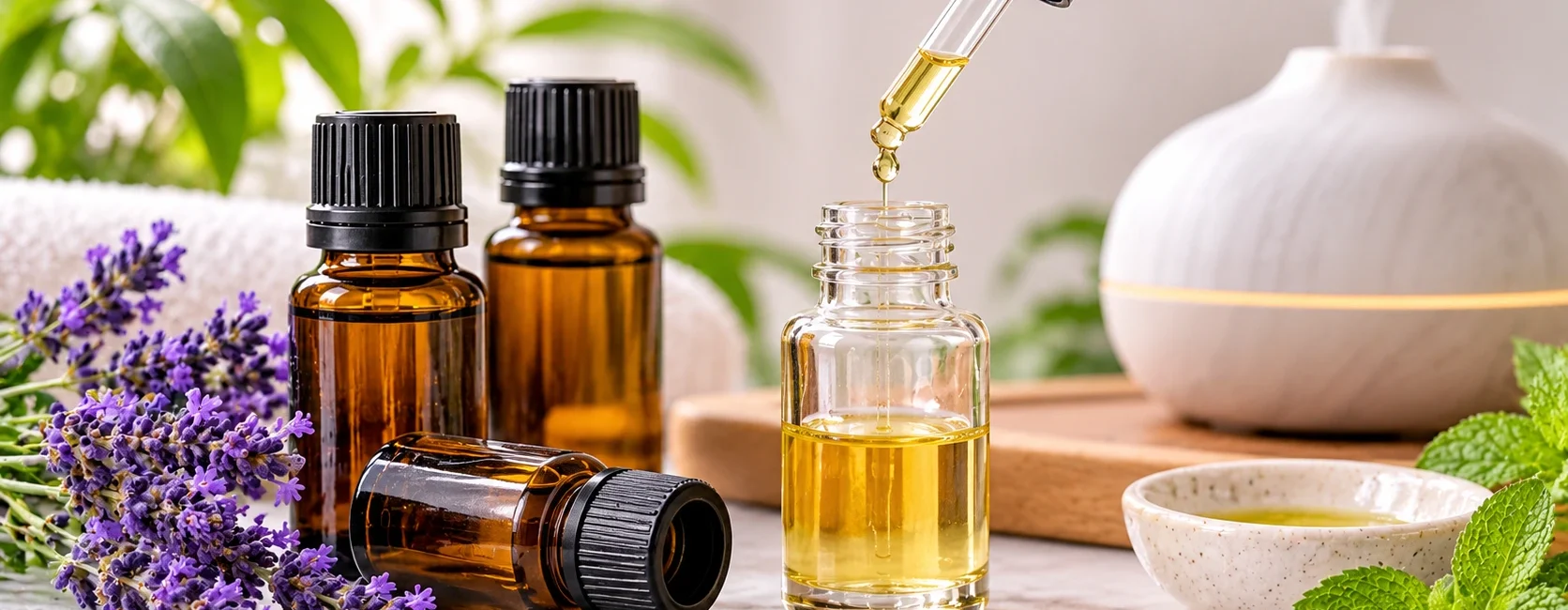
Essential oils are concentrated aromatic extracts obtained from different parts of plants, including flowers, leaves, peels, roots, bark, and seeds. Depending on the botanical material, they may be produced through methods such as steam distillation or mechanical expression.
Each oil has its own characteristic aroma and composition. Lavender, for example, is commonly associated with a floral and herbal scent, while lemon has a bright citrus character and cedarwood offers a warmer, woody aroma. These differences make essential oils useful in a wide range of creative applications.
They are commonly used as fragrance ingredients in:
- Handmade soaps and bath products
- Candles and wax melts, where the chosen oil is suitable for the formulation
- Massage oils and body-care preparations
- Diffuser blends and home fragrance products
- Perfume-inspired personal-care products
- DIY cosmetic formulations
An important distinction is that essential oils are not interchangeable with ordinary fragrance oils. They have different compositions and formulation considerations, so the suitability of an ingredient should always be checked for the specific product being made.
Understanding Fragrance Notes Before Blending
One of the easiest ways to create a balanced fragrance is to understand top, middle, and base notes. These terms describe how different aromatic materials contribute to the overall scent and how their aromas tend to develop over time.
Top notes: The first impression
Top notes are generally the first aromas noticed after a blend is opened or applied. They often have a light, fresh, or bright character and may fade relatively quickly.
Common examples include lemon, sweet orange, grapefruit, and bergamot. These oils can make a fragrance feel lively and inviting, which is why citrus notes are often used to introduce a blend.
Middle notes: The heart of the fragrance
Middle notes help connect the lighter opening aromas with the deeper elements of a composition. They often provide the central character of a fragrance and can become more noticeable as the top notes fade.
Lavender, geranium, rosemary, and clary sage are examples of oils frequently used in this role. Floral and herbal aromas can give a blend a recognisable personality without making it feel too sharp or too heavy.
Base notes: Depth and lasting character
Base notes are typically richer, deeper aromas that can remain noticeable for longer. They help give a fragrance a sense of warmth and structure.
Cedarwood, patchouli, vetiver, and certain resinous materials are often used to create this effect. Even a small contribution from a deep, persistent aroma can change the character of an entire blend.
Not every oil fits neatly into one category, and fragrance development depends on more than note classification. Still, this framework is a useful starting point when planning a new combination.
How to Choose Essential Oils That Work Well Together
The best blends usually have a clear idea behind them. Instead of choosing several unrelated oils, decide what kind of fragrance you want to create and select ingredients that support that direction.
Start with a fragrance family
Fragrance families make it easier to identify combinations that are likely to complement one another.
Citrus: Lemon, sweet orange, bergamot, and grapefruit are often used for fresh, bright compositions.
Floral: Lavender, geranium, and ylang ylang can introduce softer, more rounded aromas.
Herbal: Rosemary, basil, and clary sage bring green, aromatic qualities.
Woody: Cedarwood and similar materials can add warmth and depth.
Earthy and resinous: Patchouli and other deeper aromatic materials can create a more grounded fragrance.
These categories are not strict rules. A citrus oil can work beautifully with a woody note, for instance, while a floral aroma may become more interesting when paired with an earthy ingredient.
Consider the strength of each aroma
Some oils have a powerful scent and can easily dominate a blend. Others are comparatively subtle. Combining equal amounts of every ingredient may therefore produce an unbalanced result.
Begin with small test quantities and add stronger-smelling oils cautiously. Make a note of each adjustment so that a successful blend can be reproduced later.
Keep the first blend simple
Three ingredients are often enough to create an interesting starting point: one bright note, one central aroma, and one deeper note. Once the combination works, you can experiment with additional materials if the project needs more complexity.
Five Essential Oil Combinations to Inspire Your First Blends
The following ideas are fragrance concepts rather than fixed recipes. They can help guide experimentation, but the appropriate amount of each oil depends on the intended application and its safety requirements.
1. Fresh citrus and herbs
A combination built around lemon, sweet orange, and rosemary can create a bright, green fragrance. It may suit a diffuser blend or a suitable home-fragrance formulation.
2. Soft floral blend
Lavender and geranium offer a floral direction with herbal and rosy qualities. A small amount of a suitable woody note can add contrast and make the composition feel more rounded.
3. Warm woody fragrance
Cedarwood paired with patchouli can create a deeper, earthy aroma. This direction may appeal to people who prefer less sweet and less overtly floral fragrances.
4. Fresh botanical blend
Eucalyptus and rosemary can create a crisp, aromatic combination. Because individual oils have different safety considerations, check their suitability for the intended product and user before preparing a blend.
5. Balanced citrus and floral
Bergamot and lavender can provide a fresh opening with a softer floral character. If using bergamot in a leave-on skin product, check its exact variety and phototoxicity guidance; not all bergamot oils have the same suitability for sun-exposed skin applications.
How to Make a Small Essential Oil Blend
Experimenting in small batches helps reduce waste and makes it easier to understand how individual ingredients affect the final aroma.
Start by choosing a clear fragrance direction. Select two or three oils that complement one another, then prepare a small trial blend in a suitable, clean container. Record the ingredients and exact quantities used, rather than relying on memory.
Allow the mixture to settle before making a final judgement. Some fragrances change as their components interact and as the more volatile aromas develop or fade. Smell the blend again after a suitable period and decide whether it needs adjustment.
When you are happy with the fragrance, record the final formula and keep it separate from any finished cosmetic or home-fragrance product. A concentrated aromatic blend is not automatically ready for direct application to the skin.
Essential Oil Safety: What Beginners Need to Know
Essential oils are highly concentrated materials, and using more does not necessarily improve a product. An aroma that seems gentle in a bottle can be irritating when applied to skin at an unsuitable concentration.
A few precautions should guide every project:
- Dilute before topical use: Do not apply concentrated essential oils directly to the skin unless a specific professional safety assessment supports that use.
- Check oil-specific guidance: Safe use levels vary according to the oil, product type, application area, and intended user.
- Patch test cautiously: Test an appropriately diluted preparation on a small area of skin and discontinue use if irritation occurs. A patch test does not guarantee that a reaction will never develop.
- Consider phototoxicity: Certain expressed citrus oils can increase sensitivity to sunlight when used on skin. Check the specific oil and relevant usage restrictions.
- Take extra care around children and pets: Some oils may be unsuitable for particular age groups or animals. Do not assume that a blend safe for one person or setting is safe for another.
- Avoid eyes and sensitive areas: Keep concentrated oils away from the eyes, mucous membranes, and damaged skin.
- Store responsibly: Keep bottles tightly closed, away from heat and direct light, and out of reach of children.
For cosmetic products intended for sale, follow the applicable formulation, safety assessment, labelling, and regulatory requirements. A home blending experiment should not be treated as a commercially validated recipe.
Choosing Quality Ingredients for Better Results
The quality and identity of the ingredients matter just as much as the blending technique. Before buying an oil, check the botanical name, plant part, extraction method, and any available product documentation. These details help distinguish oils that may share a common name but differ in origin or composition.
A reputable supplier should provide clear product information and avoid vague descriptions that make it difficult to understand what is being purchased. Dark glass packaging is commonly used because it helps limit light exposure, while secure closures reduce unnecessary contact with air.
When exploring a wider range of essential oil options, compare the botanical identity and intended uses of each product rather than choosing solely by fragrance description. This is especially important for makers who plan to use the same ingredient across several different formulations.
How Essential Oils Behave in Different DIY Applications
A blend that works well in a diffuser may not be appropriate for a body oil or handmade soap. Every application has its own technical requirements, and the finished product can change the way a fragrance performs.
Soap making
Essential oils are used in handmade soap to add botanical fragrance. However, not every oil behaves identically during soap making. Processing conditions, the soap base, fragrance strength, and the properties of individual oils can affect the finished scent.
Before making a full batch, check the relevant supplier documentation and applicable usage limits. For cold-process soap in particular, small-scale testing can help reveal whether the fragrance remains suitable after curing.
Candle making
Candle formulation requires ingredients that are appropriate for the wax and the intended burning conditions. An oil that smells pleasant in a bottle is not automatically suitable for candle use.
Check supplier guidance for the specific wax and fragrance material, including any recommended usage limits. Test the finished candle rather than judging performance from the unburned wax alone.
Massage and body oils
For skin-contact products, dilution and ingredient suitability are essential. Select a suitable carrier oil, follow oil-specific safety guidance, and consider the needs of the intended user. A fragrance blend should never be added to a body product without checking its permitted concentration and restrictions.
Diffusers and room fragrance
Diffuser formulations depend on the type of device and the manufacturer’s instructions. Use only ingredients recommended for that system, maintain good ventilation, and consider people or animals who may be sensitive to airborne fragrance.
Common Essential Oil Blending Mistakes to Avoid
Even experienced makers sometimes need several attempts to achieve the fragrance they want. Beginners can make the process easier by avoiding a few common errors.
Combining too many oils at once: A large number of ingredients can make a blend difficult to balance. Start with a small selection and build gradually.
Ignoring fragrance strength: A powerful oil can overwhelm delicate aromas. Adjust proportions based on the character of each ingredient rather than using equal quantities automatically.
Skipping formulation research: A fragrance blend suitable for a diffuser may not be safe for skin or suitable for a candle. Always check the intended application.
Failing to record measurements: Without written notes, it can be difficult to reproduce a successful blend. Keep a simple formulation log with ingredient names, botanical identities, quantities, and observations.
Assuming natural means risk-free: Plant-derived ingredients can still cause irritation, allergic reactions, or other unwanted effects. Treat concentrated oils with care.
Frequently Asked Questions
Can you mix different essential oils together?
Yes, different essential oils can be blended to create a more complex fragrance. Choose oils that complement one another, start with small quantities, and check the safety and suitability of the finished blend for its intended use.
How many essential oils should a beginner blend?
Two or three oils are a sensible starting point. A smaller combination makes it easier to understand how each aroma contributes to the overall fragrance.
Do essential oils need to be diluted?
Essential oils generally need to be diluted before topical application because they are concentrated and can irritate the skin. The appropriate dilution depends on the specific oil and the intended product.
Can the same essential oil blend be used in soap and massage oil?
Not automatically. Soap and massage products have different formulation requirements and safety limits. Check the relevant documentation and usage guidance separately for each application.
How should essential oils be stored?
Keep them in tightly closed containers, preferably dark glass, away from direct sunlight and excessive heat. Follow the supplier’s storage and best-before guidance, and pay attention to changes in smell, colour, or consistency.
Are essential oils proven treatments for health conditions?
No general claim that essential oils treat or cure medical conditions should be assumed. Some aromas may be enjoyable as part of a personal relaxation routine, but fragrance experience is different from proven medical effectiveness. Seek qualified medical advice for health concerns.
Final Thoughts
Blending essential oils is a rewarding way to explore fragrance and develop more personalised DIY products. Understanding fragrance notes, choosing compatible ingredients, and experimenting in small batches can help beginners create combinations with greater balance and character.
The most important principle is to match every blend to its intended application. A diffuser mixture, a candle fragrance, a soap formulation, and a skin-contact product all require different considerations. With careful ingredient selection, accurate records, and responsible safety checks, the creative possibilities become much easier to explore.