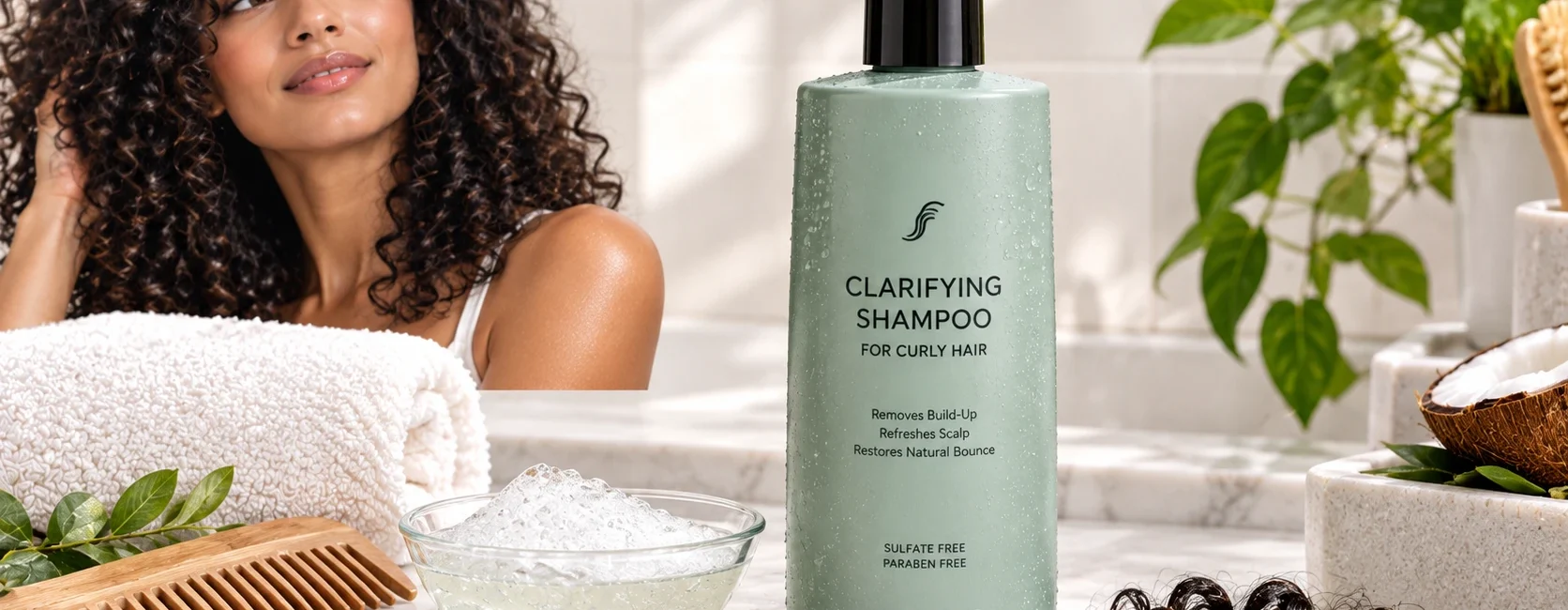
If your curls are falling flat, feel coated no matter how much product you use, or just look dull, the fix usually isn’t a new leave-in or a different gel it’s a clarifying shampoo. Curly hair has a real complicated relationship with clarifying, though: the same buildup-removing power that rescues your curl pattern can also strip the moisture curls depend on if you pick the wrong formula or use it too often. Here’s how to actually choose one, how often to use it, and what to do afterward so you don’t trade buildup for dryness.
By RK Fashion Zone Editorial Team | A dedicated team researching and writing about modern fashion, beauty products, and practical outfit guides.
Why Curly Hair Needs a Different Approach to Clarifying
Curly and coily hair has more exposed cuticle surface area along every bend than straight hair does, which makes it naturally more porous and more prone to both absorbing product and losing moisture. Scalp oil also has a harder time traveling down a coiled strand than a straight one, which is why curly hair often looks and feels drier even when the scalp itself isn’t lacking oil. That combination high porosity, difficult oil distribution, and heavier reliance on styling products (creams, gels, leave-ins, oils) to define curl pattern means curly hair accumulates buildup faster than straight hair but also has less moisture reserve to spare when a harsh clarifying shampoo strips it out. A clarifying shampoo built for curly hair needs to solve the first problem without causing the second.
Chelating vs. Clarifying vs. Sulfate-Free: Know the Difference
This distinction gets blurred constantly in product marketing, and it genuinely matters for curly hair.
Clarifying shampoos are formulated to remove general product buildup, styling residue, and excess oil. Most curly-hair-specific versions use gentler surfactants than a standard drugstore clarifying shampoo.
Chelating shampoos are a specific subcategory designed to bind to and remove mineral deposits the calcium, magnesium, copper, and iron in hard water, along with chlorine residue from pools. If your curls feel coated, dull, or unusually resistant to moisture no matter what you do, and you live somewhere with hard water or swim regularly, a chelating shampoo addresses a problem a standard clarifying shampoo may not fully solve, since mineral buildup is a different chemical problem than product residue.
Sulfate-free clarifying shampoos use milder alternative surfactants (like sodium C14-16 olefin sulfonate or cocamidopropyl betaine) instead of sodium lauryl/laureth sulfate. They clean less aggressively than sulfate formulas, which is generally the right tradeoff for curly hair sulfates are effective at cutting oil and buildup but tend to strip more moisture than curly hair can comfortably spare, and can leave curls frizzier and more prone to irritation with regular use.
The practical takeaway: if your main issue is styling product buildup, a sulfate-free clarifying shampoo is usually enough. If you’re dealing with silicone buildup from non-water-soluble products, mineral deposits from hard water, or chlorine from swimming, you need something with actual chelating agents, not just a gentler surfactant.
Signs You Actually Need to Clarify
- Curls look flat, dull, or lack their usual definition despite using your normal products
- Product isn’t absorbing the way it used to, or hair feels coated/waxy
- Your regular shampoo isn’t lathering the way it normally does
- Scalp feels itchy, flaky, or generally irritated under the buildup
- You’ve recently removed a protective style (braids, twists, locs) and want to fully reset your scalp and hair before starting a new routine
- You swim regularly and haven’t clarified in a while
- You use dry shampoo frequently between washes dry shampoo residue is one of the most common, and most overlooked, causes of curl-flattening buildup. If dry shampoo is a regular part of your routine, our guide to using dry shampoo without weighing curls down covers how to avoid exactly this problem, and our review of K18’s dry shampoo is worth a look if residue and buildup have been a recurring complaint with your current one.
Signs You’re Clarifying Too Often
- Increased frizz and flyaways immediately after washing
- Curls feel noticeably drier, rougher, or more tangled than usual
- Increased breakage or a “straw-like” texture
- Scalp feels tight or dry rather than clean
If you’re seeing these signs, space out your clarifying washes and make sure you’re following every clarifying wash with a genuinely reparative deep conditioning treatment, not just your regular conditioner.
How Often to Clarify Curly Hair
There’s no single correct frequency, and most curly-hair guides oversimplify this into a flat “once a month” rule that doesn’t hold up across different curl types and lifestyles. A more accurate framework:
- Looser waves and curls (2A–2C, 3A) that get oilier faster and use lighter products may benefit from clarifying every 2–3 weeks.
- Defined curls (3B–3C) using moderate styling product typically do well clarifying every 3–4 weeks.
- Coily and tightly coiled hair (4A–4C), which tends to be driest and most protective-style-reliant, often only needs clarifying once every 4–6 weeks, or specifically after removing a protective style.
- Frequent swimmers or people in hard water areas should clarify more often regardless of curl pattern, since mineral and chlorine buildup accumulate independent of your styling routine.
- Heavy dry shampoo users should clarify more frequently than they’d otherwise need to, since dry shampoo residue compounds quickly between washes.
Watch your hair’s actual behavior rather than following a fixed calendar buildup speed depends on product use, activity level, water hardness, and how much your scalp naturally produces oil.
What to Look for in a Clarifying Shampoo for Curly Hair
- Sulfate-free formula as the default choice, reserving stronger sulfate-based clarifying shampoos for occasional, heavy-buildup situations rather than regular use.
- Chelating agents specifically if hard water, chlorine, or silicone buildup is your issue check the ingredient list rather than assuming any “clarifying” label covers this.
- Hydrating ingredients built into the formula glycerin, aloe vera, argan oil, or panthenol help offset the inherently drying nature of any clarifying wash.
- A pH close to your hair’s natural range (mildly acidic, generally cited around 4.5–5.5) rather than a highly alkaline formula, which can leave the cuticle more raised and prone to frizz afterward.
- Fragrance-light or fragrance-free options if your scalp is sensitive or prone to irritation.
Well-known options that fit these criteria and are commonly recommended specifically for curly and coily textures include Pattern Clarifying Shampoo (formulated for curly/coily hair with a lightweight, moisturizing base), Malibu C’s chelating treatments (frequently recommended for swimmers and hard water buildup), and DevaCurl’s low-poo or clarifying purge formulas built specifically around textured hair needs. If you have significant silicone or heavy product buildup and need a stronger occasional reset, a sulfate-based option like Bumble and Bumble’s classic clarifying shampoo can be used sparingly, followed immediately by intensive conditioning.
How to Clarify Curly Hair Correctly
- Detangle before you shampoo, not after clarifying shampoo can leave hair feeling drier and more prone to tangling and breakage if you try to detangle post-wash on already-stripped strands.
- Focus the shampoo on your scalp, not the length of your hair. Most buildup and oil accumulate at the roots; scrubbing clarifying shampoo through your lengths and ends unnecessarily strips moisture from the parts of your hair that need it most.
- Massage gently with fingertips, not nails, to lift buildup without causing friction damage to the cuticle.
- Rinse thoroughly clarifying shampoo residue left behind defeats the purpose and can contribute to the exact dullness you’re trying to fix.
- Follow immediately with a deep conditioning treatment, not just your regular daily conditioner. This step isn’t optional for curly hair our guide to choosing the right deep conditioner covers how to pick one that actually restores what a clarifying wash removes.
- Apply a leave-in afterward while hair is still damp to help lock in the moisture from your deep conditioner before styling. Our roundup of leave-in conditioners worth using breaks down options by hair need.
- Style as usual once fully conditioned clarified hair often takes product more effectively than buildup-covered hair, so you may notice you need less product than usual for your first post-clarifying style.
A Note for Color-Treated or Chemically Processed Curly Hair
Clarifying shampoo, especially sulfate-based versions, can fade color and strip the protective coating some color and chemical treatments rely on. If your curls are color-treated, our guide to hair color ideas and maintenance touches on how different techniques hold up to washing frequency the same logic applies directly to how often and how aggressively you should clarify. When in doubt, choose the gentlest sulfate-free option that still addresses your buildup, and space out clarifying washes further than you would with non-color-treated hair.
Managing Frizz Between Clarifying Washes
Clarifying resets your curls, but the humidity, friction, and moisture-loss issues that cause frizz day-to-day are a separate, ongoing concern. If frizz is a persistent problem beyond just buildup, our full breakdown of how to fix frizzy hair covers the root causes and daily habits that keep curls smooth between wash days.
Frequently Asked Questions
How often should curly hair be clarified?
It depends on curl pattern and lifestyle looser curls with lighter product use may need it every 2–3 weeks, while coily or protective-style-reliant hair often only needs it every 4–6 weeks. Frequent swimmers and hard water areas should clarify more often regardless of curl type.
Is sulfate-free clarifying shampoo actually effective?
Yes, for general product buildup and light oil. It won’t cut through heavy buildup or mineral deposits as aggressively as a sulfate formula, but it’s gentler on curly hair’s moisture balance for regular use.
What’s the difference between a clarifying shampoo and a chelating shampoo?
Clarifying shampoo removes general product residue and oil buildup. Chelating shampoo specifically targets mineral deposits from hard water and chlorine, which a standard clarifying formula may not fully address.
Should I clarify before or after removing a protective style?
After. Clarifying right after taking down braids, twists, or locs helps fully reset your scalp and hair before starting a new routine or protective style.
Do I need to deep condition after clarifying?
Yes, this isn’t optional for curly hair. Clarifying removes moisture along with buildup, and a deep conditioning treatment immediately afterward is what prevents that process from leaving your curls dry or frizzy.
Can clarifying shampoo damage curly hair?
Used appropriately and followed by proper conditioning, no. Overusing a strong sulfate-based clarifying shampoo without adequate follow-up conditioning is what leads to dryness, increased frizz, and breakage over time.