If your eyeliner keeps ending up on your eyelid instead of staying where you drew it, or your wing vanishes the moment you open your eyes, you’re not doing it wrong hooded eyes create two specific physical problems that standard eyeliner advice doesn’t account for. This guide covers both problems directly: why they happen, and the liner types, techniques, and product choices that actually solve them, rather than another generic “apply with eyes open” tip repeated across most hooded-eye tutorials.
The Two Real Problems Hooded Eyes Create for Eyeliner
Problem one: disappearing lines. A line drawn along your lash line or crease with your eyes closed gets physically covered by the fold of skin the moment your eyes open and the hood settles back into place. This is a visibility problem the liner is there, you just can’t see it anymore.
Problem two: transfer and smudging. This is the less-discussed issue, and it’s arguably the bigger daily frustration. Because hooded eyes have reduced lid space, the skin of your eyelid makes direct contact with the skin of your hood every time you blink far more contact than a non-hooded eye experiences, where there’s more visible lid space keeping the two surfaces apart. That repeated skin-to-skin contact is what transfers wet or semi-set liner from your lash line up onto your hood throughout the day, creating that smudged, “melted” look by early afternoon even when your original application was clean.
Almost every hooded-eye liner tutorial addresses problem one (apply with eyes open). Very few properly address problem two, which is exactly why so many people with hooded eyes report their eyeliner “just doesn’t last” even when they’re using a long-wear formula that works fine for everyone else they know.
Choosing the Right Formula of eyeLiner for Hooded Eyes
Formula choice matters more here than for most eye shapes, specifically because of the transfer problem above.
Liquid liner with a fast-set, matte finish is generally the strongest choice for hooded eyes, since it dries down harder and faster than cream or pencil formulas, giving it less time to transfer before it fully sets.
Gel liner applied with a thin angled brush offers excellent control for precise placement, and most gel formulas set to a budge-proof finish once fully dry but “fully dry” is the key phrase, since gel takes longer to set than liquid, leaving a longer transfer-risk window immediately after application.
Pencil liner is the least reliable option for hooded eyes specifically, not because it’s a worse product overall, but because its creamier texture stays soft longer and transfers most readily onto the hood with repeated blinking.
Whichever formula you choose, prioritize one explicitly marketed as waterproof, transfer-resistant, or long-wear over a standard formula this is one of the few eye shapes where that label genuinely changes your day-to-day results rather than being a marginal upgrade. For general technique across any formula, our full eyeliner application guide covers the fundamentals this article builds on.
Techniques That Actually Work for Hooded Eyes
Apply With Your Eyes Open, Checking Periodically
This is the baseline everyone mentions, but the detail that matters is periodically, not just once at the end. Check your line’s visibility with your eyes open every few strokes, not only after you think you’re finished, since it’s much easier to adjust a thin, wrong-height line early than to fix a fully built-up one.
Keep the Line Thinner Through the Inner Two-Thirds
A thick line along the entire lash line reads as heavier and more likely to visually disappear under the hood toward the inner and middle sections of the eye. Keeping it thin through the inner two-thirds and only building thickness toward the outer corner, where there’s typically more visible space even on significantly hooded eyes, keeps more of the line visible overall.
Try Floating the Liner Above Your Natural Line
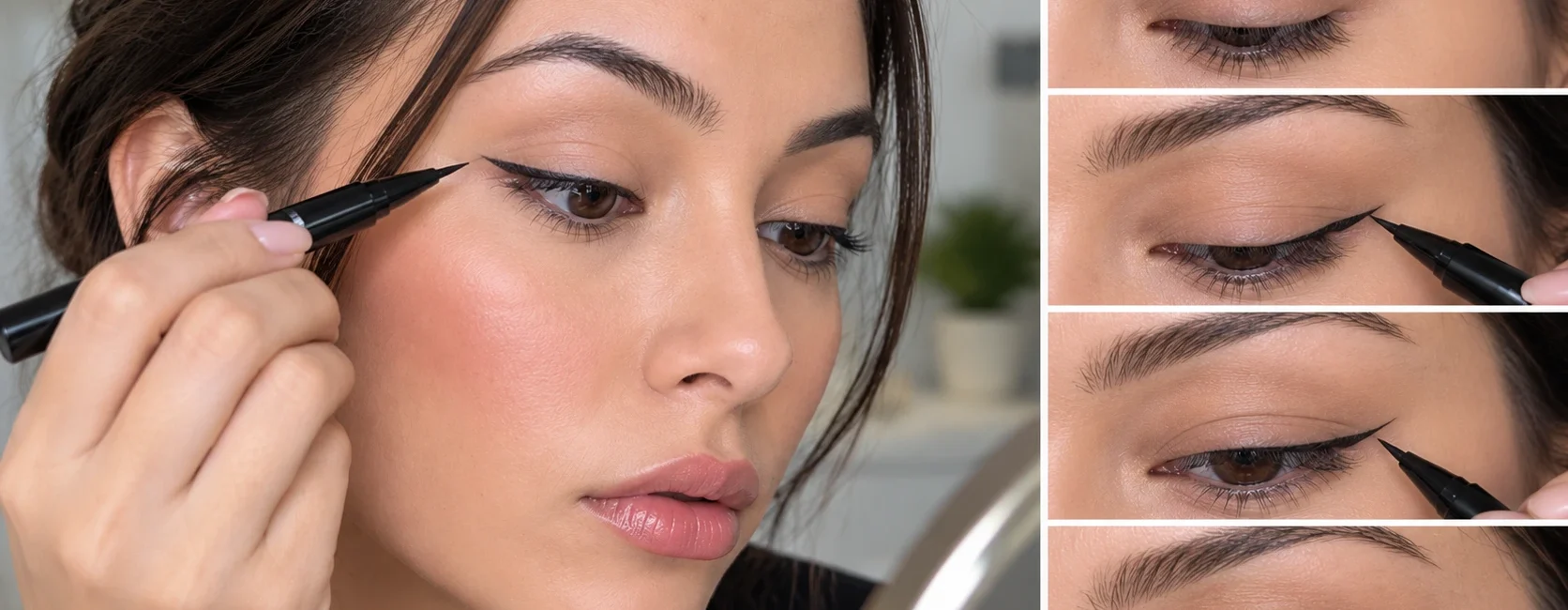
This is the single most useful technique specific to hooded eyes, and it’s underused in general tutorials. Instead of following your natural lash line and crease, draw the line slightly above where your natural crease would sit essentially placing the liner where a non-hooded eye’s visible lid space would be. This creates the visual impression of a lifted, more open eye shape and keeps the entire line visible when your eyes are open, since you’re drawing above the hood’s fold rather than along a line the hood will cover.
Adjust Your Wing’s Angle and Height
A standard wing, angled to follow the lower lash line extended outward, often gets partially or fully absorbed into the hood on eyes with significant hooding. Angling the wing slightly higher than you would on a non-hooded eye, and keeping it a bit shorter than your instinct suggests, tends to keep more of it visible once your eyes settle back into their natural resting position. Build it in stages draw a short guideline first, open your eyes to check visibility, then extend only if it’s still reading as too short.
Consider a Graphic or “Floating” Liner Look Intentionally
Rather than fighting the hood to recreate a traditional wing, a deliberately graphic liner shape a line that floats above the crease with visible negative space between it and the lash line works with the hooded shape instead of against it. This has become a popular, specifically hooded-eye-friendly style precisely because it doesn’t rely on the lash-line-hugging placement that a hood tends to obscure.
Tightline as Your Foundation
Filling in the upper waterline and the gaps between your upper lashes (tightlining) adds definition at the base of your lashes without needing to build a thick visible line that the hood might cover. This works well as a subtle, everyday base, either on its own or underneath a more defined liner shape.
Preventing Transfer and Smudging Throughout the Day
Since transfer is the issue most hooded-eye guides skip, here’s how to actually address it:
- Set liquid or gel liner with a light dusting of matching or translucent powder once it’s dried, using a small brush to pat, not rub, over the line. This meaningfully reduces the tackiness that causes transfer during blinking.
- Apply in thin layers rather than one thick pass. A thick, wet application takes longer to fully set and has more product available to transfer during that window.
- Let each layer dry before adding the next, especially before closing your eyes or touching the area.
- Avoid heavy, oil-based eye creams or primers directly on the lid where liner will sit, since a slick surface underneath liner increases how easily it transfers, even with a good formula.
- Blot gently, don’t rub, if you notice early smudging rubbing spreads product across a larger area of the hood rather than removing it.
Matching Liner Style to Your Level of Hooding
Not all hooded eyes are hooded to the same degree, and your approach should scale with that:
- Mild hooding (a small amount of crease coverage) can generally use a fairly standard liner technique with only slight adjustments thinner through the inner two-thirds, checked with eyes open.
- Moderate hooding benefits most from the floating liner and adjusted wing angle techniques above, since a standard placement will likely partially disappear.
- Significant hooding (minimal to no visible lid space with eyes open) often looks most polished with either a fully floated liner shape, a graphic liner look, or a tightline-only approach for everyday wear, since a traditional lash-line-hugging line and wing have the least visibility on this end of the spectrum.
Common Mistakes to Avoid
- Drawing the entire look with eyes closed and never checking with eyes open until the end by then, a wrong placement means starting over rather than adjusting early.
- Making the wing too long before checking visibility, which usually means removing and redoing it rather than simply shortening in stages.
- Using a soft, creamy pencil for an all-day look without setting it, which is the most common cause of the “why does my eyeliner always end up on my eyelid” complaint specific to hooded eyes.
- Skipping eye-area prep entirely. If under-eye brightening and a fresher overall eye area are part of your goal alongside the liner itself, our guide to concealer application covers technique that pairs naturally with any of the liner styles above for a more finished look.
- Ignoring the crease-vs-hood distinction entirely, which is worth understanding at a deeper level if you’re not fully sure how hooded your eyes actually are our full breakdown of hooded eyes and how to identify them covers the self-check method and clears up the common confusion between hooded eyes, monolids, and downturned eyes before you settle on a liner approach.
Frequently Asked Questions
Why does my eyeliner disappear when I open my eyes?
This happens because a line drawn with your eyes closed, following your natural lash line and crease, gets physically covered by the fold of skin on a hooded eye once your eyes open and the hood settles. Floating the liner slightly above your natural crease, and checking placement with your eyes open throughout application, prevents this.
Why does my eyeliner smudge onto my eyelid on hooded eyes specifically?
Hooded eyes have reduced lid space, which means more skin-to-skin contact between your eyelid and your hood every time you blink. That repeated contact transfers wet or semi-set liner upward, which is why hooded eyes experience more smudging than eye shapes with more visible lid space, even with the same product.
What’s the best eyeliner formula for hooded eyes?
A fast-setting, matte liquid liner generally performs best, since it dries down harder and faster than gel or pencil, reducing the window where transfer can happen. Gel is a solid second choice if applied thinly and given time to fully set.
Should I tightline or use a regular liner line for hooded eyes?
Both work, and they’re not mutually exclusive. Tightlining adds definition without relying on a visible line the hood might cover, making it a reliable everyday base, while a floated or adjusted-wing liner works well for a more defined look.
How do I make a winged liner actually show up on hooded eyes?
Angle the wing slightly higher and keep it shorter than you would on a non-hooded eye, building it in stages and checking visibility with your eyes open before extending it further.
Does waterproof eyeliner actually matter more for hooded eyes?
Yes, more than for most eye shapes. Because hooded eyes transfer product through blinking-related skin contact rather than just heat or oil, a genuinely transfer-resistant or waterproof formula makes a more noticeable practical difference here than it does for eyes with more visible lid space.