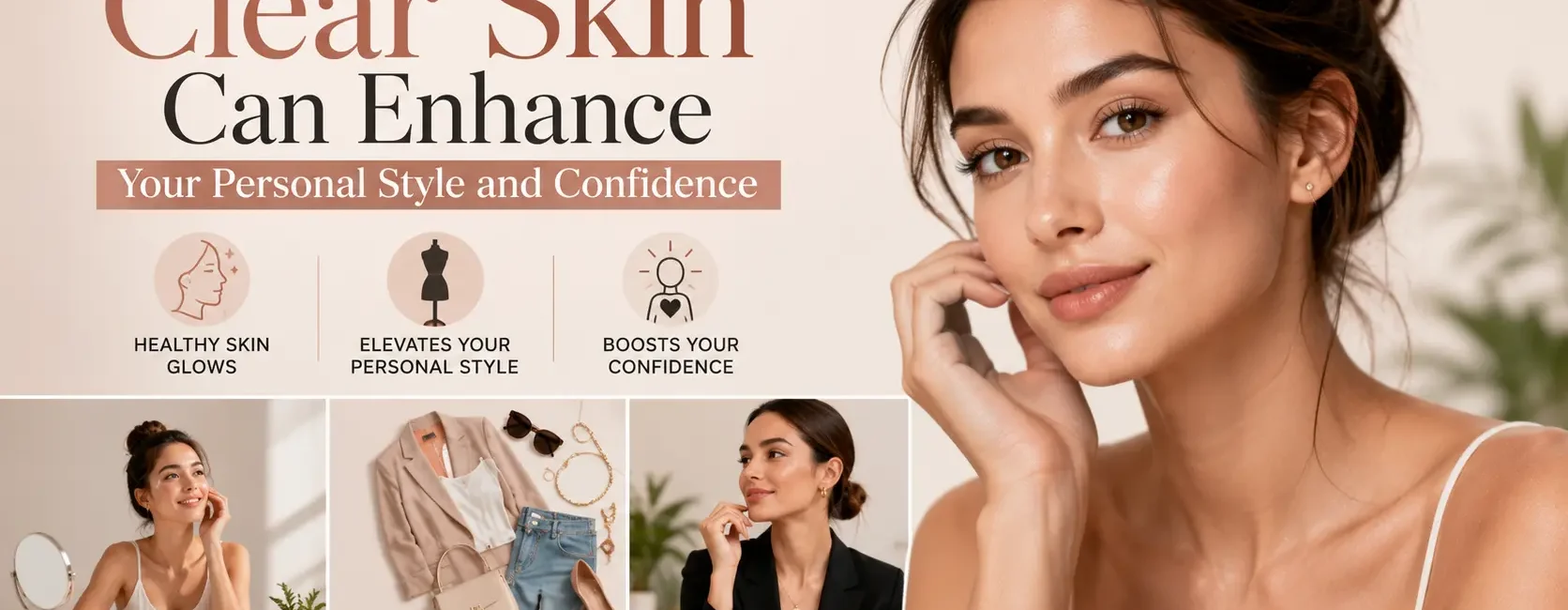
The relationship between clear skin, personal style, and self-confidence runs deeper than aesthetics. It’s psychological, social, and profoundly practical. When your skin is clear, you move through the world differently: you make bolder fashion choices, you wear fewer layers of concealing makeup, you stand a little straighter. And when it isn’t, the effect often runs in the opposite direction: you dress to hide, you pull back from statement pieces, you avoid the colors and silhouettes you’d otherwise reach for.
By Rehan Khatri | Fashion & Beauty Writer at RK Fashion Zone.
This isn’t vanity. It’s well-documented. And in2026, with the skincare industry valued at over $180 billion globally and consumer investment in skin health at an all-time high, the connection between skin clarity and personal confidence has never been more openly acknowledged by dermatologists, by fashion editors, and by the millions of people who have experienced the shift firsthand.
The Psychology Is Real: What Research Says
The impact of skin concerns on self-confidence and social behavior is one of the most consistently documented findings in dermatological psychology. Studies show that acne sufferers experience significantly higher rates of anxiety, social withdrawal, and reduced self-esteem compared to those without skin concerns, not because of vanity, but because the face is our primary social signal. It’s the first thing people look at in every interaction.
A 2024 review published in the Journal of Investigative Dermatology found that patients who achieved significant acne clearance reported not only improved self-esteem but measurable improvements in quality of life, social functioning, and willingness to engage in activities they had previously avoided. These weren’t minor improvements; the magnitude of psychological change was comparable to improvements seen in other chronic conditions treated in the same timeframe.
What this means practically: the link between clearer skin and greater confidence isn’t perception. It’s a documented, real-world effect that manifests in how people dress, how they carry themselves, and how willing they are to stand out rather than blend in.
Clear Skin and Fashion Choices: The Direct Connection
The most immediate way clear skin affects personal style is in what you’re willing to wear. When skin concerns are active acne flares, redness, or texture, many people unconsciously (or very consciously) shift toward clothing and makeup choices that minimize attention to their face. High necklines, darker colors, fuller coverage clothing. Not because those aren’t valid style choices, but because they’re being made from a place of concealment rather than expression.
Clearer skin enables the opposite dynamic: choices made from expansion rather than restriction. Specifically:
Color and pattern freedom. Light and pastel colors soft pinks, pale yellows, whites, lavenders genuinely do show more contrast against the face than deeper, darker tones. People with active skin concerns often avoid these shades specifically because they draw more attention upward. Clearer skin removes that mental barrier entirely.
Accessory confidence. Statement earrings, face-framing necklaces, bold headwear all of these draw attention to the face and neck. When someone is self-conscious about their skin, they frequently avoid accessories that pull the eye toward that area. A clearer complexion makes bold, face-adjacent accessories feel inviting rather than anxiety-inducing.
Makeup freedom. Counterintuitively, clearer skin means less makeup, not more. Those with clearer complexions consistently report wearing lighter coverage, spending less time on base makeup, and feeling more comfortable going bare-faced. This freedom the ability to choose your coverage level rather than being bound to it is its own form of style autonomy.
For fresh styling inspiration that works across every makeup level from full-glam to bare-faced, our collection of easy outfit ideas shows how the right clothing choices carry a look regardless of how much makeup you’re wearing.
The Skincare Routine as a Style Ritual
There’s a reason skincare has become a central part of the self-expression conversation in 2025, and it goes beyond product efficacy. A skincare routine is, at its core, a daily act of self-investment. The discipline and self-awareness required to maintain one consistently translates directly into other areas of personal presentation, including style.
The global “skinimalism” trend minimalist, skin-first beauty where the quality of your skin becomes the beauty look itself has fundamentally shifted how fashion and beauty intersect. Where heavy foundation coverage was once the baseline expectation for a “put-together” look, 2025’s standard is increasingly glowing, healthy skin with minimal or no base makeup. This shift puts skin health at the direct center of personal style in a way it never has before.
Korean beauty philosophy, particularly the skin-first approach that has driven 300%+ growth in K-beauty brands in the US market since 2020, has popularized the idea that the best makeup look starts with a skincare routine, not a foundation brush. Products like the Beauty of Joseon Glow Serum, which built its following on delivering visible results in skin clarity and texture, represent this philosophy at its most accessible. Our complete review of the Beauty of Joseon Glow Serum breaks down exactly how this propolis and niacinamide formula approaches the same goals: improving clarity, texture, and radiance that support both skincare confidence and style freedom.
Social Perception and the Halo Effect
Psychology has documented a phenomenon called the “halo effect” when one positive physical attribute (like clear skin) causes observers to infer other positive qualities. Studies consistently show that people with clearer skin are perceived as healthier, more competent, and more socially appealing, independent of other physical attributes.
This isn’t a judgment call; it’s a documented cognitive bias that affects professional interactions, first impressions, and social connections. For many people, understanding this dynamic isn’t about changing themselves to meet an external standard. It’s about recognizing that investing in skin health is investing in the full range of social and professional interactions that their confidence affects.
The halo effect also operates internally. When you know you look healthy when your skin feels calm, hydrated, and clear, you project that perception outward. You make eye contact more easily, you speak more confidently in social situations, and you’re more willing to put yourself forward in contexts you might otherwise avoid.
Practical Steps: Building Clear Skin Habits That Support Your Style
The most evidence-backed skincare approach for improving clarity and skin confidence in 2025 combines four core practices:
1. Consistent cleansing. Double cleansing a first cleanse with an oil-based cleanser to remove SPF, makeup, and sebum, followed by a water-based cleanser is the most consistently dermatologist-recommended approach for maintaining clear pores and even skin texture. It’s also the single most impactful change most people can make to their current routine.
2. Active ingredients with genuine evidence. Niacinamide (for pore refinement and sebum control), azelaic acid (for redness and post-breakout marks), and retinoids (for cell turnover and texture) are the three most evidence-backed topical actives for skin clarity. Any skincare routine targeting clear skin should include at least one of these consistently.
3. SPF every single day. Sun damage is the number one accelerant of uneven skin tone, hyperpigmentation, and premature aging, all of which affect perceived skin quality more than almost any other single factor. A daily SPF 30+ as the last step of your morning routine is the most impactful anti-aging and clarity-preserving habit available.
4. Patience and consistency. The most common reason skincare routines fail is switching products before they’ve had time to work. Most active skincare ingredients require 8 to 12 weeks of consistent use before delivering their full visible effect. Consistency is the entire strategy; the specific product matters far less than using it regularly.
When Professional Help Matters
For persistent, moderate-to-severe skin concerns cystic acne, severe rosacea, hormonal breakouts, significant hyperpigmentation at-home skincare has real limitations. Board-certified dermatologists have access to prescription treatments and clinical procedures that over-the-counter products cannot replicate: oral medications, prescription topicals, clinical chemical peels, laser treatments, and light therapies that address root causes rather than surface symptoms.
If your skin concerns have persisted through multiple seasons of consistent skincare without meaningful improvement, a dermatology consultation is the most efficient next step, not because the products have failed, but because some skin conditions require medical intervention that consumer products aren’t designed to provide. The confidence and style impact of successfully treating a persistent skin condition through professional channels is consistently described as transformative by those who experience it.
The Bigger Picture: Skin as Self-Expression
Perhaps the most important reframe for the clear skin and confidence conversation in 2025 is this: the goal isn’t perfection. Clear skin is not a realistic or necessary standard, and the fashion and beauty industry has increasingly moved away from promoting that idea. The skinimalism trend, the rise of body-positive beauty content, and the growing mainstream acceptance of showing “real skin” in campaigns and editorial work all reflect a cultural shift toward authenticity.
What clear skin enables and what the pursuit of healthy skin supports is not flawlessness. It’s the feeling of being comfortable enough in your skin to make choices from a place of genuine self-expression rather than concealment. That distinction matters enormously.
When you feel good in your skin, you wear the dress that shows your arms. You try the bold lip color you’ve been avoiding. You leave the house without three layers of coverage and feel entirely okay about it. These are small moments of style freedom, but cumulated over time, they represent a significantly more expressive, more confident, more authentically styled version of yourself.
That’s the real connection between clear skin and personal style. Not that clear skin makes you more beautiful, but that healthy skin makes you more comfortable expressing who you already are.