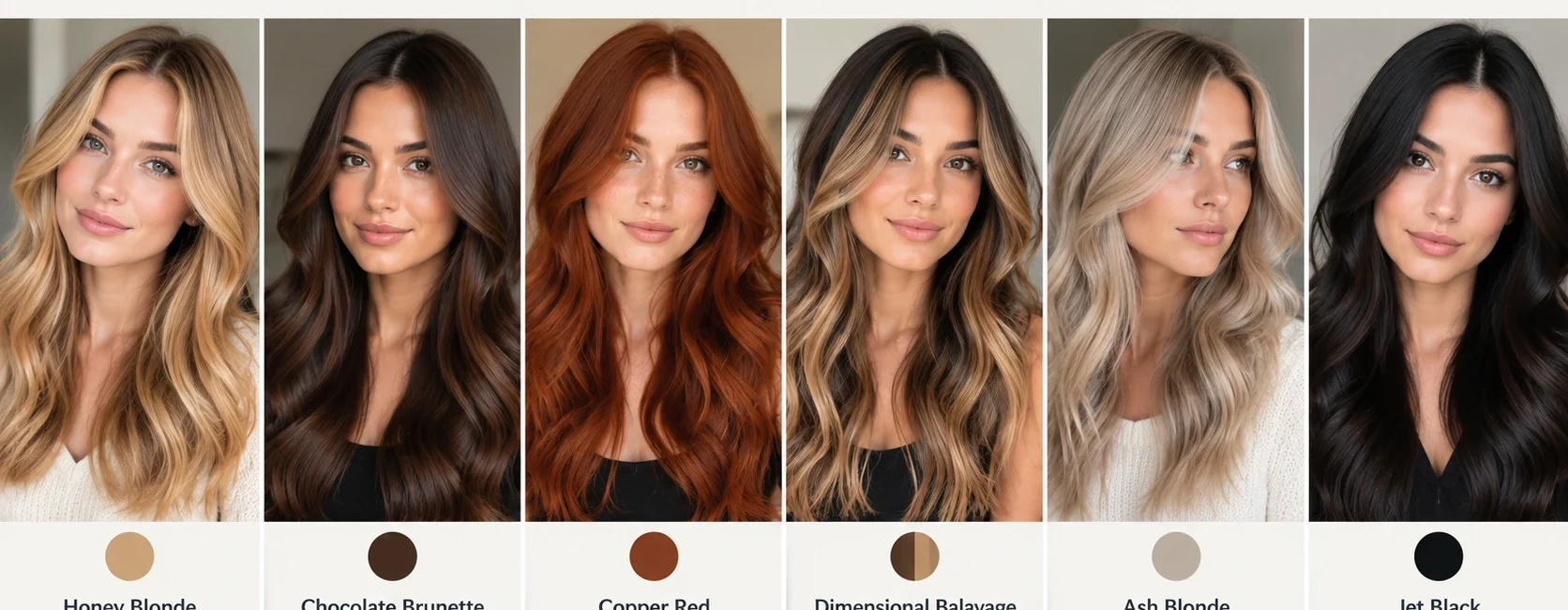
Good hair color ideas rarely come from a single photo; they come from knowing which color family, technique, and placement actually fit your hair, your undertone, and how much upkeep you’re willing to commit to. This guide is organized so you can browse by whatever matters most to you: color, technique, length, texture, season, or maintenance level, then bring whichever combination speaks to you into your next colorist consultation.
Blonde Hair Color Ideas
Blonde covers more ground than any other color family, from barely-there sun-kissed pieces to full platinum transformations.
- Honey blonde leans warm and golden, with a rich, syrupy depth that reads as sunny without being brassy.
- Butter blonde is soft and creamy, slightly more muted than honey, and tends to look natural even at full-head application.
- Golden blonde sits between honey and butter with more vibrancy, often used to brighten up mousy or dull natural blonde.
- Beige blonde mutes the gold with a cooler, sandy undertone, a popular choice for anyone who finds warm blondes too yellow-toned.
- Ash blonde strips out warmth almost entirely for a cool, smoky finish.
- Platinum blonde is the lightest, boldest version, requiring the most lift from most natural colors and the most upkeep to maintain.
- Strawberry blonde blends blonde with a soft red undertone for a warm, rosy-gold effect.
- Champagne blonde combines pale blonde with subtle beige and gold undercurrents for a soft, luminous finish.
- Dirty blonde keeps a natural, slightly muted tone that mimics how blonde hair often looks without color treatment.
- Bronde blends blonde and brunette in the same head of hair, usually through highlights or balayage, for dimension without a full commitment to either extreme.
Brunette Hair Color Ideas
Brunette shades have become one of the most requested categories in recent seasons, particularly glossy, high-shine finishes rather than flat, one-dimensional brown.
- Chocolate brown is a rich, warm mid-to-dark brown with a smooth, glossy finish.
- Espresso brown goes darker and more intense, often described in current trend coverage as having a glass-like shine when done well.
- Mocha brown sits in the middle, warm but not as deep as espresso.
- Caramel brown introduces lighter, golden pieces throughout a brown base for natural-looking dimension.
- Chestnut brown has a reddish undertone that adds warmth without moving fully into auburn territory.
- Mushroom brown is a cooler, slightly ashy brown with grey-beige undertones, popular for a soft, muted look.
- Warm brunette broadly describes any brown with gold, red, or caramel undertones rather than ash.
- Rich dark brown stays close to a natural near-black brown but with more visible tonal depth in the light.
Red Hair Color Ideas
Red has had a strong resurgence, with recent beauty coverage noting increased interest in red-family tones over classic blonde.
- Copper is a bright, warm orange-red, one of the more attention-grabbing shades in this family.
- Soft copper mutes the intensity slightly for a wearable, everyday version of the same warmth.
- Auburn blends red and brown for a deep, warm shade that reads as brunette with a red cast in direct light.
- Cherry red is vivid and cool-toned, closer to true red than orange.
- Burgundy combines red with deep purple undertones for a rich, wine-like finish.
- Wine red is similar to burgundy but often slightly darker and more muted.
- Cinnamon sits between copper and auburn, warm and spicy without being as bold as pure copper.
- Strawberry red is lighter and softer, blending red with blonde undertones.
Black Hair Color Ideas
Black hair color offers more range than it might initially seem, especially once dimension is introduced.
- Natural black is a true, deep black with minimal undertone variation.
- Soft black is slightly lifted from jet black for a marginally warmer, less stark finish.
- Blue-black has a cool, glossy undertone that reads almost navy in bright light.
- Black with highlights introduces subtle dimension through face-framing or all-over pieces, often in deep brown or dark caramel.
- Black cherry blends black with a deep red undertone for richness without fully committing to red.
- Dimensional black uses subtle tonal variation throughout rather than a single flat shade, giving depth without changing the overall color family.
Bold and Fantasy Hair Color Ideas
For anyone wanting a more dramatic departure from natural tones:
- Rose gold blends pink and blonde for a soft, wearable version of fantasy color.
- Pastel pink is lighter and more saturated toward true pink.
- Lavender and lilac offer a cool, muted purple that’s currently seeing renewed interest in spring and summer palettes.
- Blue and emerald are bolder, more saturated choices often used as partial color (money piece or underlights) rather than all-over application.
- Magenta is a vivid, high-saturation pink-red often chosen for maximum impact.
These shades typically require pre-lightening on darker natural hair, so they usually involve a longer, more involved appointment and more upkeep than natural-family colors.
Hair Color Ideas by Technique
Color names only tell part of the story — technique determines how the color is actually placed and how it grows out.
Balayage
A hand-painted highlighting technique that places lighter pieces mainly through the mid-lengths and ends, leaving the roots closer to natural. It creates a soft, sun-kissed effect with minimal harsh lines.
Highlights and Lowlights
Highlights lighten sections of hair, usually using foils, for more uniform, defined color placement than balayage. Lowlights do the opposite — adding slightly darker pieces to create depth in hair that’s been lightened, preventing an overly flat, one-tone result.
Ombre and Color Melt
Ombre transitions from a darker root to a noticeably lighter end, often with a visible line of demarcation partway down. Color melt blends multiple shades into each other so smoothly that it’s difficult to identify where one tone ends and the next begins — a technique that’s gained significant attention as one of the more requested looks in recent seasons.
Money Piece and Face-Framing Highlights
A money piece is a concentrated section of lighter color placed right around the face, usually the most noticeable highlighting since it sits closest to the eyes. Face-framing highlights are a broader version of the same concept, brightening a wider section around the hairline rather than one narrow piece.
Babylights and Root Smudge
Babylights are extremely fine, subtle highlights meant to mimic the delicate lightening some people get naturally from childhood sun exposure. A root smudge softens the line between natural roots and lightened hair by blending a shadow tone at the root, which is one of the most effective ways to extend time between colorist visits.
Hair Color Ideas by Hair Length
Short hair tends to show off color changes quickly since there’s less length for the eye to travel across; bold color, sharp contrast, or a single statement tone often reads more clearly on shorter cuts. If you’re weighing color alongside a length change, our guide to styling short hair covers how different short cuts interact with texture and shape.
Medium-length hair has enough length for dimensional techniques like balayage or money piece highlights to show real movement, while still being short enough that face-framing pieces have a strong visual impact.
Long hair gives the most room for color melt, multi-tonal balayage, or dramatic ombre transitions, since there’s more length for the eye to travel through multiple tones. Longer hair also tends to show root grow-out more gradually in absolute terms, simply because there’s more length diluting the contrast.
Hair Color Ideas by Hair Texture
Texture changes how color reads even when the shade itself is identical.
- Straight hair shows clean, defined highlight placement clearly, since there’s no natural movement breaking up the line.
- Wavy hair tends to blend dimensional color naturally, since the waves themselves create subtle light and shadow.
- Curly hair can make balayage and color melt look especially dynamic, since curls catch light differently at every angle, though very tight highlight placement can be harder to see once curls form.
- Coily/textured hair often shows the richest depth with tonal, dimensional color rather than a flat single shade, since texture naturally creates more visual layers.
- Fine hair can look fuller with subtle multi-tonal color, since the shifts in tone create the illusion of more depth and volume.
- Thick hair can handle bolder contrast and heavier highlighting without looking overdone, simply because there’s more hair to carry the effect.
None of this is a hard rule — a skilled colorist will adjust placement and technique based on your specific density and curl pattern, not just a general texture category.
Hair Color Ideas by Skin Undertone
Undertone is one factor among several — including your natural hair color, eye color, desired contrast, and your colorist’s in-person assessment — so treat this as a starting point for conversation, not a strict rule.
Warm Undertones
Colors that tend to complement warm undertones include honey, caramel, golden blonde, copper, and warm brown shades — tones that echo rather than fight the warmth already present in warm skin.
Cool Undertones
Ash blonde, cool brown, mushroom brown, burgundy, and blue-black tend to sit well against cool undertones, since they avoid amplifying warmth that isn’t naturally there.
Neutral Undertones
Neutral undertones generally have the most flexibility, since both warm and cool shades can work depending on the overall effect you’re going for and how much contrast you want against your skin.
Seasonal Hair Color Ideas
Spring Hair Color Ideas
Spring tends to bring renewed interest in softer, brighter tones — think butter blonde, soft copper, or a first foray into pastel pieces like lavender, which recent beauty coverage has flagged as a returning seasonal color for spring and summer palettes.
Summer Hair Color Ideas
Sun exposure naturally lightens hair, so summer color often works with that — balayage, babylights, and beachy dimensional blonde are popular because they blend well with natural lightening rather than fighting it.
Fall Hair Color Ideas
Fall consistently pulls toward deeper, richer tones. Recent fall 2026 coverage points strongly toward reds — copper, cherry, and auburn — alongside glossy, “expensive-looking” espresso brunettes with a high-shine finish.
Winter Hair Color Ideas
Winter often favors deeper, more dramatic contrast — rich brunette, blue-black, or burgundy tend to feel seasonally appropriate, along with icier, high-shine blonde for those wanting to stay light through colder months.
Low-Maintenance Hair Color Ideas
If frequent salon visits aren’t realistic for your schedule or budget, certain techniques are specifically designed to grow out more gracefully:
- Balayage keeps color concentrated away from the root, so regrowth is far less visually jarring than all-over color.
- Rooted blonde intentionally leaves a soft shadow at the root from the start, so new growth blends rather than creating a hard line.
- Lowlights added strategically can help disguise regrowth by breaking up contrast throughout the hair.
- Dimensional brunette with multiple close tones tends to show less obvious regrowth than a single flat shade.
- Root smudge softens the transition zone specifically, extending the time before regrowth looks noticeable.
- Face-framing highlights limit lightening to a smaller area, which means less total maintenance compared to full-head color.
How long any of these actually last between appointments depends on your natural color, how much contrast was created, your hair’s growth rate, and the specific technique used — a colorist can give you a realistic maintenance timeline based on your actual hair rather than a generic number.
Trending Hair Color Ideas Right Now
Based on recent U.S. beauty press coverage, a few directions have shown up consistently in current trend reporting: a shift toward red-family tones (copper, cherry, warm auburn) gaining ground over classic blonde requests; glossy, high-shine espresso and “expensive brunette” color aimed at natural brunettes wanting subtle refinement rather than a dramatic change; continued demand for soft, rooted blonde and bronde that grows out with minimal visible line; and a resurgence of playful, saturated color — lavender, teal, and jewel tones — especially as partial placements rather than full-head applications. Trend cycles shift quickly, so treat these as current directional signals rather than permanent rules, and confirm what’s realistic with your colorist based on your hair’s current condition and color history.
How to Choose the Right Hair Color
A genuinely good hair color decision usually comes down to weighing these factors together, not picking just one:
- Natural hair color — how much lift is needed to reach your target shade affects both cost and hair health.
- Skin undertone — a useful starting point, not a strict rule.
- Eye color — can shift how certain tones read once applied.
- Desired contrast — do you want the color to blend in or stand out?
- Hair condition — previously colored, chemically treated, or damaged hair may need conditioning treatments or a more gradual approach before major lightening.
- Maintenance commitment — be honest about how often you’ll realistically get back to a salon.
- Budget — dramatic transformations, especially from dark to light, typically involve more time and higher cost than tonal adjustments.
- Workplace preferences — some workplaces are more flexible with bold color than others.
- Subtle vs. dramatic — decide this before your appointment so you and your colorist are aligned from the start.
- Temporary vs. long-term — semi-permanent color and glosses are lower commitment than permanent lightening, and worth considering if you’re not sure about a bigger change.
What to Show Your Colorist
Walking in prepared makes a real difference in how close the final result matches what you had in mind:
- Reference photos — ideally more than one, since a single photo can be interpreted differently than you intend.
- Your current hair color, including any at-home color you’ve applied recently.
- Previous color treatments, even ones from months or years ago — previous chemical processing affects how new color will take, especially with lightening.
- Your desired shade, described as specifically as you can, including undertone (warm, cool, neutral).
- Realistic maintenance expectations — tell your colorist upfront how often you can realistically come back in.
- Whether you want highlights, lowlights, or all-over color — these require different consultations and sometimes different appointment lengths.
- How much change you actually want — a subtle refresh and a dramatic transformation are different services, even if the end color sounds similar in conversation.
Significant color changes, especially lightening hair that’s previously been colored or chemically treated, often benefit from an in-person consultation before the appointment itself, since a colorist may need to assess your hair’s condition and color history to determine what’s realistically achievable in one sitting.
Hair Color Ideas at a Glance
| Hair Color | Overall Look | Best For | Maintenance | Effect |
|---|---|---|---|---|
| Honey Blonde | Warm, golden, sun-kissed | Warm undertones, natural blondes wanting more depth | Moderate — regrowth shows gradually | Adds warmth and dimension |
| Ash Blonde | Cool, smoky, muted | Cool undertones, those avoiding brassiness | High — cool tones can shift warm quickly | Neutralizes yellow/gold tones |
| Chocolate Brown | Rich, glossy, warm | Warm undertones, natural brunettes | Low to moderate | Adds depth without high contrast |
| Balayage (any base) | Soft, dimensional, natural | Anyone wanting lower-maintenance color | Low — regrowth blends naturally | Adds movement and lived-in dimension |
| Copper | Bright, warm, bold | Warm undertones, statement-color seekers | High — bold reds fade fastest | High visual impact |
| Burgundy | Deep, rich, wine-toned | Cool to neutral undertones | Moderate to high | Adds richness with a subtle bold edge |
| Black Cherry | Deep with red undertone | Neutral to cool undertones, dark hair | Low to moderate | Richness without full red commitment |
| Money Piece Highlights | Bright pieces framing the face | Any base color wanting brightness near the face | Moderate | Brightens complexion, adds focal contrast |
Hair Color FAQs
What is the most popular hair color right now?
Recent trend coverage points toward red-family tones (copper, cherry, auburn) and glossy, high-shine brunette shades gaining ground, alongside continued demand for soft, rooted blonde.
What hair color looks best on brunettes?
There’s no single answer many brunettes stick with warm or ash-toned brown, while others add caramel or copper dimension. The better question is what undertone and contrast level you want, which a colorist can help translate into a specific brunette shade.
What hair color is easiest to maintain?
Techniques that keep color away from the root balayage, rooted color, lowlights, and root smudging generally require less frequent salon visits than full, single-tone color or high-contrast lightening.
What hair color makes you look younger?
This varies significantly by individual and isn’t something that can be answered with a single universal shade contrast, undertone match, and how the color frames your face all play a role, which is best assessed in person by a colorist.
What hair color works best with warm skin tones?
Warm undertones often pair well with honey, caramel, golden blonde, copper, and warm brown shades that complement rather than compete with existing warmth.
What hair color works best with cool skin tones?
Cool undertones often pair well with ash blonde, cool brown, mushroom brown, burgundy, and blue-black.
What is the best hair color for dark hair?
It depends on how much lift you’re willing to commit to. Dimensional techniques like balayage or lowlights can add depth without major lightening, while full lightening to blonde or fantasy colors on dark hair usually requires multiple sessions.
What are the best hair color ideas for blondes?
Blondes have some of the widest range available from beige and ash for a cooler look to honey and butter for warmth, plus techniques like babylights or a money piece for added dimension without full-head recoloring.
What hair color is best for gray coverage?
This is a technical question best answered by a colorist in person, since gray coverage depends on gray percentage, hair texture, and desired maintenance level rather than a single universally “best” shade.
What is the difference between balayage and highlights?
Balayage is hand-painted directly onto the hair for a soft, graduated effect, while highlights are typically foiled for more defined, uniform sections of lighter color.
What hair color is easiest to grow out?
Colors placed away from the root like balayage, money piece highlights, or rooted color with a smudge tend to grow out with the least visible demarcation.
How do I choose a hair color that suits me?
Start with your natural color, undertone, and how much contrast you want, then bring reference photos and be upfront about your maintenance budget when you consult a colorist the framework earlier in this guide walks through each factor in more detail.