
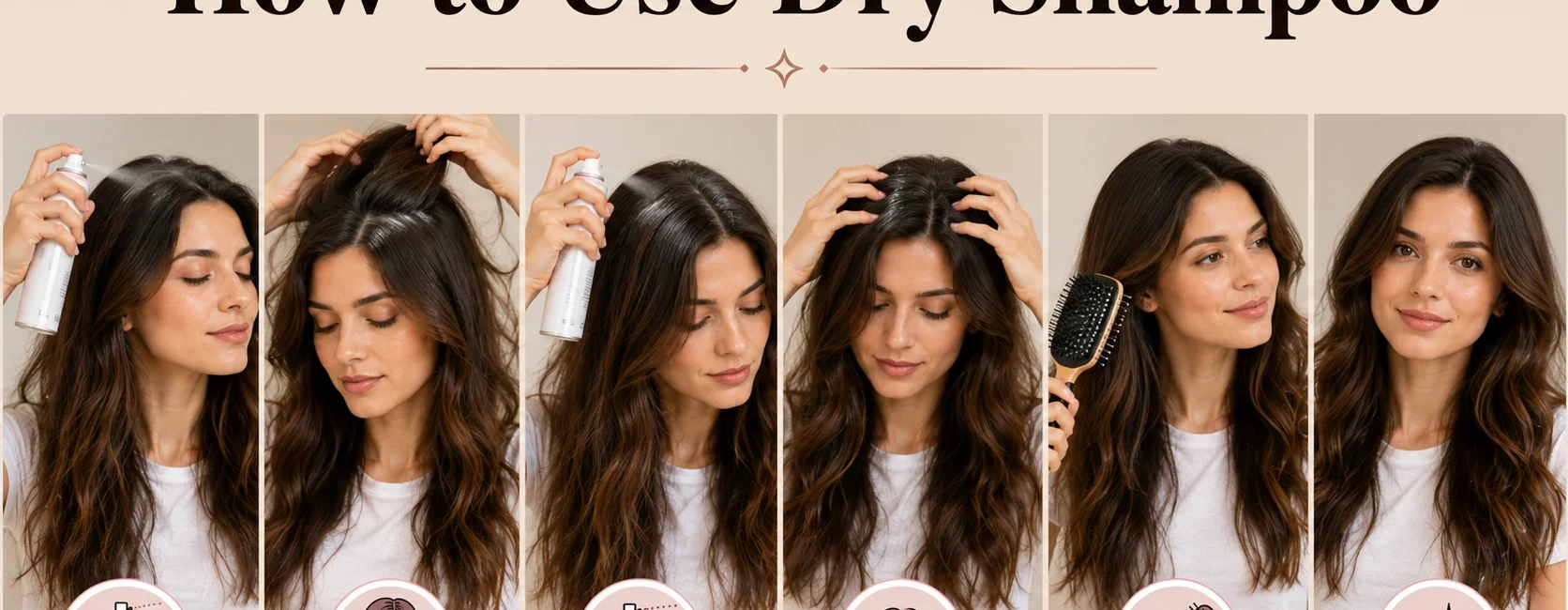
Quick answer: Shake the can well, hold it 6 to 8 inches from your scalp, and spray directly onto dry hair at the roots, section by section, focusing on the crown, hairline, and nape where oil builds up first. Let it sit for 30 seconds to 2 minutes to fully absorb, then massage it into the scalp with your fingertips and brush or blow-dry through to distribute evenly and remove any visible residue.
Dry shampoo has a reputation problem it doesn’t entirely deserve. Used wrong, it leaves hair chalky, dull, or covered in a visible white cast. Used correctly, it genuinely extends time between washes, adds volume, and refreshes oily roots in under two minutes. The difference almost always comes down to a handful of technique details that most people skip without realizing it.
By RK Fashion Zone Editorial Team | A dedicated team researching and writing about modern fashion, beauty products, and practical outfit guides.
What Dry Shampoo Actually Does (and Doesn’t Do)
Dry shampoo works by absorbing excess oil at the scalp and roots using fine powders, typically rice starch, cornstarch, or clay-based ingredients, that soak up sebum the same way blotting paper absorbs oil from skin. What it does not do is clean your hair. It has no cleansing agents and doesn’t remove dirt, product buildup, or sweat the way water and traditional shampoo do. Dermatologists are consistent on this point: dry shampoo is a genuinely useful way to keep hair looking fresh between washes, but it isn’t a substitute for regular shampooing, and relying on it exclusively for too long can lead to scalp buildup and irritation over time.
Step-by-Step: How to Use Dry Shampoo Correctly
1. Start with completely dry hair. Dry shampoo only works on dry strands; applying it to even slightly damp hair prevents the powder from absorbing oil properly and is one of the most common reasons people end up with a pasty, clumped result instead of a clean refresh.
2. Shake the canister thoroughly before every use. The absorbent powders inside settle over time, and applying without a proper shake leads to uneven distribution and a higher chance of visible residue in the spots that get too much product at once.
3. Section your hair before spraying. Rather than spraying over the entire surface, part hair into one- to two-inch horizontal sections, especially through the crown and top layers, so the product reaches the scalp directly rather than just coating the visible outer layer of hair.
4. Hold the can 6 to 8 inches from your scalp. Spraying too close concentrates too much product in one small area, which is the single biggest cause of visible white cast, especially for anyone with dark or brunette hair. A simple trick: hold the can at roughly an arm’s length from your head as a distance guide.
5. Focus on the areas that get oily first. The crown, hairline, and nape of the neck are almost always where oil builds up fastest, so these zones deserve the most direct attention rather than an even spray across the whole head.
6. Let it sit before touching it. Give the product anywhere from 30 seconds up to a couple of minutes to fully absorb the oil at the roots. Rushing this step and immediately brushing it through is one of the most common reasons dry shampoo doesn’t fully do its job.
7. Massage it into the scalp with your fingertips. This helps break up any concentrated product and works it into the roots more evenly than leaving it to sit on the surface alone.
8. Brush or blow-dry through on a cool setting. This final step distributes the product fully through the roots and is what actually eliminates visible residue, restoring a more natural-looking shine and texture rather than a flat, powdery finish.
Choosing the Right Dry Shampoo for Your Hair
Aerosol sprays are generally the best choice for fine or thin hair, since they dry quickly, distribute lightly, and add volume without the heaviness that can weigh finer strands down.
Powder formulas tend to work best for thicker or naturally oilier hair, since they can be applied more precisely at the roots and often deliver stronger oil absorption per application.
Tinted dry shampoos, formulated specifically for dark brown or black hair, are worth prioritizing if white cast has been a recurring issue; they’re tinted to blend directly into darker hair colors rather than leaving the telltale grey-white dusting that clear formulas can leave behind on deeper shades.
Foam and cream formulas are a newer category worth considering for curly or textured hair, since they tend to distribute more evenly through denser or coilier textures than a spray, which can sit unevenly on the hair’s surface without fully reaching the scalp.
If you’re building out a broader hair care routine alongside dry shampoo, our guide to styling short hair covers which volumizing and texturizing products pair well with a dry shampoo refresh for shorter cuts specifically, since root lift matters even more on shorter styles.
Common Dry Shampoo Mistakes to Avoid
Waiting until hair is very greasy before using it. Dry shampoo actually performs best used proactively on slightly lived-in hair, rather than as a last-resort fix once hair already looks visibly oily. Building it into your routine a day earlier than you think you need it typically gives a cleaner, more natural result.
Spraying too close to the scalp. As covered above, this is the single most common cause of visible white residue, especially on darker hair colors.
Skipping the wait time. Brushing through immediately after spraying doesn’t give the powder enough time to actually absorb oil, leaving hair looking coated rather than refreshed.
Overapplying in one spot to fix very oily hair. More product doesn’t fix genuinely oily roots faster; it just increases the chance of visible buildup and a dull, matte finish. Building up gradually with a couple of light applications works better than one heavy spray.
Using dry shampoo as a full replacement for washing. Since it only absorbs oil and doesn’t cleanse, relying on it exclusively for extended periods can lead to product buildup, scalp irritation, and, according to dermatologists, potential issues with hair and scalp health over time.
Skipping the brush-through step. This is what actually removes visible residue and redistributes the product; skipping it is a common reason otherwise correctly applied dry shampoo still looks chalky.
How Long Can You Actually Go Between Washes Using Dry Shampoo?
Most experts suggest dry shampoo is best used to extend a normal wash routine by one to three extra days, rather than as an indefinite substitute for washing. Individual results vary significantly based on hair type, activity level, and how oily your scalp naturally runs, but treating it as a bridge between washes, not a replacement for them, gets the best results for both hair appearance and scalp health.
Frequently Asked Questions
How far should I hold dry shampoo from my hair?
Roughly 6 to 8 inches, or about an arm’s length. Holding the can too close is the most common cause of visible white residue, especially on dark or brunette hair.
Does dry shampoo actually clean your hair?
No. Dry shampoo absorbs excess oil at the scalp but doesn’t cleanse the way water and regular shampoo do. It’s meant to extend time between washes, not replace washing entirely.
How long should I leave dry shampoo in before brushing it out?
Anywhere from 30 seconds to a couple of minutes, depending on the formula and how oily your roots are. This gives the powder enough time to fully absorb oil before you distribute it through with a brush or blow-dryer.
Why does my dry shampoo leave white residue?
Usually a combination of holding the can too close to the scalp, using too much product in one area, or skipping the final brush-through step that distributes and removes visible powder. Tinted formulas also help significantly for dark hair specifically.
Can I use dry shampoo every day?
It’s generally better used a few times a week to extend washes rather than daily, since relying on it exclusively for extended periods can lead to scalp buildup and irritation. Regular shampooing should still be part of your routine.
What’s the best dry shampoo for fine hair?
Lightweight aerosol spray formulas are generally the best fit for fine hair, since they dry quickly and add volume at the roots without the heaviness that powder or cream formulas can sometimes create on finer strands.
Final Thoughts
Dry shampoo genuinely earns its reputation as a quick, effective refresh, but only when the technique matches the product. Shake it well, apply it from the right distance directly onto dry roots, give it time to actually absorb oil, and finish by brushing or blow-drying it through completely. Skip any one of those steps, and you’re far more likely to end up with the chalky, dull result dry shampoo is unfairly blamed for. Get the sequence right, and it becomes exactly what it’s meant to be: a genuine extra day or two of clean-looking hair without a single drop of water.


2 Comments
[…] want a dry shampoo with an explicit color-protecting or color-depositing formula, since that’s a distinct claim […]
[…] causes of curl-flattening buildup. If dry shampoo is a regular part of your routine, our guide to using dry shampoo without weighing curls down covers how to avoid exactly this problem, and our review of K18’s dry shampoo is worth a look […]