
Fade Haircut Guide: Every Type, the Taper Fade, and How to Choose Yours
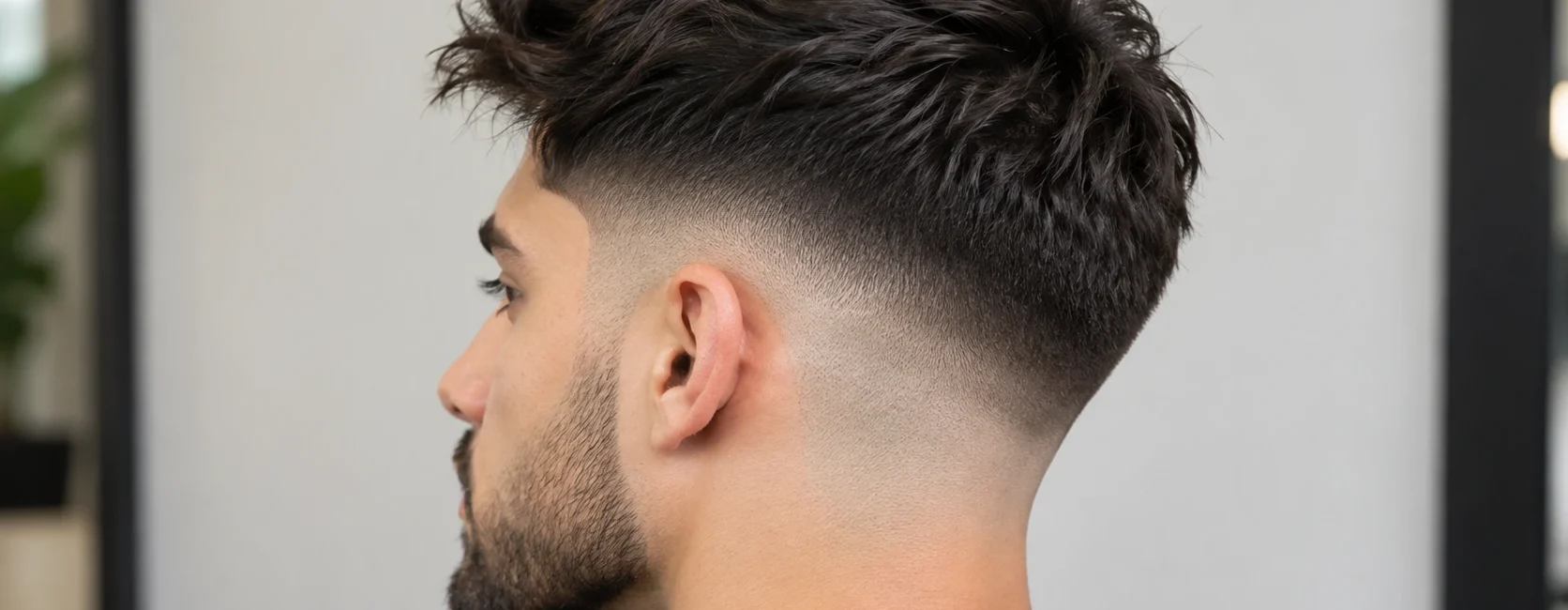
A fade haircut is the blend that shows up in almost every modern men’s cut. The hair gets shorter and shorter as it moves down the sides and back, until it disappears into skin or near-skin. It’s the reason a buzz cut looks sharp rather than flat, and the reason a curly top or a slicked-back style suddenly looks intentional rather than shaggy.
The confusing part is that “fade” isn’t a single haircut; it’s a technique with a dozen variations, and one of the most-searched variations is the taper fade, a style that sits somewhere between a classic taper and a full fade. If you’ve typed “fade haircut” into Google trying to figure out what actually to ask for, this guide walks through every major type, explains exactly what a taper fade is, and gives you a real framework for choosing based on your hair, your face shape, and your lifestyle.
By RK Fashion Zone Editorial Team | A dedicated team researching and writing about modern fashion, beauty products, and practical outfit guides.
What Is a Fade Haircut?
A fade haircut is a gradual shortening of hair on the sides and back of the head, cut so there’s no visible line — just a smooth transition from longer hair up top to very short (or skin-level) hair at the bottom. Barbers create this with clippers and a series of guard lengths, blending each section into the next with clippers-over-comb or shear work.
Two things determine how a fade looks:
- The finish — some fades taper down to a very short guard (a non-skin finish), while others go all the way to bare skin (a skin fade). Skin fades read as more dramatic and require more upkeep.
- The height — where the fade starts on the head changes the entire look. A fade that begins near the ears reads completely differently than one that starts near the crown.
Because the top of the head is untouched by the fade itself, you can pair the same fade with almost any top style — textured, slicked, curly, long, or buzzed. That flexibility is a big part of why the fade haircut has stayed popular across so many different personal styles.
Types of Fade Haircuts
Low Fade
A low fade starts just above the ears, close to the hairline, and blends upward. It’s the most subtle fade height, which makes it a common entry point for guys who want a clean, modern cut without a bold contrast statement. It suits conservative dress codes well and tends to grow out more gracefully than higher fades since less of the head shows the transition. It pairs naturally with a side part, a classic crop, or a slightly longer top.
Mid Fade
A mid fade begins around the temple, roughly halfway up the side of the head. It’s the most versatile fade height — noticeable enough to look deliberate, but not so high that it dominates the haircut. Mid fades work with almost any top style, from a quiff to a textured crop, and they’re a reliable middle ground for someone who isn’t sure how bold they want to go.
High Fade
A high fade starts near the crown, which means much more of the side of the head is involved in the blend. This creates strong contrast between the short sides and a fuller top, and it tends to draw attention to volume and texture up top — think pompadours, quiffs, or spiky textured styles. High fades read as more fashion-forward and are usually kept sharp with more frequent visits.
Skin Fade / Bald Fade
“Skin fade” and “bald fade” both describe a fade that tapers all the way down to bare skin at its shortest point, rather than stopping at a very short guard length. This is what gives a fade its sharpest, most high-contrast look. A skin fade can be combined with any of the heights above — a low skin fade, a mid skin fade, or a high skin fade are all common combinations, and each shows regrowth faster than a fade with a non-skin finish.
Drop Fade
A drop fade follows a curved line that dips down behind the ear instead of staying straight across the side of the head. It’s often paired with curly or textured hair because the curved shape flows naturally with the hairline and adds visual movement rather than a rigid, straight blend.
Temple Fade
A temple fade concentrates the shortest, sharpest blending specifically around the temple area, often combined with a hard part or a shape-up. It’s a popular choice for guys who want crisp detailing near the front hairline without necessarily fading the entire side of the head as dramatically.
Burst Fade
A burst fade curves around the ear in a semicircle rather than extending in a straight line across the side, which lets the back and top stay longer while the area right around the ear fades quickly. It’s a common choice for mullets, curly tops, and any style where the back is meant to stay longer than the sides.
What Is a Taper Fade?
A taper fade is a hybrid: it combines the gradual, tight blending of a traditional taper — hair shortening subtly around the ears and neckline — with the deeper contrast and clean finish of a fade. In practice, a taper fade usually keeps more length overall than a standard fade and doesn’t always drop all the way to skin, but it still fades noticeably enough to read as more than a basic taper haircut.
Here’s where the terminology gets genuinely confusing, and it’s worth saying plainly: different barbers use “taper” and “taper fade” slightly differently. Some use “taper” to mean a soft, subtle blend with no skin exposure at all, and “taper fade” to mean that same soft blend taken down closer to the skin at the bottom. Others use the terms almost interchangeably. That’s exactly why showing a reference photo matters more than the label you use (more on that below).
What makes the taper fade haircut so popular is that it delivers a clean, groomed silhouette without the boldness of a high or skin fade. A low taper fade in particular has become one of the most requested cuts for men who want their hair to look tidy and intentional in a professional setting, while still having more shape than a plain trim. It’s less dramatic than a full fade, but noticeably sharper than an untouched taper.
Fade Haircut vs Taper Fade
Since “fade” and “taper fade” get used loosely, here’s a direct comparison of how they typically differ in practice.
| Factor | Fade Haircut | Taper Fade |
|---|---|---|
| Transition | Can be very short to full skin exposure | Usually more gradual, often retains more length |
| Skin exposure | Common, especially at low/mid/high skin fades | Less common; some taper fades stay above skin |
| Contrast | Can be bold (high fade, skin fade) | Generally softer, more subtle |
| Placement | Can start anywhere from near the ears to the crown | Concentrated mainly around the ears, neckline, and lower sides |
| Everyday/office fit | Depends on height — low fades work fine, high fades are bolder | Very versatile for professional settings |
| Grow-out | Shows regrowth faster at skin-level finishes | Grows out more gracefully due to less contrast |
| Styling flexibility | Wide range — works with bold top styles | Works well with classic, low-maintenance top styles |
Neither one is objectively “better” — a full skin fade and a taper fade are simply solving for different things. A fade is built for contrast and a fresh, defined look. A taper fade is built for a cleaner, quieter finish that still feels current.
Best Fade Haircut for Different Hair Types
- Straight hair tends to show the fade’s blend lines very clearly, so straight-haired guys often get the cleanest, sharpest-looking fades with minimal styling effort.
- Wavy hair pairs well with mid and low fades, since the natural movement on top balances a moderate amount of contrast on the sides.
- Curly hair often looks great with a drop fade or burst fade, since the curved shape works with the hairline instead of against it, and a curly top left slightly longer keeps volume intact.
- Coily or textured hair can handle higher contrast well because the density on top holds its shape; a skin fade combined with a defined top is a common pairing.
- Thick hair usually needs more frequent thinning at the top to keep the fade from looking bottom-heavy.
- Fine hair tends to look fuller with a fade because the contrast on the sides makes the top read as denser by comparison.
None of this is absolute — density, growth pattern, and the style you want on top all factor in, so think of these as starting points to discuss with your barber, not fixed rules.
Best Fade Haircut for Different Face Shapes
- Oval faces generally have the most flexibility and can wear almost any fade height comfortably.
- Round faces often lean toward higher fades with more volume on top, since added height can create a more elongated appearance.
- Square faces tend to suit low or mid fades that soften strong jawlines rather than adding more angularity.
- Rectangular/oblong faces often look balanced with fades that keep some width on the sides rather than very high, narrow fades.
- Heart-shaped faces frequently pair well with fades that keep some fullness at the temples to balance a narrower chin.
These are general tendencies, not guarantees — a good barber will adjust the fade height and top volume based on your actual proportions, not just a face-shape chart.
Popular Hairstyles That Work With a Fade
- Textured crop — short, choppy texture on top with a low or mid fade underneath.
- Crew cut — a classic, low-maintenance top paired with any fade height.
- Quiff — longer top swept upward, often paired with a high fade for contrast.
- Pompadour — voluminous, structured top that pairs dramatically with a high or skin fade.
- Slick back — smooth, combed-back top that looks sharp against a mid or low fade.
- Side part — a classic, professional look that suits a low fade especially well.
- Buzz cut — uniform short length on top, often combined with a skin fade for maximum contrast.
- Curly top — natural curls left longer on top, commonly paired with a drop or burst fade.
- Fringe — hair brought forward over the forehead, often set off by a mid fade.
- Modern crop — textured, slightly disconnected top styled with a fade for a contemporary finish.
If you’re exploring how texture and cut length change your overall look, our guide to styling short hair covers similar principles around proportion and face-framing that apply just as much to men’s short cuts.
Popular Taper Fade Styles
Low Taper Fade
The most subtle version — a soft blend concentrated near the ears and neckline. Extremely common for office environments and classic looks.
Mid Taper Fade
A slightly more noticeable blend that still reads as clean and professional, with a touch more definition than a low taper fade.
High Taper Fade
More contrast than a low or mid taper fade, but still generally softer than a true high fade — a middle ground for guys who want some edge without full commitment to a skin fade.
Temple Taper Fade
Focuses the taper fade’s blending specifically around the temples, often used alongside a hard part.
Taper Fade With Curly Hair
Keeps curls intact on top while gently blending the sides, which avoids the heavier contrast a full fade would create against natural curl texture.
Taper Fade With Textured Hair
Works well when the top has natural texture or a light perm, since the taper fade’s softer blend doesn’t compete with the texture on top.
How to Choose the Right Fade Haircut
- Desired level of contrast. Bold and eye-catching (high fade, skin fade) or subtle and clean (low fade, taper fade)?
- Hair texture. Curly and coily hair often suits drop or burst fades; straight hair shows crisp lines clearly at any height.
- Face shape. Use the guidance above as a conversation starter with your barber, not a rulebook.
- Workplace requirements. Conservative offices generally favor low fades or taper fades; creative or casual environments have more room for high or skin fades.
- Maintenance routine. Be honest about how often you’ll actually get to a barber.
- Desired top style. Decide on your top style first — quiff, crop, curls, buzz — and choose a fade height that complements it.
- How often you visit a barber. More frequent visits make higher-contrast fades easier to maintain.
- Bold vs. subtle. If in doubt, a mid fade or taper fade is a safe, versatile middle ground.
How to Ask Your Barber for a Fade Haircut
Terminology varies shop to shop, so be specific about height and finish rather than relying on one word:
- “I want a low fade, skin at the bottom” — specifies height and finish.
- “Give me a mid fade, not too aggressive” — clarifies you want moderate contrast.
- “I’d like a high fade with a lot of contrast” — signals you want a bold look.
- “Can you do a skin fade on the sides” — makes clear you want bare skin, not just short guard length.
- “I want a taper fade — keep some length, just clean up the sides and back” — communicates you want the softer, hybrid version rather than a dramatic fade.
Whatever wording you use, bring a reference photo when you can. Because “fade” and “taper fade” mean slightly different things to different barbers, a photo removes almost all ambiguity.
How Often Should You Get a Fade Haircut?
Maintenance depends heavily on the finish and height you chose. Skin fades and high fades show regrowth fastest because the shortest points grow out visibly within days, softening the sharp line that made the cut look fresh. Lower fades and taper fades tend to hold their shape longer since there’s less extreme contrast to lose. Rather than following a fixed schedule, pay attention to when the blend starts looking soft or uneven at the edges that’s your real signal it’s time for a touch-up, and it will vary from person to person based on hair growth speed.
Fade Haircut FAQs
What is a fade haircut?
A fade haircut is a technique where hair on the sides and back is clipper-blended so it gradually shortens, ending in either a very short length or bare skin, with no visible line of demarcation.
What is the difference between a fade and a taper fade?
A fade can range from subtle to dramatic and often goes down to skin, while a taper fade generally keeps more length and blends more gently, mainly around the ears and neckline.
Is a taper fade a fade haircut?
Yes, a taper fade is a specific style of fade that combines a soft, gradual taper with fade-style blending, rather than a completely separate technique.
What is the most popular fade haircut?
The mid fade and low taper fade are both consistently popular because they offer a clean, modern look without requiring the boldest level of contrast.
Which fade is best for beginners?
A low fade or low taper fade is a good starting point since it’s subtle, versatile, and forgiving as it grows out.
Is a low fade or taper fade more subtle?
They’re similar in subtlety, but a taper fade typically retains a bit more overall length, making it slightly softer in most cases.
Which fade works best with curly hair?
Drop fades and burst fades tend to work especially well with curly hair because their curved shape flows with natural curl patterns.
What is the difference between a low, mid, and high fade?
The difference is where the fade begins on the head — low starts near the ears, mid starts around the temple, and high starts near the crown, with each creating progressively more contrast.
How long does a fade haircut last?
It depends on the finish and your hair’s growth rate — skin fades and high fades typically need touch-ups sooner than low fades or taper fades, since regrowth is more visible at the shortest points.
What should I tell my barber when asking for a fade?
Specify the height (low, mid, or high), the finish (skin or non-skin), and bring a reference photo if you’re not sure your wording matches what you have in mind.



1 Comment
[…] exactly how low, mid, high, skin, and drop fades differ before you walk into the shop, our complete fade haircut guide breaks down each type, and it includes the taper fade in […]