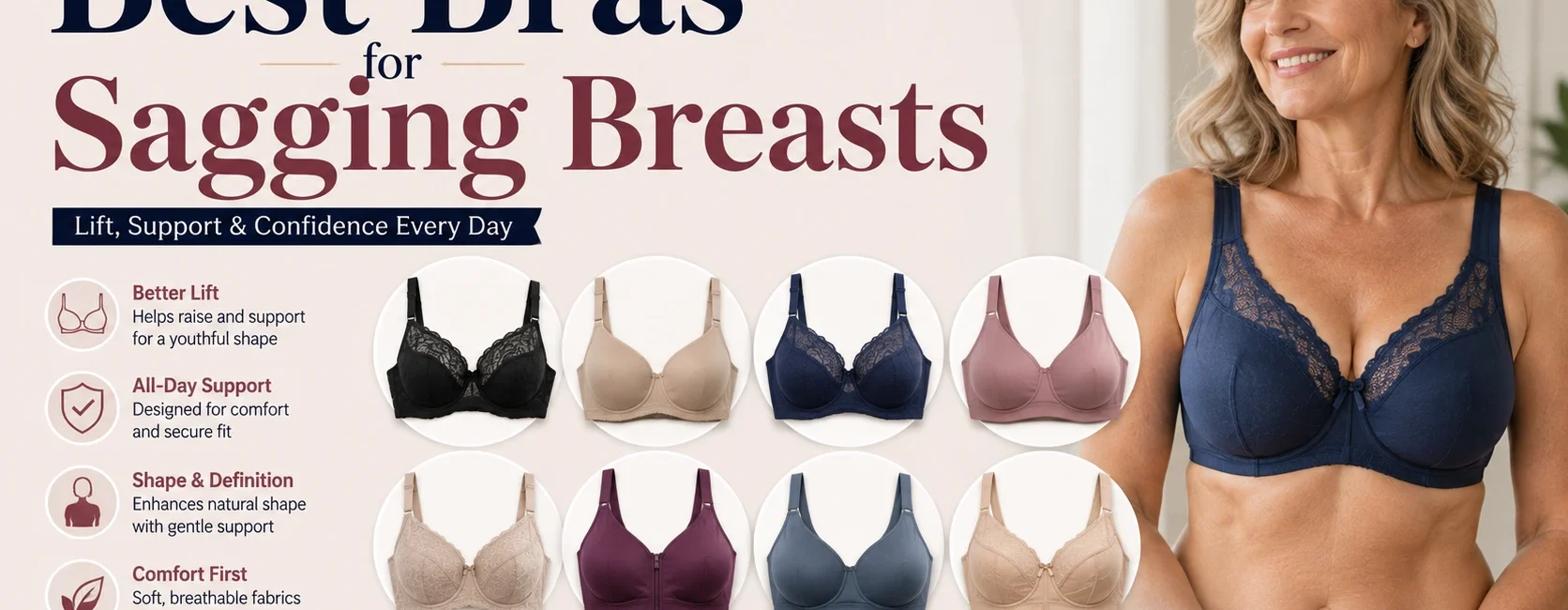
Quick answer: The best bras for sagging breasts are full-coverage or minimizer styles with a wide, non-stretch band, molded or lightly padded cups, and wide, cushioned straps, not underwire alone. Look for brands built specifically for fuller busts and lower-set breasts, like Wacoal, Chantelle, Panache, Elomi, or Cuup, and prioritize a proper band fit over cup size, since an ill-fitting band is the single most common reason a bra fails to lift and support properly.
Breast sagging, medically known as ptosis, is a completely normal part of life caused by age, pregnancy and breastfeeding, weight changes, genetics, or simply gravity over time. It affects the vast majority of women at some point, and it isn’t something to fix so much as something to dress for with the right support. The right bra won’t reverse ptosis, but it will lift, shape, and support in a way that changes how clothes fit and how you feel in them. This guide covers exactly what to look for, which bra styles genuinely help, sizing guidance, and specific picks worth trying.
By RK Fashion Zone Editorial Team | A dedicated team researching and writing about modern fashion, beauty products, and practical outfit guides.
What Actually Causes Breast Sagging?
Understanding the cause helps explain why certain bra features matter more than others. Breast tissue is held in place by Cooper’s ligaments, connective tissue that provides structural support, along with skin elasticity and, for some, underlying muscle tone. Over time, several factors cause these ligaments and skin to stretch and lose their original tautness:
- Age — collagen and elastin naturally decrease over time, reducing skin’s ability to hold its shape
- Pregnancy and breastfeeding — breast tissue expands and contracts repeatedly, which stretches supporting ligaments
- Significant weight fluctuation — repeated gain and loss stretches skin and tissue beyond its ability to rebound fully
- Larger cup size — more tissue weight places more ongoing strain on Cooper’s ligaments
- Smoking — breaks down elastin, the protein responsible for skin’s ability to snap back into shape
- Genetics — skin elasticity and ligament strength vary significantly from person to person
None of this is within anyone’s full control, which is exactly why the right bra not a specific body type is the real solution for how you look and feel in your clothes day to day.
What to Look for in a Bra for Sagging Breasts
A wide, non-stretch band. The band, not the straps, does roughly 80% of a bra’s supportive work. A wide band made from firmer, less stretchy fabric distributes weight evenly around the ribcage rather than letting the bust pull downward and forward.
Molded or lightly padded cups. Molded (pre-shaped) cups maintain their structure independently of the breast tissue inside them, creating a naturally lifted silhouette and smoothing out any asymmetry that comes with lower-set breast tissue. Avoid soft, unlined cups if lift is your priority; they offer far less structural support.
Full-coverage cup shape. A full cup that encloses the entire breast, rather than a plunge or balconette style, contains and supports more of the tissue, which matters more as cup size and ptosis increase. Full-coverage styles are consistently the top recommendation for fuller, lower-set busts.
Wide, cushioned straps. Thin straps dig in and provide minimal lift for anything beyond an A or B cup. Wide, cushioned straps distribute weight across the shoulder rather than concentrating it in a thin line, which both improves comfort and adds real lifting support.
A supportive underwire that fits your root width, not just your cup size. A properly sized underwire sits flat against the ribcage and fully encloses breast tissue without poking or digging in at the sides. Ill-fitting underwire is one of the most common bra complaints and usually signals the wrong band or cup size, not a flaw with underwire itself.
Firm, structured side panels. Reinforced side panels prevent tissue from spilling out to the sides (“side spillage”), which both improves the fit under clothing and adds meaningful support.
Bra Styles That Genuinely Help
Full-coverage bras are the single most reliable category for lift and support, since they contain and structure the most tissue.
Minimizer bras redistribute breast tissue across a wider area of the chest rather than concentrating it forward, which reduces both bounce and the visual weight of a fuller bust under clothing, helpful for anyone dealing with the discomfort or self-consciousness that can come with more pronounced sagging.
Longline bras extend below the standard band line, adding structure through the midsection and distributing weight over a larger surface area. They’re a particularly strong option for more advanced ptosis, since the extended band gives the bust more to rest against.
Racerback and convertible-strap bras pull the shoulder straps closer together at the back, which can improve lift for people with a rounded or forward shoulder posture that otherwise pulls straps outward and reduces their lifting effect.
Sports bras with compression and encapsulation (rather than compression alone) are worth prioritizing for any physical activity, since unsupported movement is one of the biggest accelerators of further ligament stretching over time.
What to Avoid
Soft, unstructured bralettes as a daily driver. Bralettes are comfortable and have their place, but they offer minimal structural support and aren’t built for lift, better suited to smaller busts, low-impact days, or layering under looser clothing than as an everyday go-to.
Stretched-out bands. A bra band loses elasticity well before the cups show visible wear. If a band no longer sits snugly on the loosest hook, it has lost most of its supportive capacity, regardless of how new the bra otherwise looks.
Cup sizes that are too small. Tissue spilling over the top or sides of a cup (“quad-boob” or side spillage) isn’t a sign you need more support fabric; it’s a sign the cup size is wrong. This is one of the most common fit mistakes across all bust sizes.
How to Get Properly Fitted
Get measured every 6–12 months, and always after major life changes. Weight fluctuation, pregnancy, breastfeeding, and menopause all change breast size and shape enough to require a different band and cup size than before.
Measure band size snugly, not tightly. Wrap a soft tape measure directly under the bust, parallel to the floor, snug enough to stay in place without compressing.
Understand sister sizing. If a specific size doesn’t fit quite right, going up a band size and down a cup size (or the reverse) usually gives a very similar cup volume with a different band fit, useful for dialing in comfort without starting the fitting process over.
Try before committing when possible. Fit varies meaningfully by brand and even by style within the same brand, so an in-store fitting, or ordering multiple sizes online with an easy return policy, saves far more frustration than guessing from a size chart alone.
The band should be the primary support, not the straps. A correctly fitted bra should feel supportive even with the straps removed. If a bra only feels supportive because the straps are cranked tight, the band size is too large.
Best Bras for Sagging Breasts Worth Considering
While personal fit varies by body type, several brands have built strong reputations specifically around fuller-bust and lower-set support:
Wacoal is widely regarded for its precise sizing range and genuinely structural full-coverage and minimizer styles, particularly for D cup and above.
Chantelle offers full-coverage and T-shirt bra styles with reinforced support that holds its shape well over repeated wear and washing.
Panache and Elomi (sister brands) specialize specifically in fuller-bust sizing, often up to a K cup, with side support panels and wide straps built into nearly every style.
Cuup has built a strong reputation for a more contemporary, size-inclusive fit with genuinely supportive underwire options alongside its wireless range.
Bali and Playtex offer widely available, budget-friendly full-coverage and minimizer options at most major retailers, a solid starting point for anyone not ready to invest in a specialty fitting.
For everyday pieces that pair well with proper bra support underneath, our guide on flattering jeans for curvier and fuller figures covers fit principles that apply the same logic, prioritizing structure and proper sizing over guesswork.
Bras by Life Stage
Postpartum and breastfeeding. Look for nursing-specific full-coverage bras with the same structural features covered above: wide bands, molded cups, and wide straps, since breastfeeding bras are often mistakenly treated as a separate, lower-support category when they don’t need to be.
Post-weight-loss. Skin and tissue that have stretched from previous weight carries less natural elasticity even after weight loss, making structured, full-coverage support more important, not less, during this transition.
Perimenopause and menopause. Hormonal shifts during this period can change breast density and shape somewhat suddenly; a re-fitting during this transition, even if your size hasn’t changed by the numbers, is worth doing.
How to Test Fit Before Committing to a New Bra
Getting the fit right matters more than the specific brand or style you choose, and it’s worth actually testing rather than assuming a size chart number will translate perfectly. The same testing principle applies across supportive intimates and shapewear. Our guide on how to test butt-lifting leggings before you buy walks through a similar hands-on approach to verifying real support and fit before committing to a purchase, rather than relying on the size label alone.
Frequently Asked Questions
Can a bra actually fix sagging breasts?
No bra reverses ptosis permanently; only surgery changes the underlying tissue and ligament structure. The right bra lifts, shapes, and supports while worn, significantly improving how clothing fits and how you feel day to day, but the effect isn’t permanent once the bra is removed.
What is the best bra style for very saggy breasts?
Full-coverage bras with molded cups, wide non-stretch bands, and wide cushioned straps offer the most lift and support for more pronounced ptosis. Longline styles add even more structure for advanced cases.
Do wireless bras provide enough support for sagging breasts?
Some do, particularly those with reinforced side panels and a wide, structured band, but generally underwire provides more consistent lift and shape for fuller or lower-set busts than wireless alternatives.
How often should I replace my bras?
Most bras lose significant elasticity and support after 6 to 12 months of regular wear, even if they still look intact. Rotating between at least two to three bras extends the life of each one by giving the elastic time to recover between wears.
Does sleeping in a bra prevent sagging?
There’s no strong evidence that sleeping in a bra prevents or slows ptosis. Comfort should be the deciding factor here, not a belief that it changes the rate of natural sagging.
What bra size should I start with if I’ve never been professionally fitted?
Start with a snug (not tight) band measurement taken directly under the bust, then get properly fitted in-store or via a detailed online size guide, since most people are wearing a band size that’s too large and a cup size that’s too small.
Final Thoughts
The right bra for sagging or lower-set breasts comes down to a handful of structural features working together: a wide, non-stretch band doing the majority of the support work, molded full-coverage cups, wide cushioned straps, and a properly fitted underwire. No single brand or style works universally, which is why a proper fitting and a willingness to re-check that fit after any major life change matters more than chasing a specific product recommendation. Get the fit right, and the lift, comfort, and confidence follow.