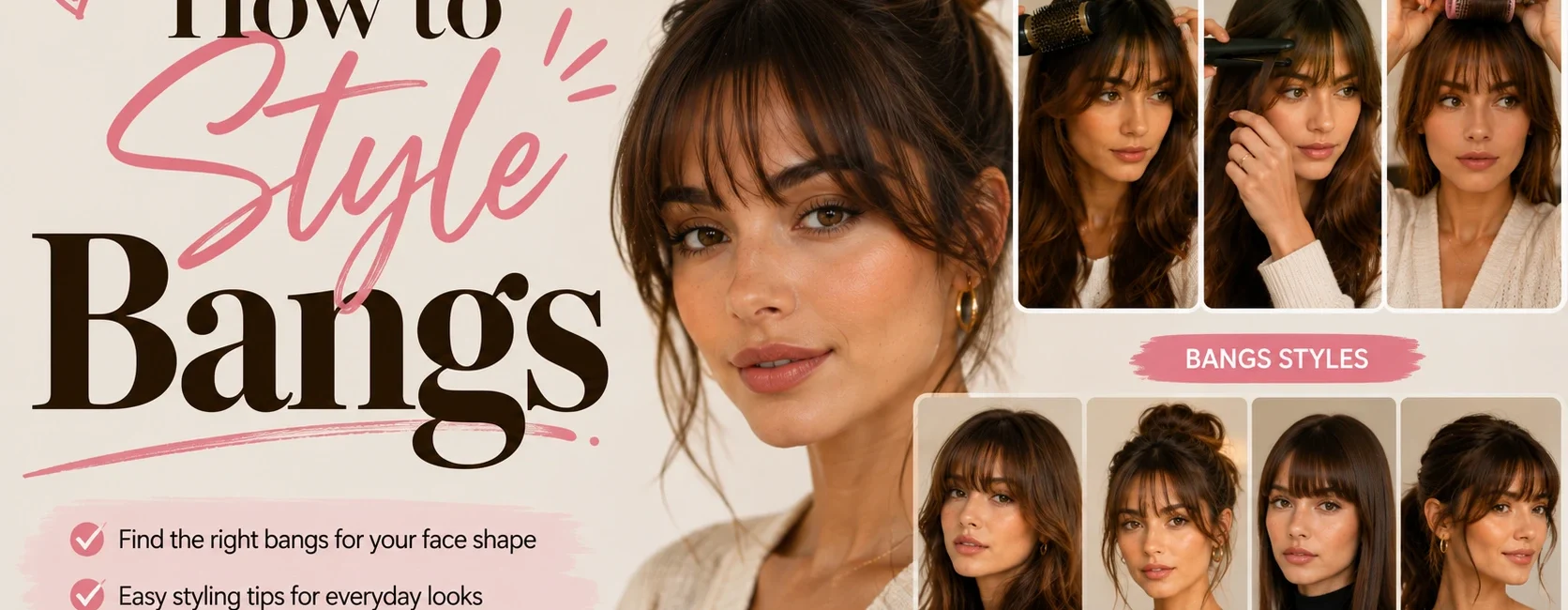
Bangs are having one of their biggest moments in years, and unlike past bang trends that centered on a single dominant shape, 2026 is all about range. Soft and airy, sharp and micro, curly and undone, French-girl imperfect; there’s no single “right” way to wear a fringe anymore, which also means there’s no single way to style one. The technique that makes wispy bangs look effortless will flatten curtain bangs, and the products that keep curly bangs defined will weigh down a sleek, blunt fringe.
By Rehan Khatri | Fashion & Beauty Writer at RK Fashion Zone.
Why “How to Style Bangs” Depends Entirely on Which Bangs You Have
Bangs are not one product category. A wispy, face-framing fringe needs almost the opposite styling approach from a blunt, editorial-straight bang, and curly bangs need an entirely different logic from either. Before reaching for a round brush or a styling product, identifying exactly which type of bang you have, or want, matters more than any single technique.
That said, one principle holds across nearly every bang style: heat and moisture temporarily loosen hair’s internal bonds, and the direction you shape hair in while it’s damp or heated is the direction it holds once it cools. Nearly every styling method below is a variation on that same underlying idea.
Curtain Bangs
The most enduring bang trend of the past several years, and still one of the most-searched styles heading into 2026, now trending in a softer, more feathery version that blends seamlessly into the rest of the cut rather than reading as a distinct, separate piece.
Curtain bangs part at the center and sweep outward toward each side of the face, styled with a round brush and blow dryer directing the ends away from the face, or set with rollers or a twist-and-clip method for a heat-free option. Because this style has enough technique behind it to deserve its own deep dive, our complete guide to styling curtain bangs covers every method in detail: round brush, flat iron, curling iron, and no-heat options, along with fixes for the most common curtain-bang frustrations.
Best for: Nearly every face shape, especially round and square faces that benefit from the soft, angled framing. Widely considered the most universally flattering bang shape available right now.
Wispy Bangs
Light, feathery, and deliberately undone, wispy bangs are trending specifically because they require the least daily effort of any bang style and blend easily into natural texture rather than fighting it.
To style, apply a lightweight mousse or texturizing spray to damp bangs, then either air-dry with light finger-separation or use a low-heat blow-dry with fingers instead of a brush to encourage natural movement rather than a uniform, brushed-through shape. Resist the urge to over-brush wispy bangs once dry; the slightly uneven, piece-y quality is the entire point of the style.
Best for: Fine hair, since the lighter density of wispy bangs doesn’t emphasize thinness the way a heavier, blunt fringe can. Also a strong option for square faces, where the softness helps balance stronger jaw angles.
Micro Bangs
A short, above-the-eyebrow fringe that delivers the most dramatic, high-fashion effect of any bang style on this list, and one of the most talked-about statement trends of the year.
Micro bangs are largely a cutting decision rather than a daily-styling one, but keeping them looking intentional day-to-day comes down to a light touch: a small amount of pomade or texturizing cream worked through with fingers, avoiding heavy products that can make such a short section look greasy or flat almost immediately. They pair especially well with shag cuts and sharp, blunt bobs, since the contrast between a bold micro fringe and movement through the rest of the hair keeps the overall look from feeling severe.
Best for: Confident, statement-driven styling, and best suited to oval or longer face shapes; can visually shorten a face further, so it’s generally not recommended for anyone specifically trying to balance a longer face shape.
French / Birkin Bangs
Inspired by the classic Jane Birkin look and currently seeing a significant search and styling resurgence, French bangs are soft, airy, and sit at eye-skimming length, with a deliberately imperfect, slightly uneven finish rather than a crisp, ruler-straight line.
Style with minimal product and a small round brush to create a soft bend rather than a defined curl, finishing with a lightweight, flexible cream rather than a strong-hold spray to keep the movement touchable. The goal is bangs that look like they fell into place naturally rather than bangs that were visibly, deliberately styled.
Best for: Straight or wavy hair specifically; this style relies on soft movement that can be harder to maintain consistently on very curly or coily textures without additional smoothing steps.
Bottleneck Bangs
A hybrid between curtain bangs and a classic full fringe, narrow at the center part and gradually widening out toward the cheekbones, set to be one of the most in-demand fringe shapes of 2026.
Because the shape is narrower through the middle, styling focuses on blow-drying the center section forward and slightly down while sweeping the outer, longer pieces away from the face, blending the two motions where they meet for a seamless transition rather than a visible break.
Best for: Heart-shaped faces and anyone with a larger forehead, since the wider framing at the cheekbones softens a more prominent forehead more effectively than a narrower curtain shape.
Curly Bangs
Long overlooked in most bang styling advice, curly bangs have become one of the most celebrated fringe trends of the year, driven largely by curl-forward celebrity styling that’s shown curly hair can absolutely carry a fringe.
The key technique differs from every other bang type on this list: cut while dry, but style while wet. Curl shrinkage means a curly bang needs to be cut at its natural, dry length to land correctly, but daily styling starts on soaking wet hair with a curl-defining cream worked through, twisted gently into place, and small clips used to control any cowlicks near the hairline while the curls set. Air-drying is essential, and resisting the urge to touch or scrunch the bangs while they’re still setting is what prevents frizz.
Best for: Naturally curly or coily hair textures; forcing straight-hair bang techniques onto curly hair is the most common reason curly bangs look boxy or uneven rather than soft and natural.
Blunt / Classic Bangs
A straight-across fringe hitting the brow or just below remains a defined, editorial option, though current styling leans toward softening the classic blunt shape rather than keeping it razor-sharp, since heavily flat-ironed, ultra-crisp bangs have started to feel dated compared to the textured, “undone” styling dominating 2026.
To keep blunt bangs current, blow-dry with a flat or paddle brush for a smooth base, then use a flat iron to add the slightest outward bend at the ends rather than styling them completely straight and static. A light shine serum on the ends, rather than a matte styling cream, also helps keep the classic shape from reading as too severe.
Best for: Thick, dense hair, since this shape holds its clean line best with enough natural density behind it, and oval faces that can carry a more defined, structured fringe shape without it overwhelming the features.
Side-Swept Bangs
A longer, angled fringe that sweeps diagonally across the forehead rather than sitting straight across, remaining one of the lowest-maintenance bang options and a strong entry point for anyone new to wearing a fringe at all.
Blow-dry in the direction you want the bangs to sit, using a round brush to add a soft bend in that diagonal direction, then set with a light-hold spray. Because side-swept bangs blend more easily into the rest of a longer hairstyle, they also require the least separate daily styling of any option on this list.
Best for: Round faces, where the diagonal line adds length and angles that a straight-across fringe doesn’t provide, and anyone prioritizing low daily maintenance.
How to Choose Bangs for Your Face Shape
Round faces: Long side-swept or curtain bangs add length and soften the width across the cheeks better than a straight-across shape.
Oval faces: The most flexible face shape for bangs; nearly every style on this list works well, making this the easiest starting point if you’re unsure what to try.
Square faces: Wispy or textured bangs soften strong jaw angles more effectively than a blunt, heavy fringe, which can emphasize the squareness of the face.
Heart-shaped faces: Bottleneck or side-swept bangs balance a wider forehead against a narrower chin more effectively than styles that sit heavily and evenly across the entire forehead.
Long faces: Fuller, wider bangs that cover more of the forehead create the visual shortening effect that flatters this shape; very thin, sparse bang styles tend to elongate an already long face further.
Larger foreheads: Bottleneck and curtain bangs are specifically noted for minimizing forehead size more effectively than a shorter, cropped fringe.
Matching Bangs to Your Hair Texture
Fine hair works best with wispy or curtain bangs, both of which avoid the flat, thin appearance a heavier, blunt fringe can create on lower-density hair.
Thick hair can handle more structured, textured, or heavily layered bang shapes without the styling collapsing under its own volume.
Curly or coily hair needs a bang cut specifically for curls, following the dry-cut, wet-style method covered above, rather than a straight-hair bang shape forced onto natural texture.
Low-Maintenance vs. Daily-Styling Bang Types
If daily styling time is a real factor in your decision, curtain bangs and long side-swept bangs are the most forgiving, blending naturally as they grow and requiring the least active shaping each morning. Wispy and micro bangs sit at the other end, both benefiting from at least some daily attention to maintain their intended shape and separation.
For anyone pairing a bang style with a shorter overall haircut, our guide to styling short hair covers techniques for pixies, bobs, and lobs that a fringe is frequently cut alongside.
Caring for Bangs Between Salon Visits
Bangs are re-styled and heat-exposed more frequently than the rest of your hair, which makes upkeep between cuts genuinely important. A lightweight leave-in conditioner helps offset repeated heat exposure without adding weight that flattens finer bang styles, and regular trims- roughly every 3 to 4 weeks for shorter styles like micro or blunt bangs, and every 5 to 6 weeks for longer curtain or side-swept shapes- keep the intended shape from growing out into an awkward in-between stage.
Frequently Asked Questions
What type of bangs are easiest to maintain?
Curtain bangs and long side-swept bangs are generally considered the lowest-maintenance options, since both blend gracefully as they grow out and require the least precise daily styling.
Which bangs are trending most in 2026?
Curtain bangs remain the most consistently popular style, now trending in a softer, more feathery version. Wispy bangs, French/Birkin bangs, bottleneck bangs, and curly bangs are also seeing significant search and styling interest this year.
How do I know which bangs suit my face shape?
Round faces generally suit side-swept or curtain bangs, square faces suit softer wispy styles, heart-shaped faces suit bottleneck or side-swept shapes, and oval faces can wear nearly any bang style well.
Can curly hair have bangs?
Yes, and curly bangs are one of the most celebrated trends of the year. The key is cutting them dry to account for shrinkage, then styling them wet with a curl-defining cream rather than forcing a straight-hair bang technique onto natural curl texture.
How often do bangs need to be trimmed?
Shorter styles like micro or blunt bangs typically need a trim every 3 to 4 weeks to maintain their shape. Longer styles like curtain or side-swept bangs can generally go 5 to 6 weeks between trims.
Are blunt, straight-across bangs out of style?
Not entirely, but current styling favors a softer, slightly textured take on blunt bangs rather than a razor-sharp, heavily flat-ironed finish, which has started to feel dated compared to the more undone, natural-movement styling trending in 2026.
Final Thoughts
There’s no single answer to “how to style bangs,” because there’s no single kind of bangs anymore. The right technique depends entirely on the shape you have or want, your natural hair texture, and how much daily styling time you’re realistically willing to give it. Identify your bang type from the list above, match the technique to it specifically, and a fringe stops being something you’re constantly fighting and starts being exactly what it’s meant to be: the fastest way to change up your entire look without touching your length.