Bangles jewellery sits at an unusual crossroads: it’s simultaneously one of the oldest, most culturally significant jewellery forms in South Asian tradition and one of the biggest Western accessory trends of the moment. That combination is exactly why searching “bangles jewellery” turns up such a scattered mix of results: bridal chooda sets, minimalist gold stacks, chunky resin cuffs, and celebrity wrist stacks all technically qualify.
What Counts as a Bangle (and What Doesn’t)
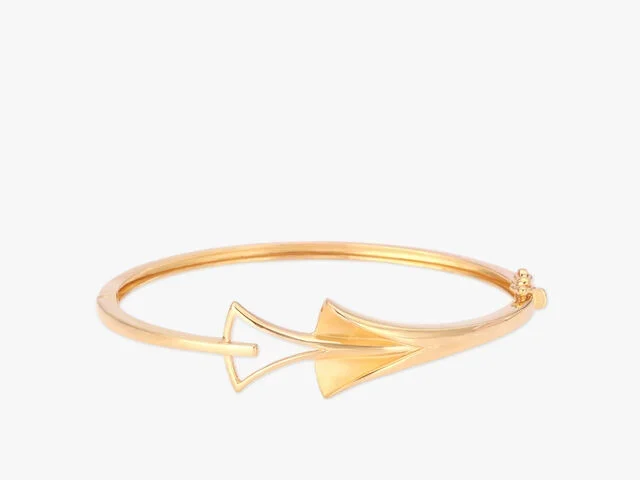
A bangle is a rigid, typically circular or oval band worn around the wrist, put on by sliding it over the hand rather than fastening with a clasp. That rigidity is the key distinction from a bracelet, which usually has a clasp, chain links, or flexible construction. A cuff bangle bends this rule slightly; it has a gap that allows it to open enough to slip on without going fully over the hand, giving a bit more sizing flexibility than a fully closed bangle.
Types of Bangles Jewellery Worth Knowing
Classic round bangles are the traditional, fully closed circular band, the most common form across both South Asian and Western jewelry traditions, sized to slide directly over the hand.
Cuff bangles have an opening at one point, allowing the band to flex slightly for an easier, more adjustable fit. These are especially popular in Western fashion jewelry for their comfort and one-size-fits-most flexibility.
Kada is a thicker, often more substantial bangle style rooted in South Asian jewelry and cultural tradition, frequently worn as a single statement piece rather than stacked. Many modern kada designs now include an openable or screw-clasp mechanism specifically to remove the guesswork of exact wrist sizing.
Glass bangles (choora/chuda) are thin, brightly colored glass bangles central to South Asian bridal tradition, most notably the red and white chooda worn by brides in Punjabi and broader North Indian wedding customs, typically for a set period after the wedding.
Charm bangles incorporate small hanging charms or pendants along the band, offering a more personalized, Western-leaning take on the format.
Stackable slim bangles are the defining format of the current fashion moment: thin, lightweight bands meant to be worn several at once rather than as a single piece.
Bangle Materials, Explained
- Gold remains the most significant material for bangles across both bridal/festive South Asian contexts and everyday Western fashion, ranging from 14k to 22k depending on region and intended use. Higher karat gold (22k, common in South Asian jewelry) is softer and more traditionally ornate; lower karat gold (14k, more common in Western fine jewelry) is more durable for daily wear.
- Gold-plated and gold-filled options offer the look of solid gold at a fraction of the price. Gold-filled has a thicker layer of actual gold bonded to a base metal and holds up considerably better over time than gold-plated, which has only a thin surface layer that can wear off with regular use.
- Sterling silver is a popular, more affordable alternative to gold, though it requires more frequent polishing to prevent tarnish.
- Glass is lightweight, affordable, and central to bridal and festive South Asian bangle traditions, but it’s also fragile and prone to shattering with impact.
- Resin and acrylic bangles are common in costume and fashion jewelry, offering bold color and pattern options at low cost, though they’re not designed for long-term durability.
- Wood and beaded bangles lean casual and bohemian, often used as texture pieces within a mixed stack rather than a primary statement piece.
What’s Actually Trending in Bangles for 2026
Bangle trends this year lean heavily into stacking and personalization rather than a single heavy statement piece:
- Slim, stackable bangles worn in twos and threes have become the default everyday approach, replacing the older habit of a single, heavier bangle. People are increasingly building a bangle collection gradually, the way they might build a ring collection, rather than buying one significant piece.
- Mixed metals combining yellow gold, rose gold, white gold, or silver within the same stack have moved from a styling risk to a default expectation, with alternating tones used deliberately to create rhythm and contrast on the wrist.
- Textured and hammered finishes are being layered alongside polished, plain bands to keep a stack from looking flat, since texture catches light differently than a smooth surface.
- Openable and adjustable kada-style closures are increasingly common even outside traditional kada designs, removing the exact-sizing problem that closed bangles have always presented.
- Sculptural, architectural metalwork twisted, curved, or geometric shaping rather than a plain round band is a growing direction for people who want a bangle with visual presence without added stones.
- Heritage motifs reinterpreted for daily wear: temple-inspired detailing, engraved traditional patterns, and other culturally rooted design elements are being reworked into lighter, more everyday-wearable pieces rather than only appearing in heavy bridal sets.
- Lightweight and low-noise construction has become a genuine engineering focus for brands catering to people who want a large visual stack without the weight or clinking sound heavy metal bangles create against a desk or keyboard through the workday.
How to Choose the Right Bangle Size
Bangle sizing trips up more buyers than almost any other jewelry category, mainly because, unlike a ring or a clasped bracelet, a closed bangle has to physically slide over your hand at its widest point (usually across the knuckles), not just fit your wrist comfortably afterward.
- Measure your hand at its widest point, typically across the knuckles with your thumb tucked in, using a soft measuring tape or a strip of string measured against a ruler afterward.
- Compare that measurement to the brand’s specific bangle size chart. Sizing isn’t standardized across brands or regions the way ring sizing loosely is, so don’t assume your size from one retailer transfers directly to another.
- When between two sizes, size up for a fully closed bangle, since a bangle that won’t pass over your hand is unusable, while a slightly loose one is simply a styling choice.
- Consider a cuff or openable kada style if you’re unsure about sizing or buying as a gift, since the adjustable opening removes most of the sizing risk entirely.
How to Stack and Style Bangles
The current stacking approach favors intentional imbalance over a matched, uniform set:
- Mix widths and textures rather than wearing identical bangles; pair one thicker piece with two or three slim ones for contrast.
- Mix metal tones deliberately; alternating gold and rose gold, or gold and silver, reads as more current than an all-matching set.
- Try an asymmetric approach: a full stack on one wrist and a single clean bangle or your watch on the other creates visual contrast rather than mirrored symmetry.
- Leave visual breathing room in a large stack rather than packing every bangle tightly together, so individual pieces remain distinguishable rather than blurring into one mass.
- Let one piece anchor the stack: a slightly larger, more detailed bangle works as a focal point, with slimmer pieces filling in around it.
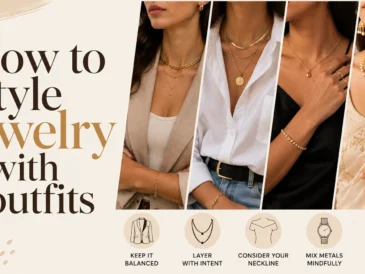
If you’re working out how bangles fit into your broader jewelry choices for a specific outfit, our guide to styling jewelry with different looks covers proportion and balance principles that apply directly to bangle stacking. And if you’re building out your collection beyond bangles specifically, our breakdown of bracelet styles worth having is a natural next stop.
Bangles for Bridal and Festive Occasions
In South Asian bridal tradition, bangles carry meaning well beyond styling. The chooda, a set of red and white (sometimes ivory) glass or metal bangles, is a central part of many Punjabi and North Indian wedding ceremonies, traditionally gifted by the bride’s maternal uncle and worn for a defined period after the wedding, often around 40 days to a year depending on family tradition. Bridal gold sets frequently pair broad, ornate kada with more delicate patterned bangles, often incorporating stone work, enamel detailing (meenakari), or engraved temple motifs for ceremonial weight and visual impact that everyday stacks intentionally avoid. If you’re coordinating bangles with a fusion or Indo-Western wedding look specifically, our guide to Indo-Western dressing covers how to balance traditional jewelry against more contemporary silhouettes.
Buying Guide: What to Check Before You Buy
- Hallmarking and purity marking on gold pieces in the U.S.: look for a karat stamp (14K, 18K, 22K) from a reputable retailer; for gold purchased internationally or through informal channels, verify hallmarking standards apply, since they vary by country.
- Gold-filled vs. gold-plated labeling: don’t assume “gold” in a product name means solid gold; check the specific construction described in the listing.
- Return and resizing policy: given how common sizing mismatches are with bangles specifically, confirm whether a retailer accepts returns or offers resizing before buying, especially for a fully closed style.
- Weight listed in grams for gold pieces; this is the most reliable way to compare value across sellers, since gold pricing is fundamentally tied to weight and purity.
- Country of manufacture and stone certification if buying a stone-set or diamond-detailed bangle, since certification standards and disclosure requirements vary by retailer.
Caring for Different Bangle Materials
- Gold: Clean with a soft cloth and mild soap solution; avoid harsh chemicals and remove before swimming in chlorinated water, which can affect certain gold alloys over time.
- Silver: Store in an anti-tarnish pouch and polish periodically with a silver-specific polishing cloth to maintain shine.
- Glass: Store separately from other jewelry to prevent chips or cracks, and avoid wearing during activities with a real risk of impact.
- Resin and acrylic: Keep away from prolonged direct sunlight and high heat, both of which can cause discoloration or warping over time.
- All materials: Remove bangles before activities involving significant hand impact, heavy lifting, or water exposure beyond quick handwashing, since bangles by design sit exposed on the wrist more than most other jewelry.
Frequently Asked Questions
What’s the difference between a bangle and a bracelet?
A bangle is a rigid band, typically fully closed, worn by sliding it over the hand, while a bracelet usually has a clasp or flexible chain construction that fastens around the wrist without needing to pass over the hand.
How do I know what bangle size to buy?
Measure your hand across its widest point (usually the knuckles), compare that to the specific retailer’s size chart, and size up if you’re between two sizes, since a bangle needs to pass over your hand physically.
Are gold-plated bangles worth buying?
They’re a reasonable, affordable option for fashion pieces you don’t expect to wear daily for years, but gold-filled options hold up significantly better over time if durability matters more to you than upfront cost.
How many bangles should I stack together?
There’s no fixed rule; two or three slim bangles is a common, versatile everyday approach, while a larger stack of six or more leans toward a bolder, more festive or statement look.
What is a chooda, and is it the same as a regular bangle?
A chooda is a specific bridal bangle set, traditionally red and white or ivory, worn as part of Punjabi and broader North Indian wedding customs. It carries cultural and ceremonial significance beyond styling, unlike a general fashion bangle.
Can I mix gold and silver bangles in one stack?
Yes, mixed-metal stacking is one of the strongest current trends, and deliberately alternating tones is generally seen as more current than an all-matching set.