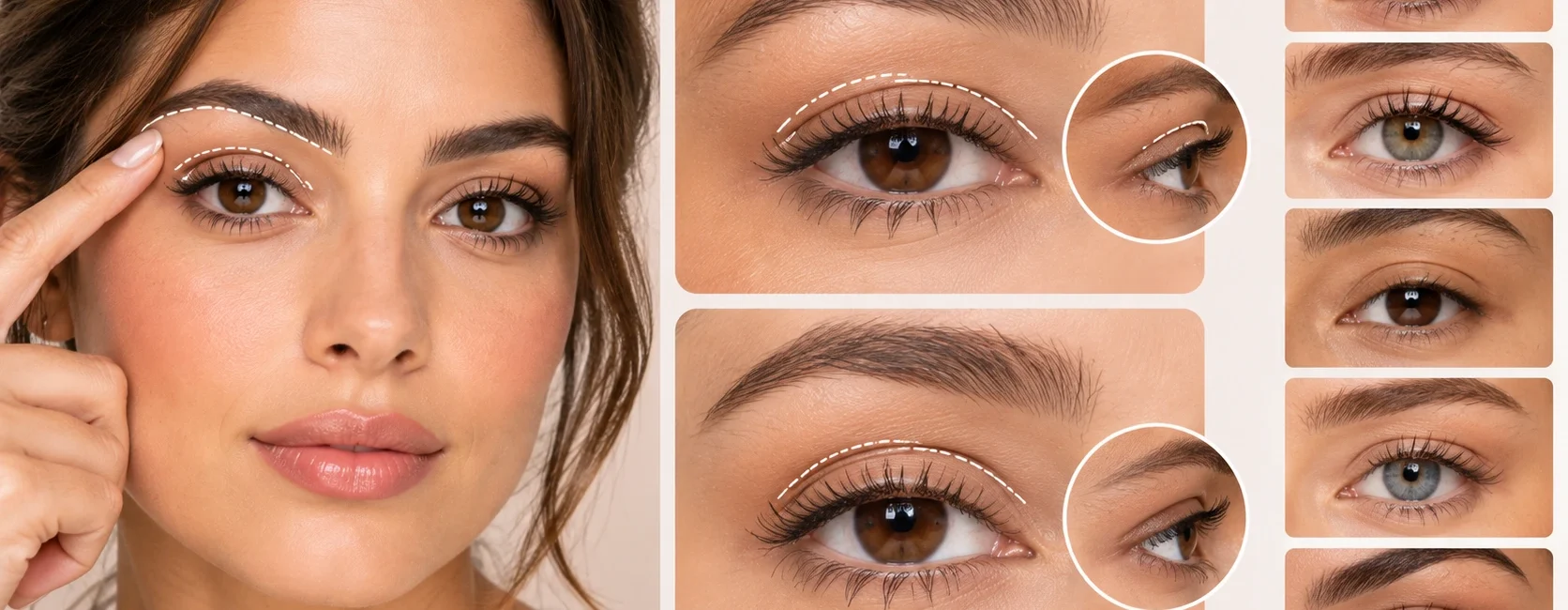
Half the confusion around “hooded eyes” starts before anyone even opens an eyeshadow palette a huge number of people searching this term aren’t actually sure whether they have hooded eyes, monolids, or downturned eyes, because beauty content routinely treats all three as interchangeable when they’re genuinely different things. Getting the identification right matters, because the makeup techniques that work beautifully on true hooded eyes can look off on a monolid, and vice versa. Here’s how to actually tell what you’re working with, plus the application, brow, and eye-care approaches that follow from it.
What Are Hooded Eyes, Exactly?
Hooded eyes describe an eye shape where a fold of skin either from the brow bone or excess upper eyelid skin extends down and partially or fully covers the natural crease of the eyelid when your eyes are open. The crease itself is still there; it’s just hidden or reduced in visibility because skin is draping over it. This is different from having a naturally small or high crease with hooded eyes, the crease exists but the “lid space” (the visible skin between your lash line and your crease) is minimal or invisible when you’re looking straight ahead with your eyes open naturally.
Hooded Eyes vs. Monolids vs. Downturned Eyes: The Distinction Almost Nobody Explains Clearly
This is the single biggest source of confusion in “hooded eyes” search results, and it’s worth being precise about, because these are three separate anatomical features that can exist independently or together.
Hooded eyes are about lid space a crease exists, but skin covers or shadows it, reducing how much visible eyelid you see above the lash line.
Monolids are about the absence of a visible crease structure there’s no distinct fold at all where the upper eyelid meets the browbone, so the skin is smooth from lash line to brow without a defined crease line. This is a structural difference in the eyelid itself (related to how much the levator muscle attaches to the skin), not skin covering an existing crease. Monolids are especially common in East Asian eye shapes, though they appear across ethnicities.
Downturned eyes are about corner angle, not lid space or crease structure at all the outer corners point slightly downward rather than upward or level. Downturned eyes can be hooded, monolid, or neither; it’s an independent feature describing the angle of the eye rather than what’s happening with the eyelid skin.
You can have hooded eyes that are also downturned, hooded eyes with a very deep crease, or hooded monolids (less common, but it happens). Treating all three terms as synonyms which a lot of beauty content does is exactly why so much generic “hooded eye” makeup advice doesn’t actually work for everyone who has genuinely hooded eyes.
How to Actually Tell If You Have Hooded Eyes
A quick, practical self-check: look straight ahead into a mirror with your eyes open and relaxed, not wide or strained. If you can clearly see a strip of eyelid skin between your lash line and your crease, your eyes aren’t significantly hooded. If that strip is minimal, mostly covered, or only appears when you physically lift your brow with a finger, that’s the hallmark of hooded eyes. A second check: look at yourself with your eyebrows completely relaxed versus gently lifted with your fingers if lifting your brow suddenly reveals a lid space and crease you couldn’t see before, that confirms hooding rather than a naturally small or monolid-style eye shape, since a monolid won’t reveal a crease line even when the brow is lifted.
Genetic Hooding vs. Age-Related Hooding (and When It’s Worth a Doctor’s Opinion)
Hooded eyes are frequently a simple genetic trait present from a young age, tied to bone structure, brow position, and the natural amount of upper eyelid skin someone has this is the most common reason and isn’t a medical concern of any kind. Hooding can also increase gradually with age as skin loses elasticity and mild fat and skin redistribution occurs around the brow and lid, which is an extremely common, non-medical part of aging.
There’s a distinct third category worth naming directly: ptosis, a drooping of the eyelid caused by a weakened or stretched levator muscle (the muscle responsible for lifting the eyelid), which is a genuine medical condition rather than a cosmetic eye shape trait. Ptosis is usually one-sided or asymmetric, can develop suddenly rather than gradually, and may affect vision if the drooping is significant enough to obstruct the pupil. If you notice sudden, one-sided, or rapidly progressing eyelid drooping especially if it’s affecting your vision or comes with other symptoms like double vision or headache that’s worth mentioning to a doctor rather than treating as a cosmetic hooded-eye trait, since it can occasionally signal an underlying neurological or muscular issue that benefits from proper evaluation. The vast majority of people with hooded eyes are dealing with a completely normal genetic or age-related trait, not ptosis this distinction is just worth knowing rather than assuming every case is purely cosmetic.
Eyeshadow Application for Hooded Eyes
The core challenge with hooded eyes is that traditional eyeshadow placement a crease shade blended into a visible crease gets hidden the moment your eyes are open, since that’s exactly the area the hood covers. A few adjustments make a real difference:
- Apply with your eyes open, not closed. This is the single most important habit to change. Check your placement periodically with your eyes open rather than only assessing the look with your eyes shut, since what looks perfectly blended with closed eyes can disappear or look muddy once open.
- Place your transition shade above your natural crease, not directly in it, since the natural crease is where the hood folds over and hides product. Placing the transition shade slightly higher closer to where your brow bone starts keeps it visible when your eyes are open.
- Keep the lid space (the area right above your lash line) a lighter, brighter shade to visually open up the limited visible skin you have there, reserving deeper shades for the outer corner and blended upward.
- A soft cut crease a more defined line of color placed higher than your natural crease, with a lighter shade below it is one of the most effective techniques specifically for hooded eyes, since it creates the visual impression of a defined crease exactly where the hood would otherwise hide one.
- Avoid heavy shimmer directly on the lid space if your hood is significant, since shimmer can emphasize rather than disguise the fold; a soft matte or gentle sheen tends to look more polished.
Eyeliner for Hooded Eyes
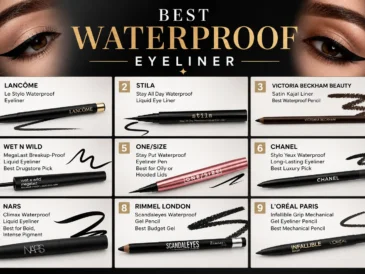
Liner is where hooded eyes trip people up most, since a perfectly winged line drawn with eyes closed can end up entirely hidden under the hood once your eyes open. Our full eyeliner application guide covers general technique in depth, but the hooded-eye-specific adjustment is worth repeating clearly here: apply with your eyes open wherever possible, keep the line thinner through the inner two-thirds of the eye, and angle any wing slightly higher than you’d expect, since a hood tends to visually “eat” length and angle you can’t see until your eyes are fully open and relaxed again.
Brow Shaping: The Step Most Hooded-Eye Guides Skip Entirely
Brow position has an outsized effect on how much hooding is visible, since the brow is often what’s draping down to create the hood in the first place. A brow shape with a more defined, slightly higher arch rather than a flat, low-set brow can meaningfully increase visible lid space without touching eyeshadow at all. This doesn’t mean over-plucking or dramatically altering your natural brow shape; it means being intentional about where you groom the underside of the brow versus letting it grow low and heavy, since a heavier lower brow border is often what’s directly contributing to a more hooded appearance.
Glasses and Sunglasses Considerations
If you wear glasses, frames that sit slightly higher on the bridge and don’t crowd the brow area tend to work better with hooded eyes than frames with a low, heavy top rim, which can visually compound the hooding effect by adding another layer of visual weight directly above the lash line. This is a genuine practical consideration worth discussing with an optician when selecting frames, separate from any cosmetic makeup adjustment.
Eye-Area Skincare Considerations
Since hooding can be affected by skin elasticity and the general condition of the eye area over time, a dedicated eye-area skincare step is worth considering alongside any makeup adjustments, particularly if age-related changes are part of what you’re noticing. Our review of the Beauty of Joseon Revive Eye Serum covers a retinal-based option aimed at supporting the appearance of fine lines and firmness around the eye area, which is worth reading alongside the pregnancy and sensitive-skin cautions covered there before adding any active ingredient near the eyes. If under-eye brightening is more your focus than the upper lid specifically, our guide to applying concealer covers technique for that area, which pairs naturally with the eyeshadow adjustments above for a more finished, awake-looking overall eye area.
Frequently Asked Questions
What’s the difference between hooded eyes and monolids?
Hooded eyes have a crease that’s covered or shadowed by skin, while monolids have no distinct crease structure at all. Lifting your brow with a finger will reveal a hidden crease on hooded eyes, but not on true monolids.
Are hooded eyes and downturned eyes the same thing?
No. Hooded eyes describe lid space and crease visibility; downturned eyes describe the angle of the outer corners. You can have either trait independently or both together.
Do hooded eyes get worse with age?
They can become more pronounced with age as skin elasticity naturally decreases, which is a normal, common change rather than a medical concern. Sudden, one-sided, or rapidly progressing drooping is different and worth mentioning to a doctor, since it can indicate ptosis rather than typical age-related hooding.
What eyeshadow technique works best for hooded eyes?
A soft cut crease, with the transition shade placed above the natural crease rather than directly in it, tends to work especially well, along with checking placement with your eyes open rather than closed throughout application.
Can eyebrow shape actually affect how hooded my eyes look?
Yes. A brow with a slightly more defined, higher arch can visibly increase available lid space, since brow position often directly contributes to how much the hood drapes over the crease.
Should I see a doctor about hooded eyes?
Not typically most hooded eyes are a normal genetic or age-related trait. See a doctor if drooping is sudden, one-sided, worsening quickly, or affecting your vision, since those signs can point to ptosis rather than a typical cosmetic eye shape.